Wastewater Treatment and Research - Böcker
Visar alla böcker i serien Wastewater Treatment and Research. Handla med fri frakt och snabb leverans.
9 produkter
9 produkter
1 773 kr
Skickas inom 10-15 vardagar
Emerging technologies in wastewater treatment plant is an ecological, profitable and natural technology designed to eliminate heavy metals, radionuclides, xenobiotic compounds, organic waste, pesticides, etc. from contaminated sites or industrial downloads through biological means. Since this technology is used in conditions on site, it does not physically disturb the site unlike conventional methods, that is, chemical or mechanical methods. In this technology, higher plants or microbes are used alone or in combination for the phytoextraction of heavy metals from sites contaminated with metals. Through microbial interventions, metals are immobilized or mobilized through redox conversions in contaminated sites. If they are mobilized, accumulating metal plants are placed to accumulate metals in their bodies. Next, metal-loaded plants are collected and recycled to reduce the volume of waste and then, disposed of as hazardous materials or used for the recovery of precious metals, if possible. In case of immobilization, metals are no longer available to be toxic to organisms. There are very few books published on the proposed theme. A good number of books have been published on environmental bioremediation, but the proposed book is a new and an innovative proposal specifically in wastewater treatment. Looking into the importance of emerging technologies in wastewater treatment research, the book will have a high and applicable value in industrial wastewater treatment research.Features: The book highlights the importance of emerging technologies in the wastewater treatment plant to clean up the environment from pollution caused by human activities. It assesses the potential application of several existing bioremediation techniques and introduces new emerging technologies. It is an updated vision of the existing emerging technologies in environmental bioremediation strategies with their limitations and challenges and their potential application to remove environmental pollutants. It also introduces the new trends and advances in environmental bioremediation with a thorough discussion of recent developments in this field. Highlights the importance of bioremediation to deal with the ever-increasing number of environmental pollutants.
1 773 kr
Skickas inom 10-15 vardagar
The proposed book mainly sorts out emerging and burning issues faced day to day by municipal and industrial wastewater treatments. It also provides a comprehensive view of recent advances in hybrid treatment technologies for wastewater treatment, addresses the current limitations and challenges of applying these tools in wastewater treatment systems. This book gives an insight about recent developments in membrane technology for wastewater treatment. Industrial wastewater contains a large variety of compounds, such as heavy metals, salts and nutrients, which makes its treatment challenging. Thus, the use of conventional water treatment methods is not always effective. In this sense, membrane-based hybrid processes have emerged as a promising technology to treat complex industrial wastewater. The present book analyses and discusses the potential of membrane-based hybrid processes for the treatment of complex industrial wastewater along with the recovery of valuable compounds and water reutilization. In addition, recent and future trends in membrane technology are highlighted.FEATURESThe properties, mechanisms, advantages, limitations and promising solutions of different types of membrane technologies are discussedThe optimization of process parameters is addressedThe performance of different membranes is describedThe potential of nanotechnology to improve the treatment efficiency of wastewater treatment plants is presentedThe application of membrane and membrane-based hybrid treatment technologies for wastewater treatment is covered
2 317 kr
Skickas inom 10-15 vardagar
Wastewater Treatment: Molecular Tools, Techniques, and Applications provides an insight about the application of different tools and technology for exploring microbial structure-function relationships that involved in WWTPs. From the present day consequence of alarming usable water crysis throughout the globe, an immediate action on water cycle is necessary. Along with other options the waste water recycling is one major opportunity to combat the future scarcity. The book aims to provide a comprehensive view of advanced emerging technologies for wastewater treatment, heavy metal removal, pesticide degradation, dye removal, waste management, microbial transformation of environmental contaminants, etc. It also describes different application of Omic tools in Waste water treatment plants (WWTPs),describes the role of microorganisms in WWTPs, points out the reuse of treated wastewater through emerging technologies, also includes the recovery of resources from wastewater and emphasizes on cutting edge molecular tools for WWTPs. We hope the content of the book will be very much usefull for the community who are directly associated in wastewater management research, people who are associated with environmental awarness programme and the students of UG and PG courses.Features:This book highlights the importance of molecular genomics, molecular biology techniques to sort out the problems faced by industrialist who operates wastewater treatment plant with the ever-increasing number of environmental pollutants.Describes application of different Omic tools in Wastewater treatment plants (WWTPs)Describes the role of microorganisms in WWTPsPoints out the reuse of treated wastewater through emerging technologies.Includes the recovery of resources from wastewaterEmphasizes on cutting edge molecular toolsThis book targets engineers, scientists and managers who require an excellent introduction and basic knowledge to the principles of molecular biology or molecular genomics in the area of wastewater treatment.Different professionals working or interested in the Environmental Microbiology or Bioremediation or Environmental Genomics field.Students on Environmental Biotechnology/Microbiology.
1 434 kr
Skickas inom 10-15 vardagar
Increasing population and industrialization are the key pollutant contributors in water bodies. The wastes generated by industries are highly hazardous for humans and the ecosystem and require a comprehensive and effective treatment before being discharged into water bodies. Over the years, many up gradations have been introduced in traditional water treatment methods which were expensive and ineffective especially for removal of toxic pollutants. Phycoremediation has been gaining attention due to its mutual benefit in wastewater treatment and for valuable algae biomass production. Wastewater, especially sewage and industrial effluents, is rich in pathogenic organisms, organic and inorganic compounds and heavy metals that adversely affect human and aquatic life. Microalgae use these inorganic compounds and heavy metals for their growth. In addition, they also reduce pathogenic organisms and release oxygen to be used by bacteria for decomposition of organic compounds in a secondary treatment. In this book, the potential of microalgae in wastewater treatment, their benefits, strategies, and challenges are discussed. The increasing need of finding innovative, low-cost, low-energy, sustainable and eco-friendly solutions for wastewater treatment makes the publication of a book on phycoremediation timely and appropriate.Features:(1) Deals with the most emerging aspects of algal research with special reference to phycoremediation.(2) Studies in depth diversity, mutations, genomics and metagenomics study(3) An eco-physiology, culturing, microalgae for food and feed, biofuel production, harvesting of microalgae, separation and purification of biochemicals.
Bio-Nano Filtration in Industrial Effluent Treatment
Advanced and Innovative Approaches
Inbunden, Engelska, 2023
1 841 kr
Skickas inom 10-15 vardagar
The ever-increasing number of pollutants discharged into the environment drives the search for new treatment technologies or the modification of the existing ones. In this sense, innovation in bio-nano filtration systems seems very promising and, therefore, a book on the current advances and innovations on this topic is highly appropriate.Bio-nano filtration is a relatively new emerging technology applied to the treatment of wastewater and other toxic compounds. In the last two decades, this technology has begun to emerge as an economically viable process to treat the great variety of recalcitrant pollutants discharged into the environment. Thus, it is speculated that the US biofiltration market will reach over $100 million by 2020. This book aims to present how innovation in bio-nano filtration can provide effective solutions to overcome the serious problem of water pollution worldwide. The removal of contaminants will be the result of the combined effects of biological oxidation, adsorption, and filtration processes.Features: Describes the microbial ecology of bio-nano filtration. Describes the modelling of bio-nano filtration. Describes the design of bio-nanofillers.
2 317 kr
Skickas inom 10-15 vardagar
Advanced Oxidation Processes for Wastewater Treatment: An Innovative Approach: This book highlights the importance of various innovative advanced oxidation technology to clean up the environment from pollution caused by human activities. It assesses the potential application of several existing bioremediation techniques and introduces new emerging technologies.This book is an updated vision of the existing advanced oxidation strategies with their limitations and challenges and their potential application to remove environmental pollutants. It also introduces the new trends and advances in environmental bioremediation technology with thorough discussion of recent developments in this field.This book highlights the importance of different innovative advanced oxidation process to deal with the ever-increasing number of environmental pollutants.Features:Illustrates the importance of various advance oxidation processes in effluent treatment plantPoints out the reuse of the treated wastewater through emerging advance oxidation technologies for effluent treatment plantHighlights the recovery of resources from wastewaterPays attention to the occurrence of novel micro-pollutantsEmphasizes the role of nanotechnology in bioremediation of pollutantsIntroduces new trends in environmental bioremediation
1 637 kr
Skickas inom 10-15 vardagar
As the global pursuit for environmental sustainability and circular water economy grows ever ambitious, this book explores recent trends, methods, and advancements in industrial wastewater treatment.With insights from professors and industry experts in the field, this book provides new perspectives on the following themes:Cutting-edge treatment technologies like membrane filtration, advanced oxidation processes, anaerobic digestion, process optimisation, and water reuseAdopting a multidisciplinary approach for handling and treatment of industrial wastewaterMethods and techniques for the removal and remediation of microplastics from wastewaterRecent approaches for treatment of biomedical wastewater from hospitals and diagnostic centresThe role of Artificial Intelligence in quality assessment, monitoring, and treatment of industrial wastewaterThis is a valuable resource for environmentalists, scientists, and technologists around the world. It will also be of interest to academics and students within the disciplines of Water Systems Engineering, Environmental Science and Remediation, and Sustainable Development.
1 909 kr
Skickas inom 10-15 vardagar
In recent years, problems such as environmental pollution, global warming, and high energy consumption have brought waste treatment technologies to the forefront. As the scientific world turns to sustainable, environmentally friendly, and ecologically sound energy sources, microalgae-based technologies have become one of the most intensely studied subjects in academia. This book delves deeper into the emergence of microalgae as the green alternative that could lead the world toward adopting a circular economy and zero-discharge approach.With insights from professors and industry experts in the field, this book provides new perspectives on the day-to-day environmental applications of microalgal technologies in waste treatment and management as well as recycling. It also explores the environmental impact of traditional waste treatment and recovery technologies and highlights how algae-based technologies can serve as an eco-friendly alternative in microplastic removal and biofuel production. This book equips readers with the essential knowledge on algae-based phycoremediation technologies, with special emphasis on their use in conventional treatment facilities to remove harmful contaminants and stabilize pH for effective bacterial treatment.This is a valuable resource for environmentalists, scientists, and technologists around the world. It will also be of interest to academics and students within the disciplines of Phycology, Water Systems Engineering, Environmental Science and Remediation, and Sustainable Development.
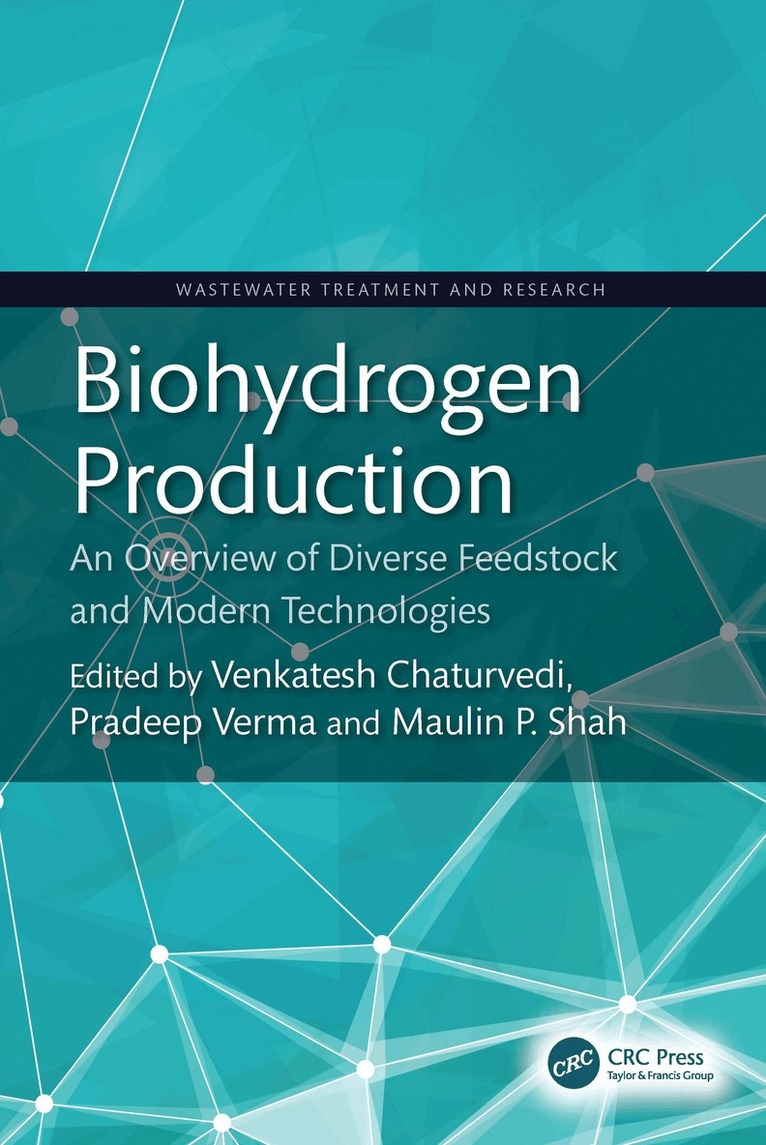
Biohydrogen Production
An Overview of Diverse Feedstock and Modern Technologies
Inbunden, Engelska, 2025
2 385 kr
Skickas inom 10-15 vardagar
Rapid accumulation of pollutants and waste has resulted in a persistent demand for environmental clean-up through sustainable microbial technologies that combine biodegradation with bioenergy generation. Biohydrogen has emerged as a popular biofuel because it produces zero-carbon emissions and is environmentally friendly.This volume in the Wastewater Treatment and Research series delves into the various ways in which biohydrogen can be produced. This includes photosynthetic biohydrogen production, where cyanobacteria decompose water to hydrogen under anaerobic conditions using photosynthesis, anaerobic dark fermentation where hydrogen is produced by decomposition of organic matter by anaerobic microorganisms, and light and dark fermentation. With special emphasis on cell immobilization strategies, membrane processes, and nanomaterials, this book also highlights recent innovations in biohydrogen production such as culture enrichment, pretreatment of wastes, metabolic and genetic engineering, and the coupling process of light and dark fermentation. By providing an ecofriendly roadmap to turning waste into bioenergy, this book serves as an instrumental guide to averting one of the most pressing environmental crises of our times.Professors, researchers, students, and science enthusiasts will appreciate this holistic overview of biohydrogen production, especially in terms of its long-term viability, cost, and environmental implications.