Wiley Short Histories - Böcker
Visar alla böcker i serien Wiley Short Histories. Handla med fri frakt och snabb leverans.
8 produkter
8 produkter
291 kr
Skickas inom 7-10 vardagar
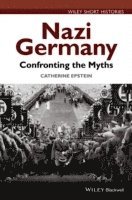
Nazi Germany: Confronting the Myths provides a concise and compelling introduction to the Third Reich. At the same time, it challenges and demystifies the many stereotypes surrounding Hitler and Nazi Germany. Creates a succinct, argument-driven overview for students by using common myths and stereotypes to encourage critical engagement with the subjectProvides an up-to-date historical synthesis based on the latest research in the fieldArgues that in order to fully understand and explain this period of history, we need to address its seeming paradoxes – for example, questioning why most Germans viewed the Third Reich as a legitimate government, despite the Nazis’ criminalityIncorporates useful study features, including a timeline, glossary, maps, and illustrations
277 kr
Skickas inom 7-10 vardagar
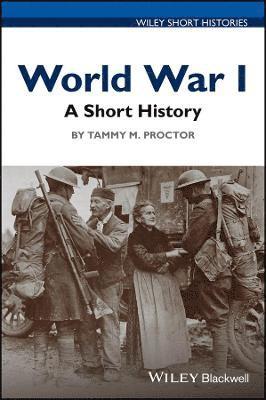
A lively, engaging history of The Great War written for a new generation of readersIn recent years, scholarship on World War I has turned from a fairly narrow focus on military tactics, weaponry, and diplomacy to incorporate considerations of empire, globalism, and social and cultural history. This concise history of the first modern, global war helps to further broaden the focus typically provided in World War I surveys by challenging popular myths and stereotypes to provide a new, engaging account of The Great War.The conventional World War I narrative that has evolved over the past century is that of an inevitable but useless war, where men were needlessly slaughtered due to poor decisions by hidebound officers. This characterization developed out of a narrow focus on the Western Front promulgated mainly by British historians. In this book, Professor Proctor provides a broader, more multifaceted historical narrative including perspectives from other fronts and spheres of interest and a wider range of participants. She also draws on recent scholarship to consider the gendered aspect of war and the ways in which social class, religion, and cultural factors shaped experiences and memories of the war. Structured chronologically to help convey a sense of how the conflict evolvedEach chapter considers a key interpretive question, encouraging readers to examine the extent to which the war was total, modern, and globalChallenges outdated stereotypes created through a focus on the Western FrontConsiders the war in light of recent scholarship on empire, global history, gender, and cultureExplores ways in which the war and the terms of peace shaped the course of the 20th centuryWorld War I: A Short History is sure to become required reading in undergraduate survey courses on WWI, as well as courses in military history, the 20th century world, or the era of the World Wars.
1 020 kr
Skickas inom 7-10 vardagar
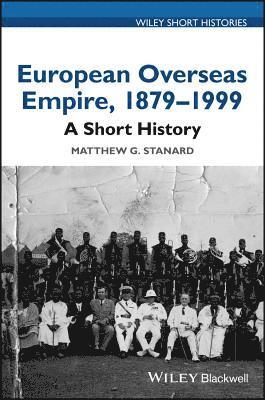
A Timely Look Back at the Era That Shaped Our WorldThousands of years of recorded history show that the main way in which human societies have been organized is as empires. Today, the evidence of recent European overseas empire’s lasting effects is all around us: from international frontiers and fusion cuisine to multiplying apologies for colonial misdeeds. European Overseas Empire, 1879-1999: A Short History explores the major events in this critical period that continue to inform and affect our world today.New access to archives and a renewed interest in the most recent era of European overseas empire building and the decolonization that followed have produced a wealth of fascinating information that has recharged perennial debates and shed new light on topics previously considered settled . At the same time, current events are once again beginning to echo the past, bringing historical perspective into the spotlight to guide our actions going forward. This book examines our collective past, providing new insight and fresh perspectives as it: Traces current events to their roots in the European overseas imperialism of the 19th and 20th centuriesChallenges the notion of political, cultural, social, and economic exchanges of the era as being primarily “Europe-outward”Examines the complexity and contingency of colonial rule, and the range of outcomes for the various territories involvedExplores the power dynamics of overseas empires, and their legacies that continue to shape the world today
348 kr
Skickas inom 7-10 vardagar
A Timely Look Back at the Era That Shaped Our WorldThousands of years of recorded history show that the main way in which human societies have been organized is as empires. Today, the evidence of recent European overseas empire’s lasting effects is all around us: from international frontiers and fusion cuisine to multiplying apologies for colonial misdeeds. European Overseas Empire, 1879-1999: A Short History explores the major events in this critical period that continue to inform and affect our world today.New access to archives and a renewed interest in the most recent era of European overseas empire building and the decolonization that followed have produced a wealth of fascinating information that has recharged perennial debates and shed new light on topics previously considered settled . At the same time, current events are once again beginning to echo the past, bringing historical perspective into the spotlight to guide our actions going forward. This book examines our collective past, providing new insight and fresh perspectives as it: Traces current events to their roots in the European overseas imperialism of the 19th and 20th centuriesChallenges the notion of political, cultural, social, and economic exchanges of the era as being primarily “Europe-outward”Examines the complexity and contingency of colonial rule, and the range of outcomes for the various territories involvedExplores the power dynamics of overseas empires, and their legacies that continue to shape the world today
980 kr
Skickas inom 7-10 vardagar
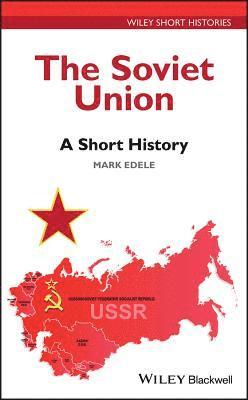
An acclaimed historian explores the dynamic history of the twentieth century Soviet UnionIn ten concise and compelling chapters, The Soviet Union covers the entire Soviet Union experience from the years 1904 to 1991 by putting the focus on three major themes: warfare, welfare, and empire. Throughout the book, Mark Edele—a noted expert on the topic—clearly demonstrates that the Soviet Union was more than simply "Russia." Instead, it was a multi-ethnic empire.The author explains that there were many incarnations of Soviet society throughout its turbulent history, each one a representative of Soviet socialism. The text covers a wide range of topics: The end Romanov empire; The outbreak of World War I; The Bolshevik Revolution of 1917; The breakdown of the old empire and its re-constitution in the Civil War; The New Economic Policy; The rise of Stalin; The Soviet’s role in World War II; Post war normalization; and Gorbachev’s attempt to end the Cold War. The author also explores the challenges encountered by the successor states, their struggles with and against democracy, capitalism, authoritarianism, and war. This vital resource: Provides a concise overview of the history of the Soviet UnionIncludes information on the latest research that takes the broad view of the history of the Soviet Union and its place in world historyTreats scholarly disagreements as part of the history of the influence of the Soviet Union on the course of the twentieth centuryOffers suggestion for further readings and a link to online primary sourcesWritten for students of twentieth century Russia, the Russian Revolution, the Soviet Union, and the Cold War, and twentieth century World History, The Soviet Union: A Short History is a volume in the popular Wiley Short Histories series.
328 kr
Skickas inom 7-10 vardagar
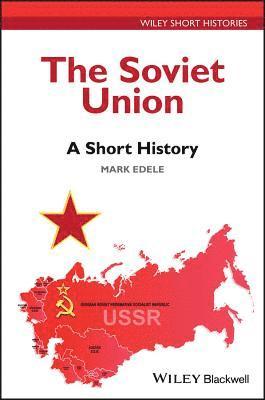
An acclaimed historian explores the dynamic history of the twentieth century Soviet UnionIn ten concise and compelling chapters, The Soviet Union covers the entire Soviet Union experience from the years 1904 to 1991 by putting the focus on three major themes: warfare, welfare, and empire. Throughout the book, Mark Edele—a noted expert on the topic—clearly demonstrates that the Soviet Union was more than simply "Russia." Instead, it was a multi-ethnic empire.The author explains that there were many incarnations of Soviet society throughout its turbulent history, each one a representative of Soviet socialism. The text covers a wide range of topics: The end Romanov empire; The outbreak of World War I; The Bolshevik Revolution of 1917; The breakdown of the old empire and its re-constitution in the Civil War; The New Economic Policy; The rise of Stalin; The Soviet’s role in World War II; Post war normalization; and Gorbachev’s attempt to end the Cold War. The author also explores the challenges encountered by the successor states, their struggles with and against democracy, capitalism, authoritarianism, and war. This vital resource: Provides a concise overview of the history of the Soviet UnionIncludes information on the latest research that takes the broad view of the history of the Soviet Union and its place in world historyTreats scholarly disagreements as part of the history of the influence of the Soviet Union on the course of the twentieth centuryOffers suggestion for further readings and a link to online primary sourcesWritten for students of twentieth century Russia, the Russian Revolution, the Soviet Union, and the Cold War, and twentieth century World History, The Soviet Union: A Short History is a volume in the popular Wiley Short Histories series.
1 020 kr
Skickas inom 7-10 vardagar
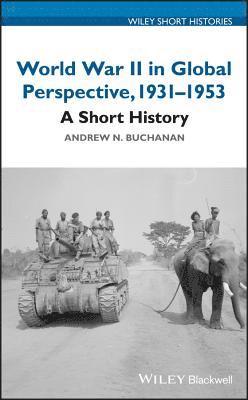
A comprehensive review of World War II that offers a global-level analysisWritten for academics and students of history, World War II in Global Perspective, 1931-1953 presents a dynamic and global account of the historical events prior to, during, and after World War II. The author—a noted expert on the topic—explores the main theaters of the war and discusses the connections between them. He also examines the impact of the war on areas of the world that are often neglected in historical accounts, including Latin America, sub-Saharan Africa, and the so-called ‘neutral’ countries. This comprehensive text clearly shows how in the struggle against the Axis powers, the United States replaced Britain as the global superpower.The author discusses the Japanese invasion of Manchuria in 1931 and the Korean War (1950-1953) and argues that the core years of the war (1939-1945) cannot be understood without considering the turbulent events that framed them. The text puts World War II in context as a series of large regional conflicts that intersected and overlapped, finally emerging as a genuine “world war” with the formal entry of the United States in late 1941. This vital text: Offers a comprehensive review of World War II that frames it in a global contextGives weight to the economic and political developments of the warProvides a robust account of the main military campaignsContains illustrations and maps that themselves highlight little-known aspects of the global war
370 kr
Skickas inom 11-20 vardagar
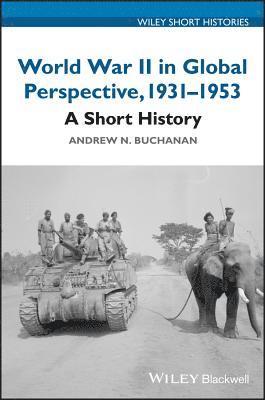
A comprehensive review of World War II that offers a global-level analysisWritten for academics and students of history, World War II in Global Perspective, 1931-1953 presents a dynamic and global account of the historical events prior to, during, and after World War II. The author—a noted expert on the topic—explores the main theaters of the war and discusses the connections between them. He also examines the impact of the war on areas of the world that are often neglected in historical accounts, including Latin America, sub-Saharan Africa, and the so-called ‘neutral’ countries. This comprehensive text clearly shows how in the struggle against the Axis powers, the United States replaced Britain as the global superpower.The author discusses the Japanese invasion of Manchuria in 1931 and the Korean War (1950-1953) and argues that the core years of the war (1939-1945) cannot be understood without considering the turbulent events that framed them. The text puts World War II in context as a series of large regional conflicts that intersected and overlapped, finally emerging as a genuine “world war” with the formal entry of the United States in late 1941. This vital text: Offers a comprehensive review of World War II that frames it in a global contextGives weight to the economic and political developments of the warProvides a robust account of the main military campaignsContains illustrations and maps that themselves highlight little-known aspects of the global war