Working with Culture on the Edge - Böcker
Visar alla böcker i serien Working with Culture on the Edge. Handla med fri frakt och snabb leverans.
8 produkter
8 produkter
912 kr
Skickas inom 5-8 vardagar
Fabricating Origins builds on a series of posts that originally appeared, in earlier forms, at the blog for Culture on the Edge. In these posts each member of the group focused on the problem of origins, examining how we repeatedly conjure up an authorized past that suits the needs of the continually changing present. Fabricating Origins presses these short studies further by inviting ten early career scholars to each work with Culture on the Edge by applying, extending, even critiquing the group, to further illustrate for readers how talk of origins in the present is so much more interesting that being preoccupied with long past origins themselves. The volume, like all books in the Working with Culture on the Edge series, is introduced and concluded by original, theoretically challenging but engaging essays. It provides a selection of ten main articles which draw on a variety of examples to make the case, followed by original commentaries on each, all of which are pithy but substantive.Although not a textbook, and while challenging for any reader unaccustomed to making the switch from origins to the discourse on origins, Fabricating Origins is especially aimed at the early career reader.The volume therefore includes an annotated set of suggested readings on how to rethink origins as the product of contemporary and always tactically useful talk and action.
355 kr
Skickas inom 5-8 vardagar
Fabricating Origins builds on a series of posts that originally appeared, in earlier forms, at the blog for Culture on the Edge. In these posts each member of the group focused on the problem of origins, examining how we repeatedly conjure up an authorized past that suits the needs of the continually changing present. Fabricating Origins presses these short studies further by inviting ten early career scholars to each work with Culture on the Edge by applying, extending, even critiquing the group, to further illustrate for readers how talk of origins in the present is so much more interesting that being preoccupied with long past origins themselves. The volume, like all books in the Working with Culture on the Edge series, is introduced and concluded by original, theoretically challenging but engaging essays. It provides a selection of ten main articles which draw on a variety of examples to make the case, followed by original commentaries on each, all of which are pithy but substantive.Although not a textbook, and while challenging for any reader unaccustomed to making the switch from origins to the discourse on origins, Fabricating Origins is especially aimed at the early career reader.The volume therefore includes an annotated set of suggested readings on how to rethink origins as the product of contemporary and always tactically useful talk and action.
944 kr
Skickas inom 5-8 vardagar
The fabrication of groups as different, as other, often has significant consequences, including violence and discrimination. This volume focuses on the discourses that construct Islam in the aftermath of traumatic events and thus illustrates how academic analysis of the fabrication of difference can contribute significantly to public discourse. It centers on two critical analyses by accomplished scholars who have written publicly on the constructions of Islam and Muslims as others. Mayanthi Fernando analyzes the rhetoric surrounding French laicite (often translated as secularism) in the aftermath of the attack on Charlie Hebdo in Paris in 2015, highlighting the ways the majority uses the language of laicite to diminish the presence of minorities. Aaron Hughes analyzes how scholars and others construct Islam in response to acts of violence attributed to people who identify with Islam, thus illustrating how critical academic analysis can contribute to the understanding of both the contestation and ideology behind groups such as ISIS.Ten early career scholars apply and extend the questions and approaches of these central essays in short reflections that apply these issues in new ways to other contexts (e.g., India, the United States, early Christianity) and topics (e.g., social issues in politics, religion vs. non-religion, nationalism, scholars in public discourse). The volume concludes with a substantive Afterword that broadens from these specific current events to present an extended analysis of the fabrication of difference and the ways recognizing these processes should influence our scholarship and our engagement with public discourse. In addressing the ways people construct difference and the Other, this volume, therefore, provides one answer to the question of the relevance of these fields in a period of both political challenge and internal critique of the assumption of the universality of academic research.
355 kr
Skickas inom 5-8 vardagar
The fabrication of groups as different, as other, often has significant consequences, including violence and discrimination. This volume focuses on the discourses that construct Islam in the aftermath of traumatic events and thus illustrates how academic analysis of the fabrication of difference can contribute significantly to public discourse. It centers on two critical analyses by accomplished scholars who have written publicly on the constructions of Islam and Muslims as others. Mayanthi Fernando analyzes the rhetoric surrounding French laicite (often translated as secularism) in the aftermath of the attack on Charlie Hebdo in Paris in 2015, highlighting the ways the majority uses the language of laicite to diminish the presence of minorities. Aaron Hughes analyzes how scholars and others construct Islam in response to acts of violence attributed to people who identify with Islam, thus illustrating how critical academic analysis can contribute to the understanding of both the contestation and ideology behind groups such as ISIS.Ten early career scholars apply and extend the questions and approaches of these central essays in short reflections that apply these issues in new ways to other contexts (e.g., India, the United States, early Christianity) and topics (e.g., social issues in politics, religion vs. non-religion, nationalism, scholars in public discourse). The volume concludes with a substantive Afterword that broadens from these specific current events to present an extended analysis of the fabrication of difference and the ways recognizing these processes should influence our scholarship and our engagement with public discourse. In addressing the ways people construct difference and the Other, this volume, therefore, provides one answer to the question of the relevance of these fields in a period of both political challenge and internal critique of the assumption of the universality of academic research.
944 kr
Skickas inom 5-8 vardagar
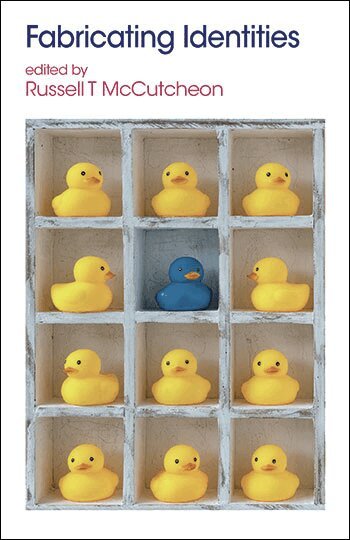
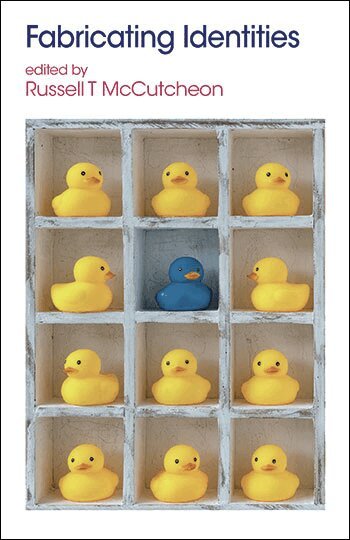
Fabricating Identities pairs early career scholars with members of Culture on the Edge, to explore how social actors identify themselves through their practices and associations. The book is arranged in a series of articles and commentaries that all press the model of seeing what we usually call identity as the result of a series of identifications-actions and circumstances that enable us to understand ourselves as related to others in specific ways. Changing relations result in changing senses of identity. With an introduction and substantive theoretical afterword, the book's brief main chapters make it an ideal conversation-starter in classes or primer for those wishing to rethink how we normally talk about identity.
355 kr
Skickas inom 5-8 vardagar
Fabricating Identities pairs early career scholars with members of Culture on the Edge, to explore how social actors identify themselves through their practices and associations. The book is arranged in a series of articles and commentaries that all press the model of seeing what we usually call identity as the result of a series of identifications-actions and circumstances that enable us to understand ourselves as related to others in specific ways. Changing relations result in changing senses of identity. With an introduction and substantive theoretical afterword, the book's brief main chapters make it an ideal conversation-starter in classes or primer for those wishing to rethink how we normally talk about identity.
944 kr
Skickas inom 5-8 vardagar
Fabricating Authenticity expands on revised posts that originally appeared on the blog for Culture on the Edge - an international research collaborative that analyzes strategies of identification. The newly envisioned main chapters in this volume draw on a variety of sites, topics, and case studies to explore what is at stake in claims of authenticity. Here, authenticity is examined as a socially contested and constructed label that is used to manage and codify a variety of choices in relation to understandings of identity formation. Building on the main chapters, Fabricating Authenticity is a collaborative enterprise that engages early career scholars to respond, critique, and press further the approaches and arguments put forth by members of Culture on the Edge. Following the format of the earlier volumes in the Working with Culture on the Edge series, the introduction and afterword provide a more substantive, theoretical analysis on the discourse of authenticity. Together with the main chapters and responses, Fabricating Authenticity explores everyday examples that work as productive conversation-starters for those wanting to complicate and examine authenticity claims, thus making this an ideal volume for the introductory classroom and beyond.
345 kr
Skickas
Fabricating Authenticity expands on revised posts that originally appeared on the blog for Culture on the Edge - an international research collaborative that analyzes strategies of identification. The newly envisioned main chapters in this volume draw on a variety of sites, topics, and case studies to explore what is at stake in claims of authenticity. Here, authenticity is examined as a socially contested and constructed label that is used to manage and codify a variety of choices in relation to understandings of identity formation. Building on the main chapters, Fabricating Authenticity is a collaborative enterprise that engages early career scholars to respond, critique, and press further the approaches and arguments put forth by members of Culture on the Edge. Following the format of the earlier volumes in the Working with Culture on the Edge series, the introduction and afterword provide a more substantive, theoretical analysis on the discourse of authenticity. Together with the main chapters and responses, Fabricating Authenticity explores everyday examples that work as productive conversation-starters for those wanting to complicate and examine authenticity claims, thus making this an ideal volume for the introductory classroom and beyond.