Yearbook of Nanotechnology in Society – serie
Visar alla böcker i serien Yearbook of Nanotechnology in Society. Handla med fri frakt och snabb leverans.
6 produkter
6 produkter
1 589 kr
Skickas inom 10-15 vardagar
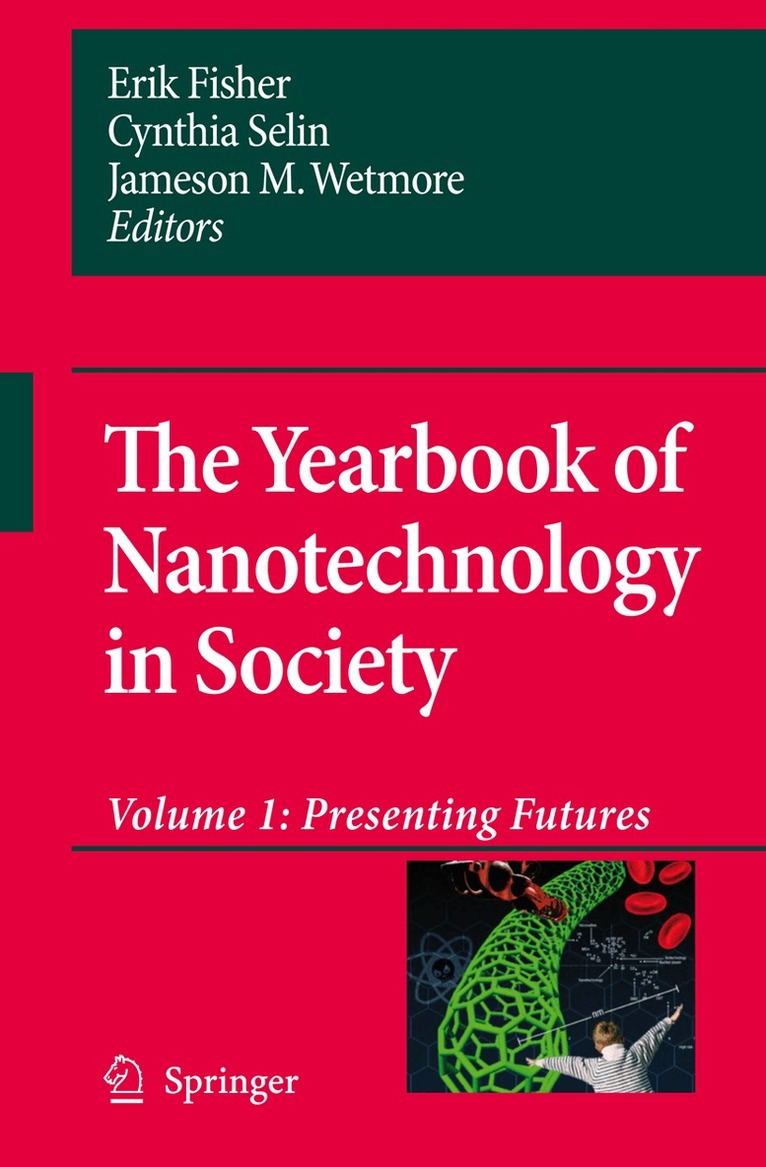
Welcome to the ?rst volume of the Yearbook of Nanotechnology in Society! Nanotechnology, hailed as “the next industrial revolution” (NSTC 2000) and c- tiqued for being little more than “hype” (Berube 2006), is the site of a great deal of social and intellectual contest. With some ten billion dollars being spent worldwide on nanotechnology research and development annually and a market forecast of trillions of dollars in sales in the medium-term future (Lux Research 2006), nations and ?rms are pursuing nano-related goals with high levels of both effort and - pectations. Yet according to the Woodrow Wilson International Center’s web-based Nanotechnology Consumer Products Inventory, most of the more than 500 na- products on the market as of this writing are basic consumer items—cosmetics, clothing, athletic equipment and the like—with modest, incremental improvements on their non-nano counterparts. Nanotechnology is also the site of an increasing amount of scholarship dedicated to understanding the interactions between society and an emerging knowled- based technological endeavor. Searching the Web of Science indices in social s- ence and humanities for nanotech* and nanoparticle*, for example, yields 231 hits 1 since 1990, but 75 percent of these occur in 2004 through 2007. This scholarship attempts to fathom the implications of nanotechnologies for society, as well as the implications for nanotechnologies of society. Some of it is also engaged in dialogue with both the public and with nanotechnology researchers about the hope and the hype described above.
1 589 kr
Skickas inom 10-15 vardagar
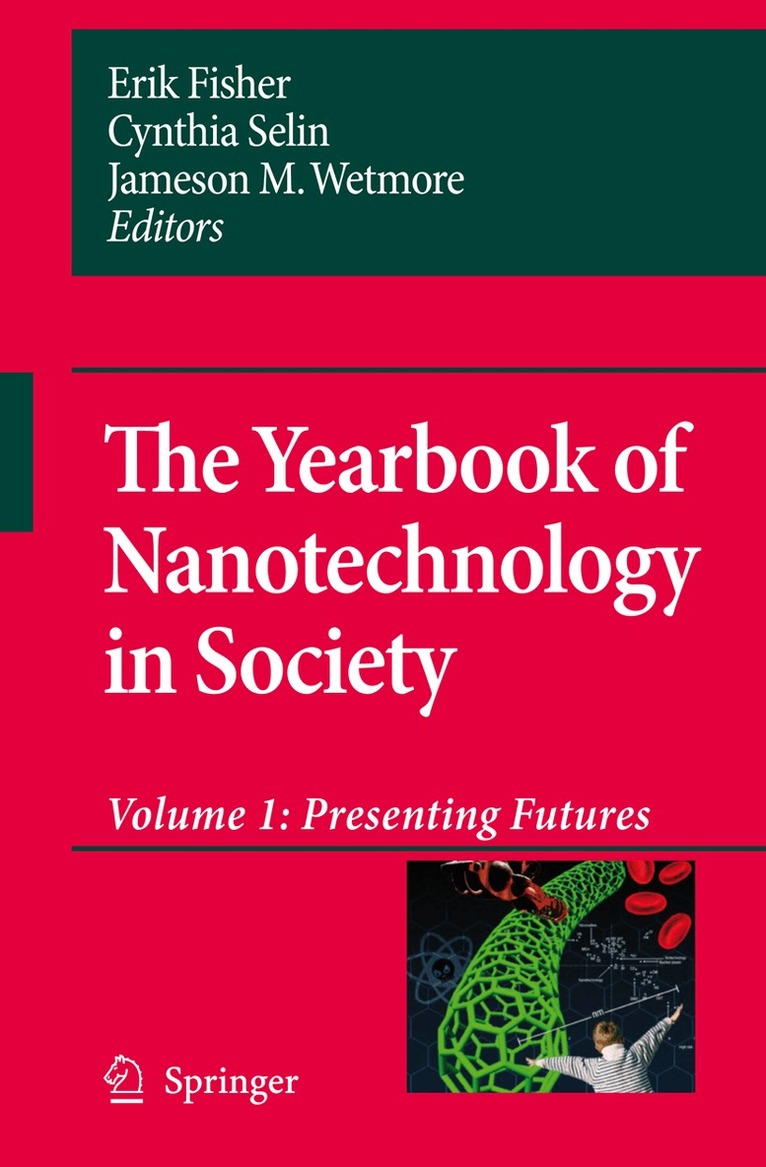
Welcome to the ?rst volume of the Yearbook of Nanotechnology in Society! Nanotechnology, hailed as “the next industrial revolution” (NSTC 2000) and c- tiqued for being little more than “hype” (Berube 2006), is the site of a great deal of social and intellectual contest. With some ten billion dollars being spent worldwide on nanotechnology research and development annually and a market forecast of trillions of dollars in sales in the medium-term future (Lux Research 2006), nations and ?rms are pursuing nano-related goals with high levels of both effort and - pectations. Yet according to the Woodrow Wilson International Center’s web-based Nanotechnology Consumer Products Inventory, most of the more than 500 na- products on the market as of this writing are basic consumer items—cosmetics, clothing, athletic equipment and the like—with modest, incremental improvements on their non-nano counterparts. Nanotechnology is also the site of an increasing amount of scholarship dedicated to understanding the interactions between society and an emerging knowled- based technological endeavor. Searching the Web of Science indices in social s- ence and humanities for nanotech* and nanoparticle*, for example, yields 231 hits 1 since 1990, but 75 percent of these occur in 2004 through 2007. This scholarship attempts to fathom the implications of nanotechnologies for society, as well as the implications for nanotechnologies of society. Some of it is also engaged in dialogue with both the public and with nanotechnology researchers about the hope and the hype described above.
1 589 kr
Skickas inom 10-15 vardagar
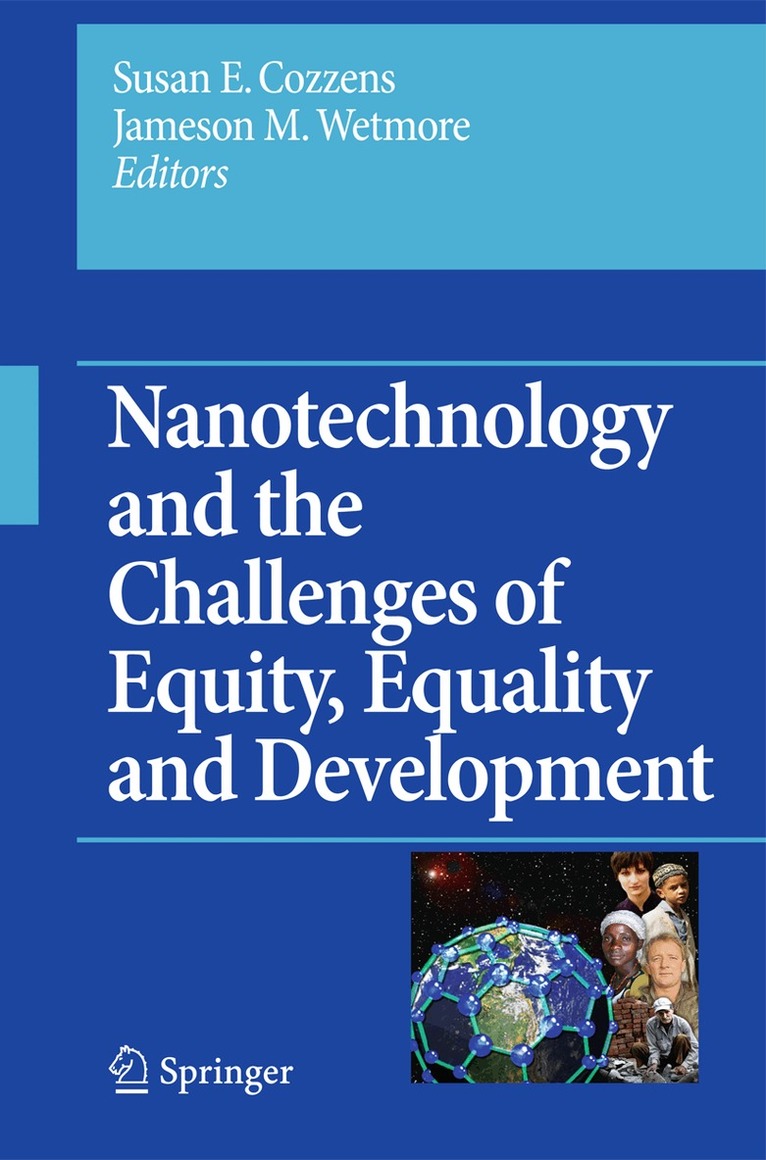
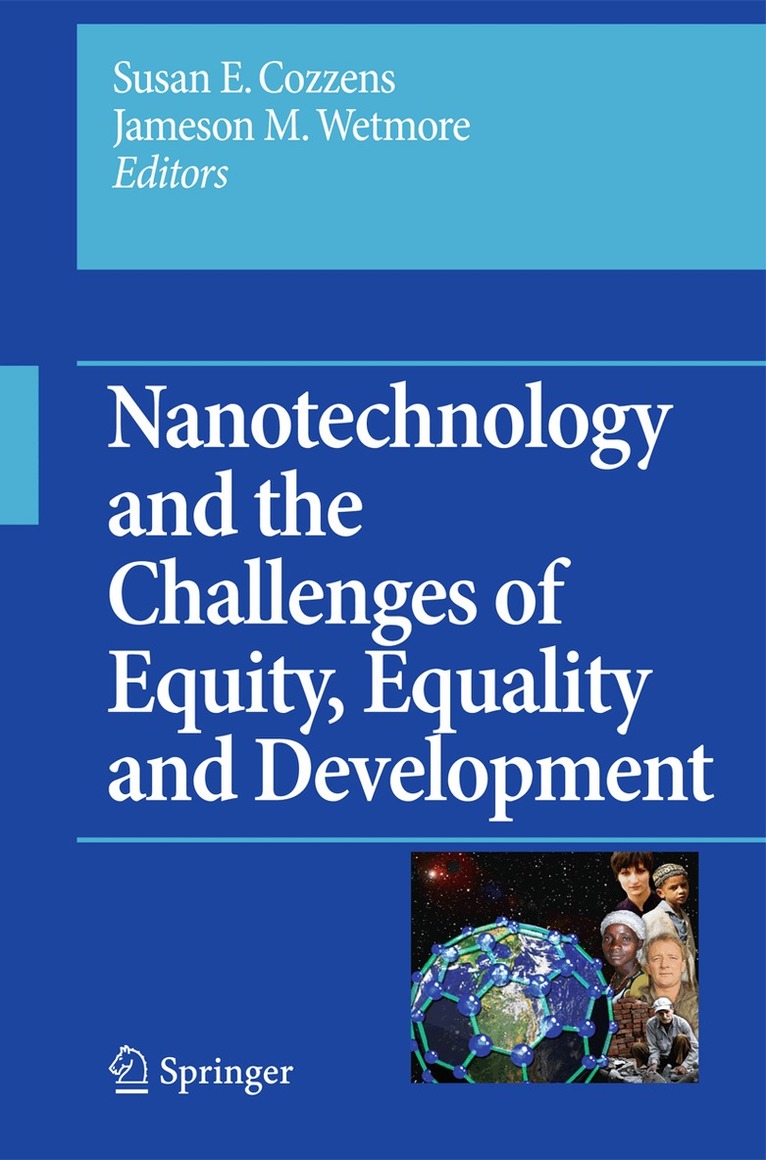
Nanotechnology is enabling applications in materials, microelectronics, health, and agriculture, which are projected to create the next big shift in production, comparable to the industrial revolution. Such major shifts always co-evolve with social relationships. This book focuses on how nanotechnologies might affect equity/equality in global society. Nanotechnologies are likely to open gaps by gender, ethnicity, race, and ability status, as well as between developed and developing countries, unless steps are taken now to create a different outcome. Organizations need to change their practices, and cultural ideas must be broadened if currently disadvantaged groups are to have a more equal position in nano-society rather than a more disadvantaged one. Economic structures are likely to shift in the nano-revolution, requiring policymakers and participatory processes to invent new institutions for social welfare, better suited to the new economic order than those of the past.
Del 3 - Yearbook of Nanotechnology in Society
Nanotechnology, the Brain, and the Future
Inbunden, Engelska, 2012
1 062 kr
Skickas inom 10-15 vardagar
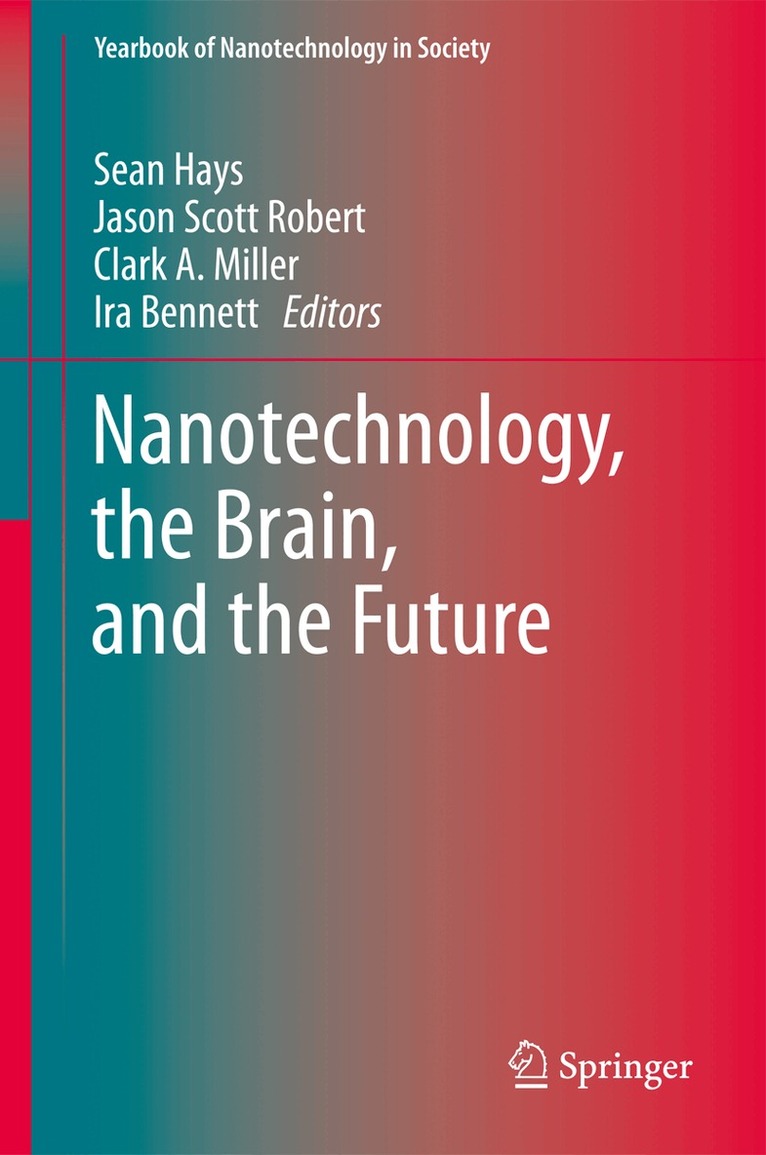
Our brain is the source of everything that makes us human: language, creativity, rationality, emotion, communication, culture, politics. The neurosciences have given us, in recent decades, fundamental new insights into how the brain works and what that means for how we see ourselves as individuals and as communities. Now – with the help of new advances in nanotechnology – brain science proposes to go further: to study its molecular foundations, to repair brain functions, to create mind-machine interfaces, and to enhance human mental capacities in radical ways. This book explores the convergence of these two revolutionary scientific fields and the implications of this convergence for the future of human societies. In the process, the book offers a significant new approach to technology assessment, one which operates in real-time, alongside the innovation process, to inform the ways in which new fields of science and technology emerge in, get shaped by, and help shape human societies.
1 589 kr
Skickas inom 10-15 vardagar
Nanotechnology is enabling applications in materials, microelectronics, health, and agriculture, which are projected to create the next big shift in production, comparable to the industrial revolution. Such major shifts always co-evolve with social relationships. This book focuses on how nanotechnologies might affect equity/equality in global society. Nanotechnologies are likely to open gaps by gender, ethnicity, race, and ability status, as well as between developed and developing countries, unless steps are taken now to create a different outcome. Organizations need to change their practices, and cultural ideas must be broadened if currently disadvantaged groups are to have a more equal position in nano-society rather than a more disadvantaged one. Economic structures are likely to shift in the nano-revolution, requiring policymakers and participatory processes to invent new institutions for social welfare, better suited to the new economic order than those of the past.
Del 3 - Yearbook of Nanotechnology in Society
Nanotechnology, the Brain, and the Future
Häftad, Engelska, 2014
1 094 kr
Skickas inom 10-15 vardagar
Our brain is the source of everything that makes us human: language, creativity, rationality, emotion, communication, culture, politics. The neurosciences have given us, in recent decades, fundamental new insights into how the brain works and what that means for how we see ourselves as individuals and as communities. Now – with the help of new advances in nanotechnology – brain science proposes to go further: to study its molecular foundations, to repair brain functions, to create mind-machine interfaces, and to enhance human mental capacities in radical ways. This book explores the convergence of these two revolutionary scientific fields and the implications of this convergence for the future of human societies. In the process, the book offers a significant new approach to technology assessment, one which operates in real-time, alongside the innovation process, to inform the ways in which new fields of science and technology emerge in, get shaped by, and help shape human societies.