• Fri frakt över 249 kr
  • •
  • Snabba leveranser
  • •
  • Billiga böcker
Kundservice

Du är på sajten för privatpersoner.

Företag, bibliotek eller offentlig verksamhet?

Du handlar på classic.bokus.com, där alla dina funktioner finns intakta.
Till classic.bokus.com
Bokus logotyp. Gå till startsidan.
  • Erbjudanden
  • Student
  • Topplistor
  • Barn & ungdom
  • Bokus Play
  • E-böcker
  • Ljudböcker
  • Pocketböcker
  • Spel och pussel

Pocketfynda! Hundratals böcker för 49 kr/st →

Sidfot

Mina sidor

    Hjälp

    • Kundservice
    • Vanliga frågor och svar
    • Frakt och leverans
    • Retur vid ångerrätt
    • Reklamera vara
    • Betalning
    • Köpvillkor
    • Allmänna villkor
    • Information om webbplatsens tillgänglighet

    Om Bokus

    • Om oss
    • Pressrum
    • För studenter
    • För företag
    • För bibliotek och offentlig verksamhet
    • För leverantörer
    • Hållbarhet

    Populärt

    • Aktuella erbjudanden
    • Presentkort
    • Studentlitteratur
    • Nya böcker
    • Topplistor
    • Signerade böcker
    • Engelska böcker

    Inspiration

    • Boktips
    • BookTok
    • Barnbokskaraktärer
    • Populära författare
    Logotyp för Bokus
    Följ oss på Facebook (extern länk)Följ oss på Instagram (extern länk)Följ oss på YouTube (extern länk)Följ oss på TikTok (extern länk)
    bokus @ CookiesAnpassa cookiesIntegritetspolicyKöpvillkor
    Till Citymail hemsida (extern länk)Till Budbee hemsida (extern länk)Till Postnord hemsida (extern länk)Till Schenker hemsida (extern länk)Till Early Bird hemsida (extern länk)Till Walleys hemsida (extern länk)
    1. Naturvetenskap och teknik
    2. Teknik och industri
    3. Elektronik och kommunikationer

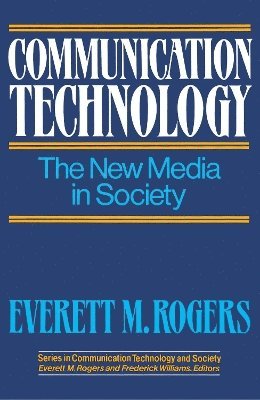
    Communication Technology

    AvEverett M. Rogers

    Häftad, Engelska, 1986

    172 kr

    Beställningsvara. Skickas inom 5-8 vardagar. Fri frakt över 249 kr.

    Beskrivning

    The Series in Communication Technology and Society is an integrated series centering on the social aspects of communication technology. Written by outstanding communications specialists, it is designed to provide a much-needed interdisciplinary approach to the study of this rapidly changing field. The industrial nations of the world have become Information Societies. Advanced technologies have created a communication revolution, and the individual, through the advent of computers, has become an active participant in this process. The "human" aspect, therefore, is as important as technologically advanced media systems in understanding communication technology. The flagship book in the Series in Communication Technology and Society, Communication Technology introduces the history and uses of the new technologies and examines basic issues posed by interactive media in areas that affect intellectual, organization, and social life. Author and series co-editor Everett M. Rogers defines the field of communication technology with its major implications for researchers, students, and practitioners in an age of ever more advanced information exchange. CONTENTS The Changing Nature of Human CommunicationWhat Are the New Communication Technologies?History of Communication ScienceAdoption and Implementation of Communication TechnologiesSocial Impacts of Communication TechnologiesNew TheoryNew Research MethodsApplications of the New Communication Technologies

    Produktinformation

    • Utgivningsdatum:1986-06-11
    • Mått:152 x 229 x 20 mm
    • Vikt:352 g
    • Format:Häftad
    • Språk:Engelska
    • Antal sidor:288
    • Förlag:Simon & Schuster
    • ISBN:9780029271209

    Utforska kategorier

    • Elektronik och kommunikationer inom Naturvetenskap och teknik

    Mer om författaren

    Everett M. Rogers is Walter H. Annenberg Professor of Communications and Associate Dean at the Annenberg School of Communications at the University of Southern California. His other works include Diffusion of Innovations and Communication Networks.

    Innehållsförteckning

    • ContentsPrefaceCHAPTER 1. The Changing Nature of Human CommunicationNature of the New Communication TechnologiesImplications for Communication ResearchWelcome to the Information SocietyChanges in the Labor ForceFrom Massification to IndividualizationWhy Information? Why Now?The Research University in the Information SocietyThe MCC Moves to AustinGoverning the Future Information SocietyA Kentucky Farmer Joins the Information SocietySummaryCHAPTER 2. What Are the New Communication Technologies?Four Eras in the Evolution of Human CommunicationI. WritingII. PrintingIII. TelecommunicationHow the Telegraph Impacted NewspapersIV. Interactive CommunicationComputer CommunicationTransistors and SemiconductorsInvention of the MicroprocessorThe Rise of Computer CommunicationComputer Bulletin BoardsVideotext and TeletextTeleconferencing: Electronic MeetingsSocial Presence and Nonverbal CommunicationThe New Cable TVSatellite CommunicationQube in ColumbusWired CitiesSummaryCHAPTER 3. History of Communication ScienceA Personal PerspectiveEuropean Roots: Trade and SimmelFour American RootsJohn Dewey: PragmatismCharles Horton Cooley: The Looking-Glass SelfRobert E. Park and the Chicago School of SociologyGeorge Herbert Mead: The SelfThe Engineers of Communication: Claude Shannon and Norbert WienerThe Mathematical Theory of CommunicationShannon's Information TheoryThe Impact of Shannon's TheoryNorbert Wiener and CyberneticsThe Yellow PerilThe Impact of Wiener's Cybernetic TheoryThe Four Founders: Lasswell, Lewin, Hovland, LazarsfeldHarold D. Lasswell: Propaganda EffectsKurt Lewin: GatekeepingCarl Hovland: Persuasion ResearchPaul F. Lazarsfeld: ToolmakerWilbur Schramm: InstitutionalizerCommunication Technology and Communication ScienceCHAPTER 4. Adoption and Implementation of Communication TechnologiesDiffusion of InnovationsWhat Is Special About the Diffusion of Communication Technologies?Diffusion of Home ComputersInnovation That Failed: The Context System at Stanford UniversitySmashing the ATM WallUses of an Electronic Mail SystemInnovation Clusters and the Hot MarketCharacteristics of the Adopters of the New MediaThe Rapid Diffusion of VCR'sNaming a New Communication TechnologyThe Innovation Process in OrganizationsA Model of the Innovation ProcessThe Diffusion of Microcomputers in California High SchoolsSummaryCHAPTER 5. Social Impacts of Communication TechnologiesFrom Audience Research to Effects ResearchPast Research on Communication EffectsThe Era of Minimal EffectsThe Era of Conditional EffectsProcess Versus Effects In Communication ResearchA Typology of ImpactsUnemployment and Social ClassSilicon Valley Today: The Information Society of Tomorrow?Impacts on InequalityCommunication Technology and Information GapsThe Green Thumb in KentuckyGender Inequality in Computer UseComputer Romance on DEAFNETInformation OverloadPrivacyYour Bank's Computer Knows a Lot About YouDecentralizationTeleworkingImpacts of a New Medium on Older MediaImpacts of Television on Radio and Film in the 1950'sSummaryCHAPTER 6. New TheoryBackgroundInadequacies of the Linear Model for Studying Interactive CommunicationCriticism of the Linear ModelA Convergence Model of CommunicationUnits of Analysis, Variables, and Time in the Data-CubeCommunication Network AnalysisThe Information-Exchange as a Unit of AnalysisElectronic Emotion: Socio-Emotional Content in Computer CommunicationTime as an Essential Dimension of Communication BehaviorStudying Interactivity in Computer Bulletin BoardsInvestigating InteractivitySummaryCHAPTER 7. New Research MethodsNew Methods for the Study of New MediaThe Typical Evaluation Research DesignShortcomings of Existing MethodsNew Data from New MediaTypes of New DataComputer Content AnalysisAdvantages of Computer-Monitored DataDisadvantages of Computer-Monitored DataSummaryCHAPTER 8. Application of the New CommunicationTechnologiesEducation and ChildrenThe HomeElectronic PoliticsThe OfficeApplications to Third World DevelopmentSmall Media for a Big RevolutionConclusionsReferencesIndex