Inbunden, Engelska, 2020
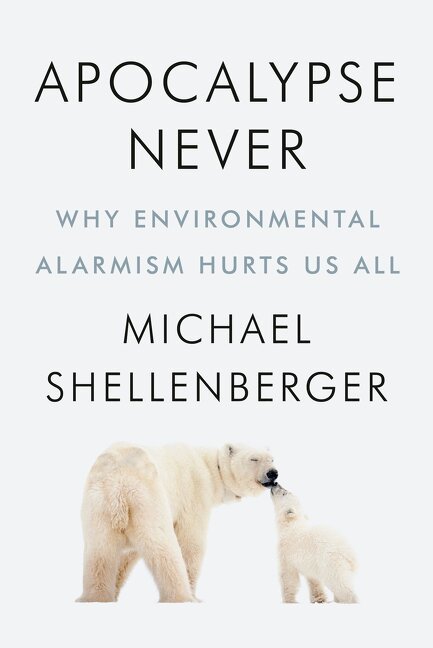
Apocalypse Never
258 kr
Skickas fredag 16/10. Fri frakt över 249 kr.
Beskrivning
Produktinformation
- Utgivningsdatum: 2020-07-23
- Mått: 152 x 229 x 34 mm
- Vikt: 592 g
- Format: Inbunden
- Språk: Engelska
- Antal sidor: 432
- Förlag: HarperCollins Publishers Inc
- ISBN: 9780063001695
Utforska kategorier
Betyg & recensioner
5 recensioner, genomsnitt 5/5
- 5/5 Mike H
Apocalypse never presents positive information about human progress in much the same way a Hans Rosling in his "Factfulness". Shellenberger illustrates his points using real and personal global examples, focusing on the benefit cheap electricity would have in all developing nations. He wants to lift up and promote a return to nuclear power and attempts to dispel the well ingrained fears that many of us have had since childhood. Energy density is key to his understanding of fuels, and is the primary reason why renewables are not suitable replacements for coal, gas or nuclear.
In order to present the positive progress of humanity since the industrial revolution, the author necessarily confronts the modern-day doomsayers. Positive human progress is of no interest to those who want to reduce the human population and return to nature, apparently to save the planet. Shellenberger realises that the motivations for the modern-day apocalyptic preachers is derived from naturalistic religion more than from science. Science is held up as the banner for those concerned about climate change, but their science is often cherry picked and lacking context, if not to say completely distorted occasionally as it suits them.
Shellenberger wishes to walk a middle line with climate change, claiming that there are extremists on both sides, those who exaggerate the threat from climate change, and those who deny climate change altogether. As far as I know, none of the prominent climate sceptics claim that the climate is not changing, indeed they all say "the climate is always changing". In this sense Shellenberger is more in the sceptic camp that the alarmist. He doesn't use the word "denier" himself about climate sceptics, but his quotations of others often do.
In the end, the author wants to return to an environmental humanistic morality. Rather than succumb to the Neo-Marxist nature worship death cult, he wants a return to principles that came from the Judeo-Christian world view, but with out God. Although he often mentions God, as an atheist and evolutionist, he struggles to justify a moral impetus, falling back on the concept of doing things for love.
I highly recommend this book because I learned such a lot. He is inspiring in many ways but dealing with Chernobyl on several pages was perhaps a bit weak. The reader is left with an uncomfortable feeling knowing that an exclusion zone of 1000square miles exists around the site and will probably do so for a very long time, even if the radiation threat is exaggerated and the number of victims is small. - 5/5 Roger H
- 5/5 Stenåke E
- 5/5 Ulf
- 5/5 Christer T