• Fri frakt över 249 kr
  • •
  • Snabba leveranser
  • •
  • Billiga böcker
Kundservice

Du är på sajten för privatpersoner.

Företag, bibliotek eller offentlig verksamhet?

Du handlar på classic.bokus.com, där alla dina funktioner finns intakta.
Till classic.bokus.com
Bokus logotyp. Gå till startsidan.
  • Erbjudanden
  • Nyheter
  • Student
  • Topplistor
  • Barn & ungdom
  • Bokus Play
  • E-böcker
  • Pocketböcker
  • Spel & pussel

Må bättre, för mindre! Upp till 50% rabatt på hälsoböcker

Sidfot

Mina sidor

    Hjälp

    • Kundservice
    • Vanliga frågor och svar
    • Frakt och leverans
    • Retur vid ångerrätt
    • Reklamera vara
    • Betalning
    • Köpvillkor
    • Allmänna villkor
    • Information om webbplatsens tillgänglighet

    Om Bokus

    • Om oss
    • Pressrum
    • För studenter
    • För företag
    • För bibliotek och offentlig verksamhet
    • För leverantörer
    • Hållbarhet

    Populärt

    • Aktuella erbjudanden
    • Presentkort
    • Studentlitteratur
    • Nya böcker
    • Topplistor
    • Signerade böcker
    • Engelska böcker

    Inspiration

    • Boktips
    • BookTok
    • Populära bokserier
    • Barnbokskaraktärer
    • Populära författare
    Logotyp för Bokus
    Följ oss på Facebook (extern länk)Följ oss på Instagram (extern länk)Följ oss på YouTube (extern länk)Följ oss på TikTok (extern länk)
    bokus @ CookiesAnpassa cookiesIntegritetspolicyKöpvillkor
    Till Citymail hemsida (extern länk)Till Budbee hemsida (extern länk)Till Postnord hemsida (extern länk)Till Schenker hemsida (extern länk)Till Early Bird hemsida (extern länk)Till Walleys hemsida (extern länk)
    1. Samhälle och politik
    2. Sociologi och antropologi
    3. Antropologi

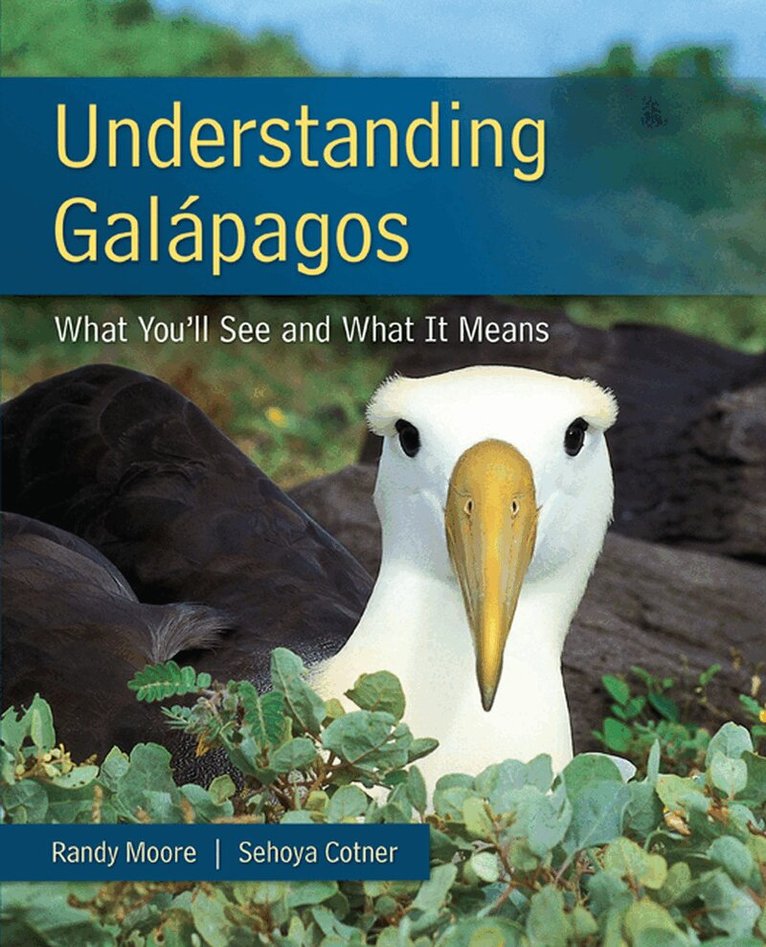
    Understanding Galapagos

    AvRandy Moore,Sehoya Cotner

    Häftad, Engelska, 2013

    1 066 kr

    Tillfälligt slut

    Beskrivning

    We wanted a book that includes up-to-date information about evolution in Galápagos, yet is accessibleby professional biologists, laypeople, students, armchair travelers, and the merely curious. Namingthe endemic-and often curious-organisms in Galápagos from checklists can be rewarding; that's whyyou will find checklists of the islands' iconic species in this book (Chapter 12). But understanding whatyou see is a different adventure, and that is one thing that we hope distinguishes this book from others.In short, we wanted to write a book that would help you not lust identify what you see, but understandwhat you see. Such an understanding goes beyond identification guides and traditional natural historyand requires a context that includes the islands' biology, geology, climate, and history.

    In this book, you will find discussions (and checklists) of the native and endemic organisms you'llsee, especially the iconic ones such as penguins, land and marine iguanas, finches, giant tortoises,and albatrosses (see color images). However, we have not described all of the organisms on theislands-after all, there are more than 600 species of lichens and 2,9OO species of marine organisms,not to mention the more than 50 families, 300 genera, and 370 species of endemic and nativebeetles. Similarly, we discuss many, but not all, of the most troublesome introduced species (at lastcount, there were more than 1,400 such species). We have focused on the native and endemic "stars"of Galápagos that fill tourists' must-see lists.

    Although our book emphasizes evolution, we have also addressed several other topics, for evolutioncannot be understood without a corresponding understanding of its context: namely, the geology,climate, and historical impact of humans on the ecosystem. This is why you will find discussions of theislands' geology, weather, trails, and Visitor Sites in this book.

    We also wrote this book to emphasize the importance of preserving Galápagos, as well as to helpreaders understand the challenges facing the islands.

    To ensure accuracy and consistency, the information in this book was derived from visiting theislands more than 30 times over many years; talking with numerous Galápagos National Park Serviceguides, boat captains, boat crews, school teachers and other residents of Galápagos, and former prisonersat the Wall of Tears penal colony; documenting the GPS coordinates of more than 350 sites,usually with two independent GNPS units (Appendix 1); studying documents at a variety of libraries,research stations, and related locations such as GNPS, Charles Darwin Research Station, NationalGeospatial Intelligence Agency, and Instituto Oceanografico de la Armada; being on the bridge withboat captains in the most challenging conditions and regions of the islands (Appendix 2); and, whennecessary, hiking, scuba diving, and interviewing local residents to resolve controversies (e.g., theexact location of Jessica; see Chapter 11).

    Produktinformation

    • Utgivningsdatum:2013-01-16
    • Mått:185 x 231 x 17 mm
    • Vikt:671 g
    • Format:Häftad
    • Språk:Engelska
    • Antal sidor:448
    • Förlag:McGraw-Hill Education
    • ISBN:9780073532288

    Utforska kategorier

    • Antropologi inom Samhälle och politik

    Mer om författaren

    In addition to writing numerous articles and textbooks, he is Editor-in-Chief of the American Biology Teacher. Randy was awarded the 1993 Teacher Exemplar Award by the National Association of Biology Teachers (NABT). Other awards and honors include a Fulbright Scholarship, a listing in the Who's Who in Science and Engineering, 1986 Most Outstanding Teacher from Baylor University, and 1980 Most Outstanding Teaching Assistant from UCLA. He received his Ph.D. in Plant Development from UCLA

    Innehållsförteckning

    • Chapter 1 Evolution and the Galápagos ArchipelagoChapter 2 History of GalápagosChapter 3 Geology and Climate in GalápagosChapter 4 The Islands: Where You’ll Go and What You’ll SeeChapter 5 BirdsChapter 6 ReptilesChapter 7 MammalsChapter 8 FishChapter 9 InvertebratesChapter 10 PlantsChapter 11 Conservation in GalápagosChapter 12 A Checklist of Common Native and Endemic Organisms in GalápagosAppendix 1 GPS Coordinates of Various Sites in GalápagosAppendix 2 Getting Around GalápagosAppendix 3 Darwin’s Name in GalápagosAppendix 4 Rules of Galápagos National Park Appendix 5 Diving in Galápagos Appendix 6 Photography in GalápagosAppendix 7 What to PackAppendix 8 Friends of GalápagosReferencesGlossaryPhoto CreditsIndex