• Fri frakt över 249 kr
  • •
  • Snabba leveranser
  • •
  • Billiga böcker
Kundservice

Du är på sajten för privatpersoner.

Företag, bibliotek eller offentlig verksamhet?

Du handlar på classic.bokus.com, där alla dina funktioner finns intakta.
Till classic.bokus.com
Bokus logotyp. Gå till startsidan.
  • Erbjudanden
  • Nyheter
  • Student
  • Topplistor
  • Barn & ungdom
  • Bokus Play
  • E-böcker
  • Pocketböcker
  • Spel & pussel

10% rabatt på allt med kod: NYSTART10 →

Sidfot

Mina sidor

    Hjälp

    • Kundservice
    • Vanliga frågor och svar
    • Frakt och leverans
    • Retur vid ångerrätt
    • Reklamera vara
    • Betalning
    • Köpvillkor
    • Allmänna villkor
    • Information om webbplatsens tillgänglighet

    Om Bokus

    • Om oss
    • Pressrum
    • För studenter
    • För företag
    • För bibliotek och offentlig verksamhet
    • För leverantörer
    • Hållbarhet

    Populärt

    • Aktuella erbjudanden
    • Presentkort
    • Studentlitteratur
    • Nya böcker
    • Topplistor
    • Signerade böcker
    • Engelska böcker

    Inspiration

    • Boktips
    • BookTok
    • Populära bokserier
    • Barnbokskaraktärer
    • Populära författare
    Logotyp för Bokus
    Följ oss på Facebook (extern länk)Följ oss på Instagram (extern länk)Följ oss på YouTube (extern länk)Följ oss på TikTok (extern länk)
    bokus @ CookiesAnpassa cookiesIntegritetspolicyKöpvillkor
    Till Citymail hemsida (extern länk)Till Budbee hemsida (extern länk)Till Postnord hemsida (extern länk)Till Schenker hemsida (extern länk)Till Early Bird hemsida (extern länk)Till Walleys hemsida (extern länk)
    1. Naturvetenskap och teknik
    2. Teknik och industri
    3. Energiteknik

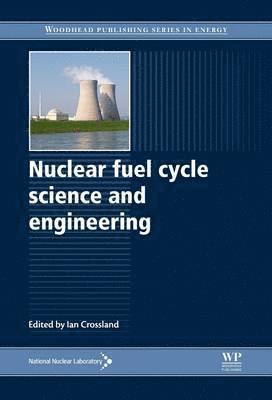
    Nuclear Fuel Cycle Science and Engineering

    AvIan Crossland

    Häftad, Engelska, 2016

    Del i serien Woodhead Publishing Series in Energy

    2 599 kr

    Beställningsvara. Skickas inom 10-15 vardagar. Fri frakt över 249 kr.

    Beskrivning

    The nuclear fuel cycle is characterised by the wide range of scientific disciplines and technologies it employs. The development of ever more integrated processes across the many stages of the nuclear fuel cycle therefore confronts plant manufacturers and operators with formidable challenges. Nuclear fuel cycle science and engineering describes both the key features of the complete nuclear fuel cycle and the wealth of recent research in this important field.Part one provides an introduction to the nuclear fuel cycle. Radiological protection, security and public acceptance of nuclear technology are considered, along with the economics of nuclear power. Part two goes on to explore materials mining, enrichment, fuel element design and fabrication for the uranium and thorium nuclear fuel cycle. The impact of nuclear reactor design and operation on fuel element irradiation is the focus of part three, including water and gas-cooled reactors, along with CANDU and Generation IV designs. Finally, part four reviews spent nuclear fuel and radioactive waste management.With its distinguished editor and international team of expert contributors, Nuclear fuel cycle science and engineering provides an important review for all those involved in the design, fabrication, use and disposal of nuclear fuels as well as regulatory bodies and researchers in this field.

    • Provides a comprehensive and holistic review of the complete nuclear fuel cycle
    • Reviews the issues presented by the nuclear fuel cycle, including radiological protection and security, public acceptance and economic analysis
    • Discusses issues at the front-end of the fuel cycle, including uranium and thorium mining, enrichment and fuel design and fabrication

    Produktinformation

    • Utgivningsdatum:2016-08-19
    • Mått:156 x 234 x 33 mm
    • Vikt:900 g
    • Format:Häftad
    • Språk:Engelska
    • Serie:Woodhead Publishing Series in Energy
    • Antal sidor:648
    • Förlag:Elsevier Science
    • ISBN:9780081016114

    Utforska kategorier

    • Energiteknik inom Naturvetenskap och teknik

    Mer om författaren

    Dr Ian Crossland is the Director of Crossland Consulting Ltd. Dr Crossland has over 40 years experience in the UK nuclear power industry. He is an independent consultant for the International Atomic Energy Agency (IAEA) as well as several national radioactive waste management bodies in Europe.

    Innehållsförteckning

    • Contributor contact detailsWoodhead Publishing Series in EnergyNational Nuclear LaboratoryPart I: Introduction to the nuclear fuel cycleChapter 1: Nuclear power: origins and outlookAbstract:1.1 The rise of nuclear power: 1938 to 19701.2 The fall: 1970 to the mid-1990s1.3 The resurgence: the mid-1990s to the present day1.4 Future trendsChapter 2: Radiological protection and the nuclear fuel cycleAbstract:2.1 Introduction2.2 The international system of radiological protection2.3 International safety standards2.4 International Atomic Energy Agency (IAEA) safety requirements and guidance for radiation protection2.5 Radiation protection in the nuclear fuel cycle2.6 Conclusions and future trends2.8 Appendix: Requirements of the International Basic Safety Standards relevant to radiological safety in the nuclear fuel cycleChapter 3: Safeguards, security, safety and the nuclear fuel cycleAbstract:3.1 Introduction3.2 Nuclear safeguards3.3 Nuclear security3.4 Nuclear safety3.5 Conclusion and future trends3.6 Sources of further information and adviceChapter 4: Public acceptability of nuclear technologyAbstract:4.1 Introduction4.2 Historical background4.3 Investigating determinants of acceptability of nuclear technology4.4 Beyond an instrumental approach to public acceptability4.5 Future trendsChapter 5: The economics of nuclear powerAbstract:5.1 Introduction5.2 Levelised cost of electricity (LCOE)5.3 Financing of NPPs5.4 Conclusions5.5 Future trendsPart II: Uranium and thorium nuclear fuel cycles: materials mining, enrichment and fuel element design and fabricationChapter 6: Mining and milling of uraniumAbstract:6.1 Introduction6.2 Uranium mining and milling6.3 World uranium mines6.4 Environmental and social impacts6.5 Secondary sources of uranium6.6 Conclusion and future trendsChapter 7: Uranium conversion and enrichmentAbstract:7.1 Introduction7.2 Uranium hexafluoride7.3 Conversion7.4 Enrichment7.5 Uranium hexafluoride quality, sampling and analysis7.6 Tails management7.7 Transport cylinder management7.8 Nuclear safeguards7.9 Future trendsChapter 8: Development of the thorium fuel cycleAbstract:8.1 Reasons for considering the thorium cycle8.2 History and development of the thorium fuel cycle8.3 Key technological features of the thorium fuel cycle and industrial challenges8.4 Generic issues linked to the deployment of the thorium fuel cycle8.5 ConclusionChapter 9: Nuclear fuel assembly design and fabricationAbstract:9.1 Introduction9.2 Principal design features of LWR fuel assemblies9.3 Basic reactor physics affecting fuel assembly design9.4 Fuel rod design and fabrication9.5 Fuel forms9.6 Factors affecting fuel rod endurance9.7 Future trends9.8 Sources of further informationPart III: Impact of nuclear reactor design and operation on fuel element irradiationChapter 10: Water cooled thermal reactor designs, operation and fuel cycleAbstract:10.1 Introduction10.2 Main characteristic of LWRs10.3 Pressurised water reactor (PWR) design features10.4 Factors affecting reactivity and their impact on PWR reactor design10.5 PWR core design10.6 Boiling water reactor (BWR) design features10.7 Factors affecting reactivity and their impact on BWR reactor design10.8 BWR core and fuel assembly design10.9 Safety features and issues10.10 Advantages and limitations10.11 Future trends10.12 Sources of further informationChapter 11: CANDU nuclear reactor designs, operation and fuel cycleAbstract:11.1 Introduction11.2 CANDU reactor features11.3 CANDU fuel and refuelling11.4 CANDU reactor control and safety11.5 Future trendsChapter 12: Gas-cooled nuclear reactor designs, operation and fuel cycleAbstract:12.1 Introduction12.2 Magnox reactors12.3 The advanced gas-cooled reactor (AGR)12.3.5 Fuel storage12.3.6 Waste management and decommissioning12.4 Safety features and issues12.5 The high-temperature gas-cooled reactor (HTGR)12.5.2 Main plant features12.5.3 Fuel design and refuelling12.6 AcknowledgementsChapter 13: Generation IV reactor designs, operation and fuel cycleAbstract:13.1 Introduction13.2 General issues in developing sustainable fuel cycles13.3 The Generation IV Initiative13.4 Common Generation IV requirements for fuels and fuel cycles13.5 The very high-temperature reactor (VHTR) and its fuel cycle13.6 The supercritical water-cooled reactor (SCWR) and its fuel cycle13.7 The molten salt reactor (MSR) and its fuel cycle13.8 The sodium-cooled fast reactor (SFR) and its fuel cycle13.9 The lead-cooled fast reactor (LFR) and its fuel cycle13.10 The gas-cooled fast reactor (GFR) and its fuel cycle13.11 Future trends13.12 Sources of further information and adviceChapter 14: Understanding and modelling fuel behaviour under irradiationAbstract:14.1 Introduction14.2 Description of important phenomena14.3 Modelling fuel behaviour under irradiation14.4 Sources of further informationPart IV: Spent nuclear fuel and radioactive waste managementChapter 15: Nuclear management of spent fuel from power reactorsAbstract:15.1 Types of nuclear reactors and nuclear fuel arisings15.2 International initiatives in spent fuel management15.3 Characteristics of spent nuclear fuel15.4 Spent fuel management strategies15.5 Spent fuel storage15.6 Spent fuel disposal15.7 Spent fuel reprocessing and recycling15.8 High-level radioactive waste (HLW) storage and disposalChapter 16: Reprocessing of spent oxide fuel from nuclear power reactorsAbstract:16.1 Introduction: closed and open cycles16.2 Targets and constraints of reprocessing16.3 Main industrial reprocessing process (PUREX)16.4 Reprocessing plant16.5 Reprocessing: industrial organization16.6 Closed cycles16.7 Future trends16.8 Sources of further information and advice16.9 Appendix: Industrial-scale reprocessing of spent oxide fuel in selected countriesChapter 17: Partitioning and transmutation of spent nuclear fuel and radioactive wasteAbstract:17.1 Introduction17.2 Physics of transmutation17.3 Transmutation in different types of reactors17.4 Implementation scenarios17.5 Potential benefits of P&T for a repository17.6 Future trends and R&D challenges17.7 Conclusions17.8 AcknowledgementChapter 18: Disposal of radioactive wasteAbstract:18.1 Introduction18.2 Nature of radioactive waste18.3 Pre-disposal18.4 Framework for disposal18.5 Modern disposal practice18.6 Future trends18.7 Sources of further information and adviceChapter 19: Packaging and transport of radioactive material in the nuclear fuel cycleAbstract:19.1 Introduction19.2 Safety and security in the packaging and transport of radioactive material19.3 Governing international regulatory security principles and guidance in radioactive materials’ packaging and transport19.4 Regulatory requirements for packages and transport19.5 Transport experience and operations19.6 Current technologies and future trends19.8 AcknowledgementsCo-operation in the field of nuclear power: An overview of non-commercial international nuclear power organisationsIndex