• Fri frakt över 249 kr
  • •
  • Snabba leveranser
  • •
  • Billiga böcker
Kundservice

Du är på sajten för privatpersoner.

Företag, bibliotek eller offentlig verksamhet?

Du handlar på classic.bokus.com, där alla dina funktioner finns intakta.
Till classic.bokus.com
Bokus logotyp. Gå till startsidan.
  • Erbjudanden
  • Nyheter
  • Student
  • Topplistor
  • Barn & ungdom
  • Bokus Play
  • E-böcker
  • Pocketböcker
  • Spel & pussel

10% rabatt på allt med kod: NYSTART10 →

Sidfot

Mina sidor

    Hjälp

    • Kundservice
    • Vanliga frågor och svar
    • Frakt och leverans
    • Retur vid ångerrätt
    • Reklamera vara
    • Betalning
    • Köpvillkor
    • Allmänna villkor
    • Information om webbplatsens tillgänglighet

    Om Bokus

    • Om oss
    • Pressrum
    • För studenter
    • För företag
    • För bibliotek och offentlig verksamhet
    • För leverantörer
    • Hållbarhet

    Populärt

    • Aktuella erbjudanden
    • Presentkort
    • Studentlitteratur
    • Nya böcker
    • Topplistor
    • Signerade böcker
    • Engelska böcker

    Inspiration

    • Boktips
    • BookTok
    • Populära bokserier
    • Barnbokskaraktärer
    • Populära författare
    Logotyp för Bokus
    Följ oss på Facebook (extern länk)Följ oss på Instagram (extern länk)Följ oss på YouTube (extern länk)Följ oss på TikTok (extern länk)
    bokus @ CookiesAnpassa cookiesIntegritetspolicyKöpvillkor
    Till Citymail hemsida (extern länk)Till Budbee hemsida (extern länk)Till Postnord hemsida (extern länk)Till Schenker hemsida (extern länk)Till Early Bird hemsida (extern länk)Till Walleys hemsida (extern länk)
    1. Naturvetenskap och teknik
    2. Teknik och industri
    3. Agronomi och lantbruk

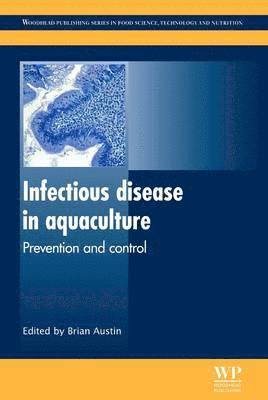
    Infectious Disease in Aquaculture

    Prevention and Control

    AvB Austin

    Häftad, Engelska, 2016

    Del i serien Woodhead Publishing Series in Food Science, Technology and Nutrition

    2 437 kr

    Beställningsvara. Skickas inom 10-15 vardagar. Fri frakt över 249 kr.

    Beskrivning

    With an ever increasing demand for seafood that cannot be met by capture fisheries alone, growing pressure is being placed on aquaculture production. However, infectious diseases are a major constraint. Infectious disease in aquaculture: prevention and control brings together a wealth of recent research on this problem and its effective management.

    Part one considers the innate and adaptive immune responses seen in fish and shellfish together with the implications of these responses for disease control. The specific immune response of molluscs and crustaceans is considered in depth, along with the role of stress in resistance to infection. Advances in disease diagnostics, veterinary drugs and vaccines are discussed in part two, with quality assurance, the use and effects of antibiotics and anti-parasitic drugs in aquaculture, and developments in vaccination against fish are explored. Part three focuses on the development of specific pathogen-free populations and novel approaches for disease control. Specific pathogen free shrimp stocks, developments in genomics and the use of bacteria and bacteriophages as biological agents for disease control are explored, before the management and use of natural antimicrobial compounds.

    With its distinguished editor and expert team of contributors, Infectious disease in aquaculture: prevention and control provides managers of aquaculture facilities and scientists working on disease in aquaculture with a comprehensive and systematic overview of essential research in the prevention and control of infectious disease.

    • Collates a wealth of recent research on infectious disease and its effective management in aquaculture production
    • Considers the innate and adaptive immune responses seen in fish and shelfish and the implications for disease control
    • Discusses advances in disease diagnostics, veterinary drugs and vaccines

    Produktinformation

    • Utgivningsdatum:2016-08-19
    • Mått:156 x 234 x 29 mm
    • Vikt:770 g
    • Format:Häftad
    • Språk:Engelska
    • Serie:Woodhead Publishing Series in Food Science, Technology and Nutrition
    • Antal sidor:560
    • Förlag:Elsevier Science
    • ISBN:9780081016336

    Utforska kategorier

    • Agronomi och lantbruk inom Naturvetenskap och teknik

    Mer om författaren

    Brian Austin is the Director of the Institute of Aquaculture and Professor of Microbiology at the University of Stirling. He is internationally-known for his research on infectious disease in aquaculture.

    Innehållsförteckning

    • Contributor contact detailsWoodhead Publishing Series in Food Science, Technology and NutritionPrefacePart I: Immune responses in fish and shellfish and their implications for disease controlChapter 1: The innate and adaptive immune system of fishAbstract:1.1 Introduction1.2 Overview of immune cells and organs in fish1.3 Fish innate immune response1.4 An overview of the adaptive immune response in fish1.5 Immune regulation: the cytokine network in fish1.6 ConclusionsChapter 2: Crustacean immune responses and their implications for disease controlAbstract:2.1 Introduction2.2 Cellular defence2.3 Hematopoiesis2.4 Defence against viruses2.5 Pattern recognition in crustaceans2.6 The prophenoloxidase (proPO) cascade2.7 Coagulation2.8 Antimicrobial proteins2.9 Future trends and conclusionsChapter 3: Immune responses in molluscs and their implications for disease controlAbstract:3.1 Introduction3.2 The molluscan immune system3.3 Disease control in bivalves3.4 Conclusions3.5 AcknowledgementsChapter 4: Stress and resistance to infectious diseases in fishAbstract:4.1 Introduction: disease is not just the presence of pathogens4.2 Fish immune and stress responses4.3 Individual variability and population level effects4.4 ConclusionsPart II: Advances in disease diagnostics, veterinary drugs and vaccinesChapter 5: Advances in diagnostic methods for mollusc, crustacean and finfish diseasesAbstract:5.1 Introduction5.2 Mollusc disease diagnostic methods5.3 Crustacean disease diagnostic methods5.4 Finfish disease diagnostic methods5.5 Future trendsChapter 6: Quality assurance in aquatic disease diagnosticsAbstract:6.1 Introduction6.2 The importance of valid and reliable aquatic disease diagnosis and the role of quality assurance systems6.3 Sampling submission and handling for aquatic disease diagnosis6.4 The importance of assay performance in aquatic disease diagnosis6.5 Validation of quality assurance systems for aquatic diagnostic facilities6.6 Interpreting and reporting results under a quality assurance system6.7 Accreditation and auditing of disease diagnostic laboratories6.8 ConclusionsChapter 7: Antibiotics in aquaculture: reducing their use and maintaining their efficacyAbstract:7.1 Introduction7.2 The epidemiology and aetiology of bacterial diseases in aquatic animals7.3 The use of antibiotics in aquaculture7.4 Efficacy of antimicrobial therapy in aquaculture7.5 Laboratory detection of clinical resistance7.6 The Clinical and Laboratory Science Institute (CLSI) approach to susceptibility testing in aquaculture7.7 Questions concerning the CLSI approach7.8 Future trends: the way forward for susceptibility testing7.9 Conclusions7.10 AcknowledgementsChapter 8: Considerations for the use of anti-parasitic drugs in aquacultureAbstract:8.1 Introduction8.2 Factors in successful treatment with anti-parasitic drugs8.3 Trigger points for treatment with anti-parasitic drugs in aquaculture8.4 Future trendsChapter 9: Developments in vaccination against fish bacterial diseaseAbstract:9.1 Introduction9.2 Methods of administration of vaccines for fish9.3 Determination of effectiveness of the vaccines9.4 Vaccine composition9.5 Mode of action of vaccines9.6 ConclusionsChapter 10: Developments in adjuvants for fish vaccinesAbstract:10.1 Introduction10.2 Fish immune responses: implications for the development of vaccines and adjuvants10.3 Oil-adjuvanted fish vaccines10.4 Vaccines adjuvanted with substances other than oil10.5 Future trends and conclusions10.6 AcknowledgementsPart III: Development of specific pathogen-free populations and novel approaches for disease controlChapter 11: Development of specific pathogen-free (SPF) shrimp stocks and their application to sustainable shrimp farmingAbstract:11.1 Introduction11.2 A historical perspective on the concept of domesticated specific pathogen-free (SPF) shrimp11.3 The development of Litopenaeus vannamei as the dominant species in the Americas11.4 The adaptation of the specific pathogen-free (SPF) concept to domesticated shrimp stocks11.5 Maintenance of specific pathogen-free (SPF) status: disease surveillance and control programs11.6 Conclusions11.7 AcknowledgementsChapter 12: The role of risk analysis in the development of biosecurity programmes for the maintenance of specific pathogen-free populationsAbstract:12.1 Introduction12.2 Aquaculture disease risk analysis12.3 Application of risk analysis to surveillance and biosecurity strategies12.4 Constraints and future trends12.5 ConclusionsChapter 13: Developments in genomics relevant to disease control in aquacultureAbstract:13.1 Introduction13.2 The genomics toolbox in comparative immunology13.3 Genomics in finfish disease control13.4 Genomics in shellfish and crustacean disease control13.5 Future trendsChapter 14: Bacteria and bacteriophages as biological agents for disease control in aquacultureAbstract:14.1 Introduction14.2 Isolation of bacteria for biocontrol14.3 Antagonistic activity of bacterial agents14.4 Colonization and persistence within the host14.5 Considerations for the design of pathogen challenge tests14.6 Safety of bacterial biocontrol agents and perspectives on future development14.7 Biocontrol using bacteriophages14.8 Strengths and challenges to phage biocontrol14.9 Future trendsChapter 15: Managing the microbiota in aquaculture systems for disease prevention and controlAbstract:15.1 Introduction15.2 Control strategies against diseases15.3 The microbial maturation concept15.4 Manipulating type and number of bacteria: probiotics and prebiotics15.5 Managing bacterial activity by means of quorum sensing (QS)15.6 Host–microbe interactions affecting host health in aquaculture: the need for knowledge15.7 Conclusions15.8 AcknowledgementsChapter 16: Natural antimicrobial compounds for use in aquacultureAbstract:16.1 Introduction: microbial diseases in aquaculture16.2 Current problems in microbial disease control16.3 Public health and ethical issues relating to the use of antibiotics for disease control in aquaculture16.4 Alternative antimicrobial compounds16.5 Origin of alternative antimicrobials16.6 Plant antimicrobials16.7 Possible mode of action of herbal antimicrobials16.8 Routes of administration of antimicrobial herbal extracts to fish and shrimps16.9 ConclusionsChapter 17: The potential for antimicrobial peptides to improve fish health in aquacultureAbstract:17.1 Introduction17.2 Strategies for preventing disease in fish17.3 Antimicrobial peptides (AMPs)17.4 The potential role of antimicrobial peptides in preventing and treating fish diseases17.5 Future trends and conclusions17.6 AcknowledgementsChapter 18: Advances in non-chemical methods for parasite prevention and control in fishAbstract:18.1 Introduction18.2 Principles of disease management without chemicals18.3 Preventative measures18.4 Disease management18.5 Interventions for parasite prevention and control in fish18.6 ConclusionsIndex