• Fri frakt över 249 kr
  • •
  • Snabba leveranser
  • •
  • Billiga böcker
Kundservice

Du är på sajten för privatpersoner.

Företag, bibliotek eller offentlig verksamhet?

Du handlar på classic.bokus.com, där alla dina funktioner finns intakta.
Till classic.bokus.com
Bokus logotyp. Gå till startsidan.
  • Erbjudanden
  • Nyheter
  • Student
  • Topplistor
  • Barn & ungdom
  • Bokus Play
  • E-böcker
  • Pocketböcker
  • Spel & pussel

10% rabatt på allt med kod: NYSTART10 →

Sidfot

Mina sidor

    Hjälp

    • Kundservice
    • Vanliga frågor och svar
    • Frakt och leverans
    • Retur vid ångerrätt
    • Reklamera vara
    • Betalning
    • Köpvillkor
    • Allmänna villkor
    • Information om webbplatsens tillgänglighet

    Om Bokus

    • Om oss
    • Pressrum
    • För studenter
    • För företag
    • För bibliotek och offentlig verksamhet
    • För leverantörer
    • Hållbarhet

    Populärt

    • Aktuella erbjudanden
    • Presentkort
    • Studentlitteratur
    • Nya böcker
    • Topplistor
    • Signerade böcker
    • Engelska böcker

    Inspiration

    • Boktips
    • BookTok
    • Populära bokserier
    • Barnbokskaraktärer
    • Populära författare
    Logotyp för Bokus
    Följ oss på Facebook (extern länk)Följ oss på Instagram (extern länk)Följ oss på YouTube (extern länk)Följ oss på TikTok (extern länk)
    bokus @ CookiesAnpassa cookiesIntegritetspolicyKöpvillkor
    Till Citymail hemsida (extern länk)Till Budbee hemsida (extern länk)Till Postnord hemsida (extern länk)Till Schenker hemsida (extern länk)Till Early Bird hemsida (extern länk)Till Walleys hemsida (extern länk)
    1. Naturvetenskap och teknik
    2. Teknik och industri
    3. Maskinteknik och material

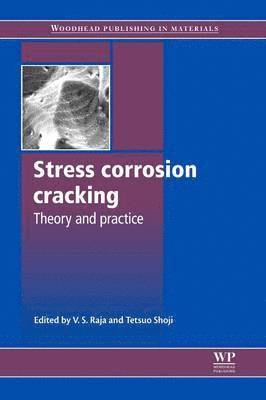
    Stress Corrosion Cracking

    Theory and Practice

    AvV S Raja,Tetsuo Shoji

    Häftad, Engelska, 2016

    Del i serien Woodhead Publishing Series in Metals and Surface Engineering

    2 989 kr

    Beställningsvara. Skickas inom 10-15 vardagar. Fri frakt över 249 kr.

    Beskrivning

    The problem of stress corrosion cracking (SCC), which causes sudden failure of metals and other materials subjected to stress in corrosive environment(s), has a significant impact on a number of sectors including the oil and gas industries and nuclear power production. Stress corrosion cracking reviews the fundamentals of the phenomenon as well as examining stress corrosion behaviour in specific materials and particular industries.

    The book is divided into four parts. Part one covers the mechanisms of SCC and hydrogen embrittlement, while the focus of part two is on methods of testing for SCC in metals. Chapters in part three each review the phenomenon with reference to a specific material, with a variety of metals, alloys and composites discussed, including steels, titanium alloys and polymer composites. In part four, the effect of SCC in various industries is examined, with chapters covering subjects such as aerospace engineering, nuclear reactors, utilities and pipelines.

    With its distinguished editors and international team of contributors, Stress corrosion cracking is an essential reference for engineers and designers working with metals, alloys and polymers, and will be an invaluable tool for any industries in which metallic components are exposed to tension, corrosive environments at ambient and high temperatures.

    • Examines the mechanisms of stress corrosion cracking (SCC) presenting recognising testing methods and materials resistant to SCC
    • Assesses the effect of SCC on particular metals featuring steel, stainless steel, nickel-based alloys, magnesium alloys, copper-based alloys and welds in steels
    • Reviews the monitoring and management of SCC and the affect of SCC in different industries such as petrochemical and aerospace

    Produktinformation

    • Utgivningsdatum:2016-08-19
    • Mått:156 x 234 x 41 mm
    • Vikt:1 120 g
    • Format:Häftad
    • Språk:Engelska
    • Serie:Woodhead Publishing Series in Metals and Surface Engineering
    • Antal sidor:816
    • Förlag:Elsevier Science
    • ISBN:9780081016466

    Utforska kategorier

    • Maskinteknik och material inom Naturvetenskap och teknik

    Mer om författaren

    Prof. V.S Raja received his doctorate from the Indian Institute of Science in Bangalore in 1987, then joined the faculty at the Indian Institute of Technology in Bombay, where he is now the Institute Chair Professor in the Department of Metallurgical Engineering and Materials Science. His research focuses broadly on the field of corrosion. He worked as a guest researcher at Chalmers University of Technology in Sweden, as a Visiting Professor at the University of Nevada in the United States, and as a Guest Scientist at GKSS in Germany and Tohoku University in Japan. He is currently working on numerous corrosion-related challenges in Canada, France, Australia, Belgium, and the Netherlands.He is a member of the CSIR and DRDO laboratories' Research Councils, and he sat on the NACE international research committee from 2009 to 2013. He has garnered multiple national accolades and is a NACE fellow as a result of his efforts. Tetsuo Shoji is Professor at the Fracture and Reliability Research Institute at Tohoku University, Japan.

    Innehållsförteckning

    • Contributor contact detailsList of reviewersForewordPrefacePart I: Fundamental aspects of stress corrosion cracking (SCC) and hydrogen embrittlementChapter 1: Mechanistic and fractographic aspects of stress-corrosion cracking (SCC)Abstract:1.1 Introduction1.2 Quantitative measures of stress-corrosion cracking (SCC)1.3 Basic phenomenology of stress-corrosion cracking (SCC)1.4 Metallurgical variables affecting stress-corrosion cracking (SCC)1.5 Environmental variables affecting stress-corrosion cracking (SCC)1.6 Surface-science observations1.7 Proposed mechanisms of stress-corrosion cracking (SCC)1.8 Determining the viability and applicability of stress-corrosion cracking (SCC) mechanisms1.9 Transgranular stress-corrosion cracking (T-SCC) in model systems1.10 Intergranular stress-corrosion cracking (I-SCC) in model systems1.11 Stress-corrosion cracking (SCC) in some commercial alloys1.12 General discussion of stress-corrosion cracking (SCC) mechanisms1.13 Conclusions1.14 AcknowledgementsChapter 2: Hydrogen embrittlement (HE) phenomena and mechanismsAbstract:2.1 Introduction2.2 Proposed mechanisms of hydrogen embrittlement (HE) and supporting evidence2.3 Relative contributions of various mechanisms for different fracture modes2.4 General comments2.5 ConclusionsPart II: Test methods for determining stress corrosion cracking (SCC) susceptibilitiesChapter 3: Testing and evaluation methods for stress corrosion cracking (SCC) in metalsAbstract:3.1 Introduction3.2 General aspects of stress corrosion cracking (SCC) testing3.3 Smooth specimens3.4 Pre-cracked specimens – the fracture mechanics approach to stress corrosion cracking (SCC)3.5 The elastic-plastic fracture mechanics approach to stress corrosion cracking (SCC)3.6 The use of stress corrosion cracking (SCC) data3.7 Standards and procedures for stress corrosion cracking (SCC) testing3.8 Future trendsPart III: Stress corrosion cracking (SCC) in specific materialsChapter 4: Stress corrosion cracking (SCC) in low and medium strength carbon steelsAbstract:4.1 Introduction4.2 Dissolution-dominated stress corrosion cracking (SCC)4.3 Hydrogen embrittlement-dominated stress corrosion cracking (SCC)4.4 ConclusionsChapter 5: Stress corrosion cracking (SCC) in stainless steelsAbstract:5.1 Introduction to stainless steels5.2 Introduction to stress corrosion cracking (SCC) of stainless steels5.3 Environments causing stress corrosion cracking (SCC)5.4 Effect of chemical composition on stress corrosion cracking (SCC)5.5 Microstructure and stress corrosion cracking (SCC)5.6 Nature of the grain boundary and stress corrosion cracking (SCC)5.7 Residual stress and stress corrosion cracking (SCC)5.8 Surface finishing and stress corrosion cracking (SCC)5.9 Other fabrication techniques and stress corrosion cracking (SCC)5.10 Controlling stress corrosion cracking (SCC)5.11 Sources of further information5.12 ConclusionsChapter 6: Factors affecting stress corrosion cracking (SCC) and fundamental mechanistic understanding of stainless steelsAbstract:6.1 Introduction6.2 Metallurgical/material factors6.3 Environmental factors6.4 Mechanical factors6.5 Elemental mechanism and synergistic effects for complex stress corrosion cracking (SCC) systems6.6 Typical components and materials used in ressurized water reactors (PWR) and boiling Water reactors (BWR)Chapter 7: Stress corrosion cracking (SCC) of nickel-based alloysAbstract:7.1 Introduction7.2 The family of nickel alloys7.3 Environmental cracking behavior of nickel alloys7.4 Resistance to stress corrosion cracking (SCC) by application7.5 ConclusionsChapter 8: Stress corrosion cracking (SCC) of aluminium alloysAbstract:8.1 Introduction8.2 Stress corrosion cracking (SCC) mechanisms8.3 Factors affecting stress corrosion cracking (SCC)8.4 Stress corrosion cracking (SCC) of weldments8.5 Stress corrosion cracking (SCC) of aluminium composites8.6 ConclusionsChapter 9: Stress corrosion cracking (SCC) of magnesium alloysAbstract:9.1 Introduction9.2 Alloy influences9.3 Influence of loading9.4 Environmental influences9.5 Mechanisms9.6 Recommendations to avoid stress corrosion cracking (SCC)9.7 Conclusions9.8 AcknowledgementsChapter 10: Stress corrosion cracking (SCC) and hydrogen-assisted cracking in titanium alloysAbstract:10.1 Introduction10.2 Corrosion resistance of titanium alloys10.3 Stress corrosion cracking (SCC) of titanium alloys10.4 Hydrogen degradation of titanium alloys10.5 Conclusions10.6 AcknowledgementsChapter 11: Stress corrosion cracking (SCC) of copper and copper-based alloysAbstract:11.1 Introduction11.2 Stress corrosion crackin (SCC) mechanisms11.3 Stress corrosion cracking (SCC) of copper and copper-based alloys11.4 Role of secondary phase particles11.5 Stress corrosion cracking (SCC) mitigation strategies11.6 ConclusionsChapter 12: Stress corrosion cracking (SCC) of austenitic stainless and ferritic steel weldmentsAbstract:12.1 Introduction12.2 Effect of welding defects on weld metal corrosion12.3 Stress corrosion cracking (SCC) of austenitic stainless steel weld metal12.4 Welding issues in ferritic steels12.5 ConclusionsChapter 13: Stress corrosion cracking (SCC) in polymer compositesAbstract:13.1 Introduction13.2 Stress corrosion cracking (SCC) of short fiber reinforced polymer injection moldings13.3 Stress corrosion cracking (SCC) evaluation of glass fiber reinforced plastics (GFRPs) in synthetic sea water13.4 Fatigue crack propagation mechanism of glass fiber reinforced plastics (GFRP) in synthetic sea water13.5 Aging crack propagation mechanisms of natural fiber reinforced polymer composites13.6 Aging of biodegradable composites based on natural fiber and polylactic acid (PLA)Part IV: Environmentally assisted cracking problems in various industriesChapter 14: Stress corrosion cracking (SCC) in boilers and cooling water systemsAbstract:14.1 Overview of stress corrosion cracking (SCC) in water systems14.2 Stress corrosion cracking (SCC) in boiler water systems14.3 Stress corrosion cracking (SCC) in cooling water systems14.4 Stress corrosion cracking (SCC) monitoring strategiesChapter 15: Environmentally assisted cracking (EAC) in oil and gas productionAbstract:15.1 Introduction15.2 Overview of oil and gas production15.3 Environmentally assisted cracking (EAC) mechanisms common to oil and gas production15.4 Materials for casing, tubing and other well components15.5 Corrosivity of sour high pressure/high temperature (HPHT) reservoirs15.6 Environmentally assisted cracking (EAC) performance of typical alloys for tubing and casing15.7 Qualification of materials for oil- and gas-field applications15.8 The future of materials selection for oil and gas productionChapter 16: Stress corrosion cracking (SCC) in aerospace vehiclesAbstract:16.1 Introduction16.2 Structures, materials and environments16.3 Material-environment compatibility guidelines16.4 Selected case histories (aircraft)16.5 Preventative and remedial measures16.6 ConclusionsChapter 17: Prediction of stress corrosion cracking (SCC) in nuclear power systemsAbstract:17.1 Introduction17.2 Life prediction approaches17.3 Parametric dependencies and their prediction17.4 Prediction of stress corrosion cracking (SCC) in boiling water reactor (BWR) components17.5 Conclusions17.6 Future trends17.7 Sources of further informationChapter 18: Failures of structures and components by metal-induced embrittlementAbstract:18.1 Introduction18.2 Mechanisms and rate-controlling processes for liquid-metal embrittlement (LME) and solid-metal-induced embrittlement (SMIE)18.3 Evidence for liquid-metal embrittlement (LME) and solid-metal-induced embrittlement (SMIE)18.4 Failure of an aluminium-alloy inlet nozzle in a natural gas plant [22]18.5 Failure of a brass valve in an aircraft-engine oil-cooler [31]18.6 Failure of a screw in a helicopter fuel-control unit [36]18.7 Collapse of a grain-storage silo [37]18.8 Failure of planetary gears from centrifugal gearboxes [39]18.9 Beneficial uses of liquid-metal embrittlement (LME) in failure analysisChapter 19: Stress corrosion cracking in pipelinesAbstract:19.1 Introduction19.2 Mechanisms of stress corrosion cracking (SCC) in pipelines19.3 Factors contributing to stress corrosion cracking (SCC) in pipelines19.4 CANMET studies of near-neutral pH stress corrosion cracking (SCC)19.5 Prevention of stress corrosion cracking (SCC)failures19.6 ConclusionsIndex