
• Fri frakt över 249 kr
  • •
  • Snabba leveranser
  • •
  • Billiga böcker
Kundservice

Du är på sajten för privatpersoner.

Företag, bibliotek eller offentlig verksamhet?

Du handlar på classic.bokus.com, där alla dina funktioner finns intakta.
Till classic.bokus.com
Bokus logotyp. Gå till startsidan.
  • Erbjudanden
  • Nyheter
  • Student
  • Topplistor
  • Barn & ungdom
  • Bokus Play
  • E-böcker
  • Pocketböcker
  • Spel & pussel

10% rabatt på allt med kod NYSTART10 →

Sidfot

Mina sidor

    Hjälp

    • Kundservice
    • Vanliga frågor och svar
    • Frakt och leverans
    • Retur vid ångerrätt
    • Reklamera vara
    • Betalning
    • Köpvillkor
    • Allmänna villkor
    • Information om webbplatsens tillgänglighet

    Om Bokus

    • Om oss
    • Pressrum
    • För studenter
    • För företag
    • För bibliotek och offentlig verksamhet
    • För leverantörer
    • Hållbarhet

    Populärt

    • Aktuella erbjudanden
    • Presentkort
    • Studentlitteratur
    • Nya böcker
    • Topplistor
    • Signerade böcker
    • Engelska böcker

    Inspiration

    • Boktips
    • BookTok
    • Populära bokserier
    • Barnbokskaraktärer
    • Populära författare
    Logotyp för Bokus
    Följ oss på Facebook (extern länk)Följ oss på Instagram (extern länk)Följ oss på YouTube (extern länk)Följ oss på TikTok (extern länk)
    bokus @ CookiesAnpassa cookiesIntegritetspolicyKöpvillkor
    Till Citymail hemsida (extern länk)Till Budbee hemsida (extern länk)Till Postnord hemsida (extern länk)Till Schenker hemsida (extern länk)Till Early Bird hemsida (extern länk)Till Walleys hemsida (extern länk)
    1. Naturvetenskap och teknik
    2. Teknik och industri
    3. Maskinteknik och material

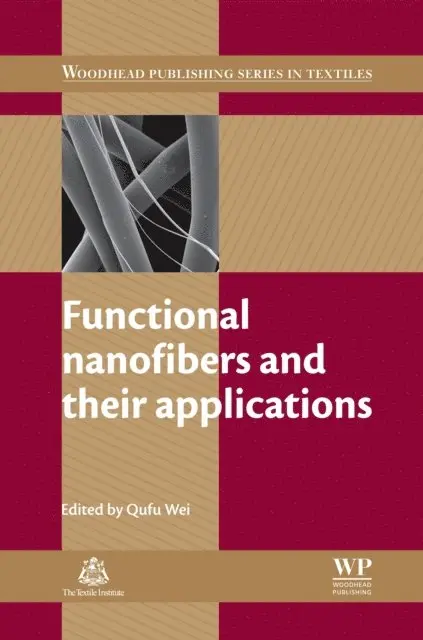
    Functional Nanofibers and their Applications

    AvQ Wei

    Häftad, Engelska, 2016

    Del i serien Woodhead Publishing Series in Textiles

    1 871 kr

    Beställningsvara. Skickas inom 10-15 vardagar. Fri frakt över 249 kr.

    Beskrivning

    Nanofibers are a flexible material with a huge range of potential applications in such areas as technical textiles. Functional nanofibers and their applications summarises key trends in the processing and applications of these exciting materials.

    Part one focuses on the types and processing of nanofibers. Beginning with an overview of the principles and techniques involved in their production, it goes on to review core-shell, aligned, porous and gradient nanofibers. The processing and application of composite functional nanofibers, carbon and polymer nanofiber reinforcements in polymer matrix composites, and inorganic functional nanofibers are then explored in detail, before part one concludes with a consideration of surface functionalization.

    A wide variety of functional nanofiber applications are then reviewed in part two. Following consideration of their use in filtration, drug delivery and tissue engineering applications, the role of functional nanofibers in lithium-ion batteries, sensor applications, protective clothing, food processing and water purification is explored. Discussion of their use in sound absorption, electromagnetic wave attenuation and biomedical and microelectronic applications follows, before a final discussion of future trends.

    With its distinguished editor and international team of expert contributors, Functional nanofibers and applications is a key text for all those working in the fields of technical textiles, as well as areas using nanofibers such as composites, biomaterials and microelectronics.

    • Summarises key trends in the processing and applications of functional nanofibres in areas such as technical textiles
    • Provides an overview of the principles and techniques involved in the production of nanofibres and reviews core-shell, aligned, porous and gradient nanofibres
    • Considers the use of nanofibres in filtration, drug delivery and tissue engineering applications and the role of functional nanofibres in lithium-ion batteries, sensor applications, protective clothing, food processing and water purification

    Produktinformation

    • Utgivningsdatum:2016-08-19
    • Mått:156 x 234 x 23 mm
    • Vikt:620 g
    • Format:Häftad
    • Språk:Engelska
    • Serie:Woodhead Publishing Series in Textiles
    • Antal sidor:448
    • Förlag:Elsevier Science
    • ISBN:9780081016497

    Utforska kategorier

    • Maskinteknik och material inom Naturvetenskap och teknik

    Mer om författaren

    Qufu Wei is Professor of Textiles, Science and Engineering for the Ministry of Education’s Key Laboratory of Eco-textiles, based at Jiangnan University, China.

    Innehållsförteckning

    • Contributor contact detailsWoodhead Publishing Series in TextilesPart I: Types and processingChapter 1: Nanofibers: principles and manufactureAbstract:1.1 Introduction1.2 Principles of electrospinning1.3 Solution electrospinning1.4 Melt electrospinning1.5 Future trendsChapter 2: Types and processing of structured functional nanofibers: core-shell, aligned, porous and gradient nanofibersAbstract:2.1 Introduction2.2 Core-shell nanofibers2.3 Aligned nanofibers2.4 Porous nanofibers2.5 Gradient nanofibers2.6 Applications of structured functional nanofibers2.7 Future trendsChapter 3: Processing of composite functional nanofibersAbstract:3.1 Introduction3.2 Formation of polymer and polymer composite nanofibers3.3 Formation of polymer and nanoparticle composite nanofibers3.4 Formation of polymer and inorganic salt composite nanofibers3.5 Examples and applications of composite functional nanofibers3.6 Future trends3.7 AcknowledgmentsChapter 4: Carbon and polymer nanofiber reinforcements in polymer matrix composites: processing and applicationsAbstract:4.1 Introduction4.2 Composite formation with nanofibers4.3 Strengths and weaknesses of nanofibers in composites4.4 Applications of nanofiber composites4.5 Future trendsChapter 5: Inorganic functional nanofibers: processing and applicationsAbstract:5.1 Introduction5.2 Processing of inorganic nanofibers5.3 Case study: preparation, structure and properties of TiO2 inorganic nanofibers5.4 Doping inorganic nanofibers5.5 Applications of inorganic functional nanofibers5.6 Future trendsChapter 6: Surface functionalization of polymer nanofibersAbstract:6.1 Introduction6.2 Surface functionalization using physical technologies6.3 Surface functionalization using chemical technologies6.4 Surface functionalization using nanotechnologies6.5 Surface functionalization using biotechnology6.6 Future trendsPart II: ApplicationsChapter 7: Functional nanofibers for filtration applicationsAbstract:7.1 Introduction7.2 Key principles of nanofibers for filtration7.3 Filtration of nanoparticles from gas streams7.4 Nanofiber catalyst support structures7.5 Future trends and conclusions7.6 Acknowledgments7.8 Appendix: notationChapter 8: Functional nanofibers for drug delivery applicationsAbstract:8.1 Introduction8.2 Drug delivery mechanisms8.3 Applications of functional nanofibers in drug delivery: a case study8.4 Future trendsChapter 9: Functional nanofibers for tissue engineering applicationsAbstract:9.1 Introduction9.2 Electrospinning of nanofibers9.3 Applications of nanofibers in tissue engineering9.4 ConclusionsChapter 10: Functional nanofibers in lithium-ion batteriesAbstract:10.1 Introduction10.2 Components and materials in lithium-ion batteries10.3 Applications of nanofibers in lithium-ion batteries10.4 Examples of applications of nanofibers10.5 Future trendsChapter 11: Functional nanofibers in sensor applicationsAbstract:11.1 Introduction: modern electrospinning technology11.2 Formation of nanostructured sensing materials11.3 Sensing mechanisms11.4 Future trends and conclusions11.5 AcknowledgmentsChapter 12: Functional nanofibers in clothing for protection against chemical and biological hazardsAbstract:12.1 Introduction12.2 Chemical and biological warfare background12.3 Electrospun nanofibers12.4 The advantages of using electrospun nanofibers in protective clothing12.5 Issues with development of electrospun fibers12.6 Future trendsChapter 13: Functional nanofibers in food processingAbstract:13.1 Introduction13.2 Electrospun fibrous mats in food-related separation applications13.3 Electrospun microfibers and nanofibers for enzyme immobilization13.4 Electrospun nanofibers in food sensors13.5 Electrospun micro- and nanofibers used for encapsulation and controlled release of bioactive compounds13.6 Future trends and conclusions13.7 Acknowledgments13.8 Sources of further informationChapter 14: Functional nanofibers in sound absorption, electromagnetic wave attenuation and bioreactor applicationAbstract:14.1 Introduction14.2 Applications in sound absorption14.3 Applications of functional nanofibers as electromagnetic wave attenuating material14.4 Applications as a bioreactor: filtration membranes14.5 Applications as a bioreactor: immobilization of enzymes14.6 Future trendsChapter 15: Functional nanofibers for water purificationAbstract:15.1 Introduction15.2 A new class of thin-film nanofibrous composite (TFNC) membranes15.3 TFNC membranes for microfiltration15.4 TFNC membranes for ultrafiltration (UF)15.5 TFNC membranes for nanofiltration and reverse osmosis15.6 Conclusions15.7 AcknowledgmentChapter 16: Functional nanofibers in microelectronics applicationsAbstract:16.1 Introduction: polymers in electronics16.2 Electrospinning of nanofibers16.3 Nanofibers in microelectronics16.3.1 Nano wires16.4 Conclusions16.5 AcknowledgmentsChapter 17: Future trends in the processing of functional nanofibersAbstract:Index