• Fri frakt över 249 kr
  • •
  • Snabba leveranser
  • •
  • Billiga böcker
Kundservice

Du är på sajten för privatpersoner.

Företag, bibliotek eller offentlig verksamhet?

Du handlar på classic.bokus.com, där alla dina funktioner finns intakta.
Till classic.bokus.com
Bokus logotyp. Gå till startsidan.
  • Erbjudanden
  • Nyheter
  • Student
  • Topplistor
  • Barn & ungdom
  • Bokus Play
  • E-böcker
  • Pocketböcker
  • Spel & pussel

10% rabatt på allt med kod: NYSTART10 →

Sidfot

Mina sidor

    Hjälp

    • Kundservice
    • Vanliga frågor och svar
    • Frakt och leverans
    • Retur vid ångerrätt
    • Reklamera vara
    • Betalning
    • Köpvillkor
    • Allmänna villkor
    • Information om webbplatsens tillgänglighet

    Om Bokus

    • Om oss
    • Pressrum
    • För studenter
    • För företag
    • För bibliotek och offentlig verksamhet
    • För leverantörer
    • Hållbarhet

    Populärt

    • Aktuella erbjudanden
    • Presentkort
    • Studentlitteratur
    • Nya böcker
    • Topplistor
    • Signerade böcker
    • Engelska böcker

    Inspiration

    • Boktips
    • BookTok
    • Populära bokserier
    • Barnbokskaraktärer
    • Populära författare
    Logotyp för Bokus
    Följ oss på Facebook (extern länk)Följ oss på Instagram (extern länk)Följ oss på YouTube (extern länk)Följ oss på TikTok (extern länk)
    bokus @ CookiesAnpassa cookiesIntegritetspolicyKöpvillkor
    Till Citymail hemsida (extern länk)Till Budbee hemsida (extern länk)Till Postnord hemsida (extern länk)Till Schenker hemsida (extern länk)Till Early Bird hemsida (extern länk)Till Walleys hemsida (extern länk)
    1. Medicin
    2. Medicin: allmänt
    3. Medicinsk utrustning och medicinska tekniker

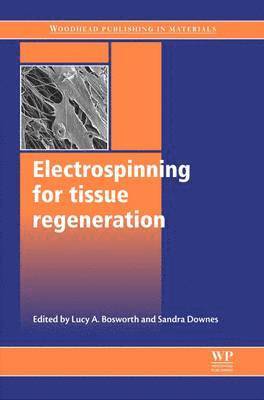
    Electrospinning for Tissue Regeneration

    AvL Bosworth,S Downes

    Häftad, Engelska, 2016

    Del i serien Woodhead Publishing Series in Biomaterials

    1 927 kr

    Beställningsvara. Skickas inom 10-15 vardagar. Fri frakt över 249 kr.

    Beskrivning

    Electrospinning is a simple and highly versatile method for generating ultrathin fibres with diameters ranging from a few micrometres to tens of nanometres. Although most commonly associated with textile manufacturing, recent research has proved that the electrospinning technology can be used to create organ components and repair damaged tissues. Electrospinning for tissue regeneration provides a comprehensive overview of this innovative approach to tissue repair and regeneration and examines how it is being employed within the biomaterials sector.The book opens with an introduction to the fundamentals of electrospinning. Chapters go on to discuss polymer chemistry, the electrospinning process, conditions, control and regulatory issues. Part two focuses specifically on electrospinning for tissue regeneration and investigates its uses in bone, cartilage, muscle, tendon, nerve, heart valve, bladder, tracheal, dental and skin tissue regeneration before concluding with a chapter on wound dressings. Part three explores electrospinning for in vitro applications. Chapters discuss cell culture systems for kidney, pancreatic and stem cell research.With its distinguished editors and international team of expert contributors, Electrospinning for tissue regeneration is a valuable reference tool for those in academia and industry concerned with research and development in the field of tissue repair and regeneration.

    Produktinformation

    • Utgivningsdatum:2016-08-19
    • Mått:156 x 234 x 22 mm
    • Vikt:590 g
    • Format:Häftad
    • Språk:Engelska
    • Serie:Woodhead Publishing Series in Biomaterials
    • Antal sidor:424
    • Förlag:Elsevier Science & Technology
    • ISBN:9780081016978

    Utforska kategorier

    • Medicinsk utrustning och medicinska tekniker inom Medicin
    • Biomedicinsk teknik inom Medicin

    Mer om författaren

    Dr. Lucy A. Bosworth and Professor Sandra Downes both work in the Materials Science Centre at The University of Manchester, UK and are widely renowned for their research into biomaterials, tissue engineering and electrospinning.

    Innehållsförteckning

    • Contributor contact detailsPart I: Fundamentals of electrospinningChapter 1: Introduction to electrospinningAbstract:1.1 Introduction1.2 Basic concepts1.3 Morphology and structural formation1.4 Parameters1.5 Apparatus1.6 Materials1.7 Applications1.8 Future trendsChapter 2: Polymer chemistryAbstract:2.1 Introduction2.2 Natural polymers2.3 Synthetic degradable polymers2.4 ConclusionsChapter 3: The electrospinning process, conditions and controlAbstract:3.1 Introduction3.2 Solution parameters3.3 Processing parameters3.4 Ambient parameters3.5 ConclusionsChapter 4: Regulatory issues relating to electrospinningAbstract:4.1 Introduction4.2 Regulation of materials in regenerative medicine4.3 Future trends4.4 Sources of further information and advicePart II: Electrospinning for tissue regenerationChapter 5: Bone tissue regenerationAbstract:5.1 Introduction5.2 Principles of bone biology5.3 Strategies for bone regeneration5.4 Fabrication of scaffolds for bone tissue engineering5.5 Potential materials for scaffolds5.6 Osteoporosis: a growing problem5.7 Strategies for the treatment of bone defects5.8 Conclusions and future trendsChapter 6: Cartilage tissue regenerationAbstract:6.1 Introduction6.2 Culture of chondrogenic cells for implantation6.3 Electrospun nanofibre scaffolds6.4 Future trendsChapter 7: Muscle tissue regenerationAbstract:7.1 Introduction to skeletal muscle7.2 Skeletal muscle injuries7.3 Mechanical properties of skeletal muscle7.4 Tissue engineering7.5 Contractile force7.6 Conductive elements7.7 Conclusion and future trendsChapter 8: Tendon tissue regenerationAbstract:8.1 Introduction: tendon tissue8.2 Tendon structure and composition8.3 Tendon pathology8.4 Clinical need8.5 Tissue engineering8.6 Cell response to electrospun bundles8.7 Mechanical properties of electrospun bundles8.8 Conclusions and future trends8.9 AcknowledgementsChapter 9: Nerve tissue regenerationAbstract:9.1 Introduction9.2 Clinical problems in nerve tissue therapy9.3 Nerve tissue engineering9.4 Biomimetic nanoscaffolds for peripheral nerve regeneration9.5 Stem cell therapy with nanofibre for nerve regeneration9.6 Conclusion and perspectivesChapter 10: Heart valve tissue regenerationAbstract:10.1 Introduction10.2 Tissue to be replaced: heart valves10.3 Specific tissue requirements as a blueprint for scaffold properties10.4 Selection of scaffold material10.5 Scaffold properties to meet tissue requirements10.6 Future trends10.7 AcknowledgmentChapter 11: Bladder tissue regenerationAbstract:11.1 Structural/functional properties of the bladder11.2 Bladder disease and the need for bladder substitution11.3 Electrospun and other scaffolds for bladder tissue engineering11.4 Electrospinning fit for purpose11.5 Future trends11.6 Conclusions11.7 AcknowledgementChapter 12: Tracheal tissue regenerationAbstract:12.1 Anatomy of the trachea and main pathologies of surgical concern12.2 Tissue engineered trachea (TET)12.3 Electrospun biodegradable tubular tracheal scaffold12.4 Scaffold fulfilment12.5 In vitro and in vivo evaluation of the cell and tissue response12.6 Conclusions12.7 AcknowledgementsChapter 13: Dental regenerationAbstract:13.1 Introduction13.2 Periodontal regeneration13.3 Reinforcement of dental restorations13.4 Conclusions and future trendsChapter 14: Skin tissue regenerationAbstract:14.1 Introduction14.2 Biology of skin and wound healing14.3 Challenging problems in existing therapies14.4 Restoring functional skin tissue14.5 Nanofibres as extracellular matrix analogue14.6 Ideal properties of scaffold14.7 Choice of biomaterial14.8 Cellular interactions on skin substitute14.9 Conclusions and future trendsChapter 15: Wound dressingsAbstract:15.1 Introduction: wound healing15.2 Nanofibres15.3 Antimicrobial nanofibrous wound dressings15.4 ConclusionsPart III: Electrospinning for in vitro applicationsChapter 16: Cell culture systems for kidney researchAbstract:16.1 Introduction16.2 Current work16.3 Electrospun materials16.4 Scanning electron microscopy of cells on electrospun scaffolds16.5 Immunostaining of extracellular matrix proteins on electrospun scaffolds16.6 Immunostaining of cells on electrospun scaffolds16.7 Comparison of culture methods16.8 Discussion and future trends16.9 AcknowledgementsChapter 17: Cell culture systems for pancreatic researchAbstract:17.1 Introduction17.2 Min6 cell line17.3 Nes2y cells17.4 Novel scaffolds and production methods17.5 Methods17.6 Results17.7 Discussion17.8 Future trends17.9 ConclusionChapter 18: Cell culture systems for stem cell researchAbstract:18.1 Introduction18.2 Embryonic stem cells18.3 Current culture techniques18.4 3D scaffolds18.5 Combining ES cells with electrospun scaffolds18.6 Future trendsIndex