• Fri frakt över 249 kr
  • •
  • Snabba leveranser
  • •
  • Billiga böcker
Kundservice

Du är på sajten för privatpersoner.

Företag, bibliotek eller offentlig verksamhet?

Du handlar på classic.bokus.com, där alla dina funktioner finns intakta.
Till classic.bokus.com
Bokus logotyp. Gå till startsidan.
  • Erbjudanden
  • Nyheter
  • Student
  • Topplistor
  • Barn & ungdom
  • Bokus Play
  • E-böcker
  • Pocketböcker
  • Spel & pussel

10% rabatt på allt med kod: NYSTART10 →

Sidfot

Mina sidor

    Hjälp

    • Kundservice
    • Vanliga frågor och svar
    • Frakt och leverans
    • Retur vid ångerrätt
    • Reklamera vara
    • Betalning
    • Köpvillkor
    • Allmänna villkor
    • Information om webbplatsens tillgänglighet

    Om Bokus

    • Om oss
    • Pressrum
    • För studenter
    • För företag
    • För bibliotek och offentlig verksamhet
    • För leverantörer
    • Hållbarhet

    Populärt

    • Aktuella erbjudanden
    • Presentkort
    • Studentlitteratur
    • Nya böcker
    • Topplistor
    • Signerade böcker
    • Engelska böcker

    Inspiration

    • Boktips
    • BookTok
    • Populära bokserier
    • Barnbokskaraktärer
    • Populära författare
    Logotyp för Bokus
    Följ oss på Facebook (extern länk)Följ oss på Instagram (extern länk)Följ oss på YouTube (extern länk)Följ oss på TikTok (extern länk)
    bokus @ CookiesAnpassa cookiesIntegritetspolicyKöpvillkor
    Till Citymail hemsida (extern länk)Till Budbee hemsida (extern länk)Till Postnord hemsida (extern länk)Till Schenker hemsida (extern länk)Till Early Bird hemsida (extern länk)Till Walleys hemsida (extern länk)
    1. Naturvetenskap och teknik
    2. Teknik och industri
    3. Energiteknik

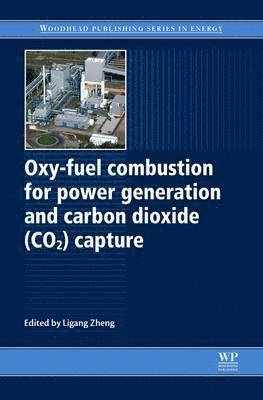
    Oxy-Fuel Combustion for Power Generation and Carbon Dioxide (CO2) Capture

    AvL Zheng

    Häftad, Engelska, 2016

    Del i serien Woodhead Publishing Series in Energy

    1 871 kr

    Beställningsvara. Skickas inom 10-15 vardagar. Fri frakt över 249 kr.

    Beskrivning

    Oxy-fuel combustion is currently considered to be one of the major technologies for carbon dioxide (CO2) capture in power plants. The advantages of using oxygen (O2) instead of air for combustion include a CO2-enriched flue gas that is ready for sequestration following purification and low NOx emissions. This simple and elegant technology has attracted considerable attention since the late 1990s, rapidly developing from pilot-scale testing to industrial demonstration. Challenges remain, as O2 supply and CO2 capture create significant energy penalties that must be reduced through overall system optimisation and the development of new processes.

    Oxy-fuel combustion for power generation and carbon dioxide (CO2) capture comprehensively reviews the fundamental principles and development of oxy-fuel combustion in fossil-fuel fired utility boilers. Following a foreword by Professor J�nos M. Be�r, the book opens with an overview of oxy-fuel combustion technology and its role in a carbon-constrained environment. Part one introduces oxy-fuel combustion further, with a chapter comparing the economics of oxy-fuel vs. post-/pre-combustion CO2 capture, followed by chapters on plant operation, industrial scale demonstrations, and circulating fluidized bed combustion. Part two critically reviews oxy-fuel combustion fundamentals, such as ignition and flame stability, burner design, emissions and heat transfer characteristics, concluding with chapters on O2 production and CO2 compression and purification technologies. Finally, part three explores advanced concepts and developments, such as near-zero flue gas recycle and high-pressure systems, as well as chemical looping combustion and utilisation of gaseous fuel.

    With its distinguished editor and internationally renowned contributors, Oxy-fuel combustion for power generation and carbon dioxide (CO2) capture provides a rich resource for power plant designers, operators, and engineers, as well as academics and researchers in the field.

    • Comprehensively reviews the fundamental principles and development of oxy-fuel combustion in fossil-fuel fired utility boilers
    • Provides an overview of oxy-fuel combustion technology and its role in a carbon-constrained environment
    • Introduces oxy-fuel combustion comparing the economics of oxy-fuel vs. post-/pre-combustion CO2 capture

    Produktinformation

    • Utgivningsdatum:2016-08-19
    • Mått:156 x 234 x 21 mm
    • Vikt:560 g
    • Format:Häftad
    • Språk:Engelska
    • Serie:Woodhead Publishing Series in Energy
    • Antal sidor:400
    • Förlag:Elsevier Science
    • ISBN:9780081017197

    Utforska kategorier

    • Energiteknik inom Naturvetenskap och teknik

    Mer om författaren

    Dr Ligang Zheng is a Research Scientist at CanmetENERGY, Natural Resources Canada. He is noted for his research in energy system technical feasibility studies and optimisation, and has also chaired the oxy-fuel combustion panel and technical sessions at the Clearwater Clean Coal Conference since 2005.

    Innehållsförteckning

    • Contributor contact detailsWoodhead Publishing Series in EnergyForewordNatural Resources Canada: Ressources naturelles CanadaChapter 1: Overview of oxy-fuel combustion technology for carbon dioxide (CO2) captureAbstract:1.1 Introduction1.2 Oxy-fuel combustion: concepts and components1.3 Oxy-fuel combustion: background and motivation1.4 Existing challenges for oxy-fuel combustion technology1.5 Development of oxy-fuel combustion technology1.6 About this book1.7 AcknowledgementsPart I: Introduction to oxy-fuel combustionChapter 2: Economic comparison of oxy-coal carbon dioxide (CO2) capture and storage (CCS) with pre- and post-combustion CCSAbstract:2.1 Introduction2.2 Oxy-coal power plant systems scope2.3 Oxy-coal carbon dioxide (CO2) capture and storage (CCS) cost estimates and comparisons with post- and pre-combustion CO2 capture2.4 ConclusionsChapter 3: Oxy-fuel power plant operationAbstract:3.1 Introduction3.2 Flue gas recycle system3.3 Oxygen (O2) handling3.4 Leakages3.5 Slagging and ash formation3.6 Flue gas cleaning equipment3.7 Maintenance of oxy-fuel power plants3.8 Plant control systems3.9 ConclusionChapter 4: Industrial scale oxy-fuel technology demonstrationAbstract:4.1 Introduction4.2 Oxy-fuel demonstrations and large pilot plants4.3 Demonstrations and progress towards commercial deployment4.4 Conclusions4.5 Update4.6 AcknowledgementsChapter 5: Oxy-fuel combustion on circulating fluidized bed (CFB)Abstract:5.1 Introduction5.2 Early work5.3 Other test facilities5.4 CanmetENERGY tests5.5 Longer duration sulphation tests5.6 Large pilot-scale and demonstration projectsPart II: Oxy-fuel combustion fundamentalsChapter 6: Ignition, flame stability, and char combustion in oxy-fuel combustionAbstract:6.1 Introduction6.2 Coal ignition6.3 Flame stability6.4 Char combustion6.5 Carbon burnout6.6 Conclusions and future trendsChapter 7: Oxy-coal burner design for utility boilersAbstract:7.1 Introduction7.2 Overview of air-fired burner design methodology7.3 Changes to burner design criteria and constraints7.4 Oxy-coal burner principles7.5 Commercial oxy-coal burners7.6 ConclusionsChapter 8: Pollutant formation and emissions from oxy-coal power plantsAbstract:8.1 Introduction8.2 Nitrogen oxide (NOx) emissions8.3 Sulphur oxide (SOx) emissions8.4 Mercury and trace elements8.5 Ash formation8.6 Integrated emissions control8.7 Vent stream from flue gas compression train8.8 ConclusionChapter 9: Oxy-fuel heat transfer characteristics and impacts on boiler designAbstract:9.1 Introduction9.2 Heat transfer criteria for oxy-fuel combustion9.3 Theoretical heat transfer analysis9.4 Computational fluid dynamics (CFD) radiation heat transfer models9.5 Conclusions9.6 AcknowledgementsChapter 10: Current and future oxygen (O2) supply technologies for oxy-fuel combustionAbstract:10.1 Introduction10.2 Oxygen supply needs for oxy-coal power plants10.3 Vacuum pressure swing adsorption technology10.4 Cryogenic air separation technology10.5 Oxygen transport membrane (OTM) technology10.6 Future trends10.7 AcknowledgementsChapter 11: Carbon dioxide (CO2) compression and purification technology for oxy-fuel combustionAbstract:11.1 Introduction11.2 Industrial carbon dioxide (CO2) production process11.3 Oxy-fuel flue gas CO2 purification process11.4 Recent advances in the oxy-fuel flue gas CO2 purification technology11.5 Environmental performance of oxy-fuel power plant11.6 Future trends11.7 Conclusions11.8 AcknowledgementsPart III: Advanced oxy-fuel combustion concepts and developmentsChapter 12: Direct oxy-coal combustion with minimum or no flue gas recycleAbstract:12.1 Introduction12.2 Prior work on near zero flue gas recycle oxy-fuel fired boilers12.3 Design considerations for near zero flue gas recycle12.4 Separate fired chambers for different steam circuits12.5 Furnace with controlled radiant heating of superheaters and reheaters12.6 Furnace with distributed firing12.7 Furnace with multiple partition walls12.8 ConclusionChapter 13: High pressure oxy-fuel (HiPrOx) combustion systemsAbstract:13.1 Introduction13.2 Rankine cycle power systems13.3 Uses of pressure in power systems13.4 Equipment and operational considerations13.5 Other high pressure power generation systems13.6 The industrial sector13.7 Future trends13.8 AcknowledgementsChapter 14: Chemical-looping combustion for power generation and carbon dioxide (CO2) captureAbstract:14.1 Introduction14.2 Principle of systems integration for chemical-looping combustion14.3 Solid looping materials14.4 Design of chemical-looping combustion systems14.5 Chemical-looping combustion systems with different fuels14.6 Future trends14.7 ConclusionsChapter 15: Oxy-fuel combustion of gaseous fuelAbstract:15.1 Introduction15.2 Thermodynamic cycles using conventional air separation technology15.3 Thermodynamic cycles using advanced air separation technologies15.4 Use of solid fuel with gasification technology15.5 Future trendsIndex