• Fri frakt över 249 kr
  • •
  • Snabba leveranser
  • •
  • Billiga böcker
Kundservice

Du är på sajten för privatpersoner.

Företag, bibliotek eller offentlig verksamhet?

Du handlar på classic.bokus.com, där alla dina funktioner finns intakta.
Till classic.bokus.com
Bokus logotyp. Gå till startsidan.
  • Erbjudanden
  • Nyheter
  • Student
  • Topplistor
  • Barn & ungdom
  • Bokus Play
  • E-böcker
  • Pocketböcker
  • Spel & pussel

10% rabatt på allt med kod: NYSTART10 →

Sidfot

Mina sidor

    Hjälp

    • Kundservice
    • Vanliga frågor och svar
    • Frakt och leverans
    • Retur vid ångerrätt
    • Reklamera vara
    • Betalning
    • Köpvillkor
    • Allmänna villkor
    • Information om webbplatsens tillgänglighet

    Om Bokus

    • Om oss
    • Pressrum
    • För studenter
    • För företag
    • För bibliotek och offentlig verksamhet
    • För leverantörer
    • Hållbarhet

    Populärt

    • Aktuella erbjudanden
    • Presentkort
    • Studentlitteratur
    • Nya böcker
    • Topplistor
    • Signerade böcker
    • Engelska böcker

    Inspiration

    • Boktips
    • BookTok
    • Populära bokserier
    • Barnbokskaraktärer
    • Populära författare
    Logotyp för Bokus
    Följ oss på Facebook (extern länk)Följ oss på Instagram (extern länk)Följ oss på YouTube (extern länk)Följ oss på TikTok (extern länk)
    bokus @ CookiesAnpassa cookiesIntegritetspolicyKöpvillkor
    Till Citymail hemsida (extern länk)Till Budbee hemsida (extern länk)Till Postnord hemsida (extern länk)Till Schenker hemsida (extern länk)Till Early Bird hemsida (extern länk)Till Walleys hemsida (extern länk)
    1. Juridik
    2. Särskilda rättsområden
    3. IT-rätt och kommunikationsrätt

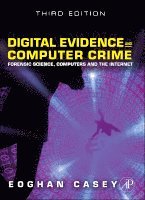
    Digital Evidence and Computer Crime

    Forensic Science, Computers, and the Internet

    AvEoghan Casey

    Inbunden, Engelska, 2011

    635 kr

    Beställningsvara. Skickas inom 10-15 vardagar. Fri frakt över 249 kr.

    Fler format och utgåvor

    E-bok

    796 kr

    E-bok

    679 kr

    Beskrivning

    Digital Evidence and Computer Crime, Third Edition, provides the knowledge necessary to uncover and use digital evidence effectively in any kind of investigation.

    It offers a thorough explanation of how computer networks function, how they can be involved in crimes, and how they can be used as a source of evidence. In particular, it addresses the abuse of computer networks as well as privacy and security issues on computer networks.

    This updated edition is organized into five parts. Part 1 is about digital forensics and covers topics ranging from the use of digital evidence in the courtroom to cybercrime law. Part 2 explores topics such as how digital investigations are conducted, handling a digital crime scene, and investigative reconstruction with digital evidence. Part 3 deals with apprehending offenders, whereas Part 4 focuses on the use of computers in digital investigation. The book concludes with Part 5, which includes the application of forensic science to networks.

    New to this edition are updated information on dedicated to networked Windows, Unix, and Macintosh computers, as well as Personal Digital Assistants; coverage of developments in related technology and tools; updated language for search warrant and coverage of legal developments in the US impacting computer forensics; and discussion of legislation from other countries to provide international scope. There are detailed case examples that demonstrate key concepts and give students a practical/applied understanding of the topics, along with ancillary materials that include an Instructor's Manual and PowerPoint slides.

    This book will prove valuable to computer forensic students and professionals, lawyers, law enforcement, and government agencies (IRS, FBI, CIA, CCIPS, etc.).


    • Named The 2011 Best Digital Forensics Book by InfoSec Reviews
    • Provides a thorough explanation of how computers & networks function, how they can be involved in crimes, and how they can be used as evidence
    • Features coverage of the abuse of computer networks and privacy and security issues on computer networks

    Produktinformation

    • Utgivningsdatum:2011-06-17
    • Mått:196 x 241 x 44 mm
    • Vikt:1 860 g
    • Format:Inbunden
    • Språk:Engelska
    • Antal sidor:840
    • Upplaga:3
    • Förlag:Elsevier Science
    • ISBN:9780123742681

    Utforska kategorier

    • IT-rätt och kommunikationsrätt inom Juridik
    • Straffprocessrätt inom Juridik

    Mer om författaren

    Eoghan Casey is an internationally recognized expert in data breach investigations and information security forensics. He is founding partner of CASEITE.com, and co-manages the Risk Prevention and Response business unit at DFLabs. Over the past decade, he has consulted with many attorneys, agencies, and police departments in the United States, South America, and Europe on a wide range of digital investigations, including fraud, violent crimes, identity theft, and on-line criminal activity. Eoghan has helped organizations investigate and manage security breaches, including network intrusions with international scope. He has delivered expert testimony in civil and criminal cases, and has submitted expert reports and prepared trial exhibits for computer forensic and cyber-crime cases.In addition to his casework and writing the foundational book Digital Evidence and Computer Crime, Eoghan has worked as R&D Team Lead in the Defense Cyber Crime Institute (DCCI) at the Department of Defense Cyber Crime Center (DC3) helping enhance their operational capabilities and develop new techniques and tools. He also teaches graduate students at Johns Hopkins University Information Security Institute and created the Mobile Device Forensics course taught worldwide through the SANS Institute. He has delivered keynotes and taught workshops around the globe on various topics related to data breach investigation, digital forensics and cyber security.Eoghan has performed thousands of forensic acquisitions and examinations, including Windows and UNIX systems, Enterprise servers, smart phones, cell phones, network logs, backup tapes, and database systems. He also has information security experience, as an Information Security Officer at Yale University and in subsequent consulting work. He has performed vulnerability assessments, deployed and maintained intrusion detection systems, firewalls and public key infrastructures, and developed policies, procedures, and educational programs for a variety of organizations. Eoghan has authored advanced technical books in his areas of expertise that are used by practitioners and universities around the world, and he is Editor-in-Chief of Elsevier's International Journal of Digital Investigation.

    Recensioner i media

    "Throughout the book there are a number of good case studies used to illustrate points which enlivens the text. There are also details of legal cases from various legislative areas and examples of relevant situations that demonstrate the points being made. There are also a number of references to other literature and links to website URLs and tools available to assist the practitioner." --Best Digital Forensics Book in InfoSecReviews Book Awards"Just finished ‘Digital Evidence and Computer Crime: Forensic Science, Computers and the Internet’ by Eoghan Casey and featuring other contributing authors, and it’s quite good. I bought this book because I wanted an all-encompassing book that provided insight on the various aspects of an investigation, especially the legal portion. And in this aspect the book does an excellent job, and is in-depth in area’s I have yet to see in other books. The book is divided into five portions digital forensics, digital investigations, apprehending offenders, computers and network forensics. For me the book was worth it for the first three portions; however, the computers and network portions, while a good start, there are more in-depth books that provide better insight… Overall, the book was enjoyable from start to finish and I would recommend it to anyone looking for a great overview of digital forensic investigation process from start to finish. I am happy to add this book to my growing reference library." --Student of Security"This hefty book on forensic evidence obtained from computers dispels the myths propagated by popular television series. It states from the premise that very few people are well versed in the technical, evidential, and legal issues concerning digital evidence. Oftentimes, the useful evidence that may be found in various digital media is overlooked, collected incorrectly, or analyzed ineffectively. It is the goal of the team of contributors to equip readers with the necessary knowledge and skills to be able to make use of digital evidence correctly and effectively…. It is quite obvious that the various authors draw from several fields, such as forensic science, computer science, political science, criminal justice, the law, and behavioral analysis; as such, it is multi- and interdisciplinary. More specifically, the authors tackle the specific crimes of cyber bullying, cyber stalking, identity theft, online sex offenders, fraudsters, and cyber threats. There is extensive use of boxed stories, legal cases, practitioner’s tips, tables, the discussion of legislation, flow charts, treaties and journals, as well as figures, diagrams, pictures, and computer screen shots. The book is comparative in nature: it covers not only cyber law in the US, but also case law in the UK, Ireland, and the Netherlands. Given the ubiquity of the computer and the crimes that it can generate, learning about how other nations handle these issues helps in the formation of our own methods for dealing with crimes domestically, as well as those that cross national boundaries." --ACM’s Computing Reviews.com"A better title for Digital Evidence and Computer Crime might be the Comprehensive Guide to Everything You Need to Know About Digital Forensics. One is hard pressed to find another book overflowing with so many valuable details and real-world examples." --Ben Rothke on Slashdot.org (Sept 2011)

    Innehållsförteckning

    • PART 1: Digital Forensics1. Foundations of Digital Forensics 2. Language of Computer Crime Investigation 3. Digital Evidence in the Courtroom 4. Cybercrime Law: A United States Perspective 5. Cybercrime Law: European PerspectivePART 2: Digital Investigations6. Conducting Digital Investigations7. Handling a Digital Crime Scene8. Investigative Reconstruction with Digital Evidence 9. Modus Operandi, Motive, and Technology PART 3: Apprehending Offenders10. Violent Crime and Digital Evidence 11. Digital Evidence as Alibi12. Sex Offenders on the Internet 13. Investigating Computer Intrusions 14. CyberstalkingPART 4: Computers15. Computer Basics for Digital Investigators16. Applying Forensic Science to Computers17. Forensic Examination of Windows Systems18. Forensic Examination of UNIX Systems19. Forensic Examination of Macintosh Systems20. Forensic Examination of Mobile Devices (online only)PART 5: Network Forensics21. Network Basics for Digital Investigators22. Applying Forensic Science to Networks23. Digital Evidence on the Internet24. Digital Evidence on Physical and Data-Link Layers25. Digital Evidence at the Network and Transport Layers