• Fri frakt över 249 kr
  • •
  • Snabba leveranser
  • •
  • Billiga böcker
Kundservice

Du är på sajten för privatpersoner.

Företag, bibliotek eller offentlig verksamhet?

Du handlar på classic.bokus.com, där alla dina funktioner finns intakta.
Till classic.bokus.com
Bokus logotyp. Gå till startsidan.
  • Erbjudanden
  • Nyheter
  • Student
  • Topplistor
  • Barn & ungdom
  • Bokus Play
  • E-böcker
  • Pocketböcker
  • Spel & pussel

10% rabatt på allt med kod: NYSTART10 →

Sidfot

Mina sidor

    Hjälp

    • Kundservice
    • Vanliga frågor och svar
    • Frakt och leverans
    • Retur vid ångerrätt
    • Reklamera vara
    • Betalning
    • Köpvillkor
    • Allmänna villkor
    • Information om webbplatsens tillgänglighet

    Om Bokus

    • Om oss
    • Pressrum
    • För studenter
    • För företag
    • För bibliotek och offentlig verksamhet
    • För leverantörer
    • Hållbarhet

    Populärt

    • Aktuella erbjudanden
    • Presentkort
    • Studentlitteratur
    • Nya böcker
    • Topplistor
    • Signerade böcker
    • Engelska böcker

    Inspiration

    • Boktips
    • BookTok
    • Populära bokserier
    • Barnbokskaraktärer
    • Populära författare
    Logotyp för Bokus
    Följ oss på Facebook (extern länk)Följ oss på Instagram (extern länk)Följ oss på YouTube (extern länk)Följ oss på TikTok (extern länk)
    bokus @ CookiesAnpassa cookiesIntegritetspolicyKöpvillkor
    Till Citymail hemsida (extern länk)Till Budbee hemsida (extern länk)Till Postnord hemsida (extern länk)Till Schenker hemsida (extern länk)Till Early Bird hemsida (extern länk)Till Walleys hemsida (extern länk)
    1. Naturvetenskap och teknik
    2. Matematik och naturvetenskap
    3. Biologi
    4. Biovetenskap

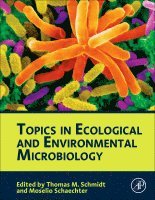
    Topics in Ecological and Environmental Microbiology

    AvThomas M. Schmidt,Moselio Schaechter

    Inbunden, Engelska, 2011

    979 kr

    Beställningsvara. Skickas inom 10-15 vardagar. Fri frakt över 249 kr.

    Beskrivning

    Topics in Ecological and Environmental Microbiology provides an overview of ecological aspects of the metabolism and behavior of microbes, microbial habitats, biogeochemical cycles, and biotechnology. This essential reference was designed by selecting relevant chapters from the authoritative and comprehensive Encyclopedia of Microbiology, 3rd edn., and inviting the original authors to update their material to include key developments and advances in the field. This concise and affordable book is an essential reference for students and researchers in microbiology, mycology, immunology, environmental sciences, and biotechnology.

    • Written by recognized authorities in the field
    • Includes topics such as air quality, marine habitats, food webs, and microbial adhesion
    • Provides a thematic mix of both classic and cutting -edge reviews, with suggested further reading in each chapter

    Produktinformation

    • Utgivningsdatum:2011-12-20
    • Mått:216 x 276 x 35 mm
    • Vikt:1 960 g
    • Format:Inbunden
    • Språk:Engelska
    • Antal sidor:774
    • Förlag:Elsevier Science
    • ISBN:9780123838780

    Utforska kategorier

    • Biovetenskap inom Naturvetenskap och teknik
    • Biologi inom Naturvetenskap och teknik

    Mer om författaren

    Dr. Schmidt has been investigating the structure, function, and dynamics of microbial communities in natural ecosystems for over 20 years, most recently focusing on microbial communities in the human GI tract. He brings the perspective gained from being EIC of the 4th Edition of the Encyclopedia of Microbiology along with the experience he has gained studying diverse microbes and microbial communities. His research group helped pioneer the methods for culture-independent analyses of microbial communities and they continue to refine and apply those methods using ecologicaltheories as a basis to track microbial populations in nature. In 2015, he refocused his research from agroecosystems to the human gut microbiome and is studying the impact of dietary fibers on the structure and function of human gut microbiome. His goal is to engineer the human gut microbiome to reduce inflammation, including through the use of dietary fiber supplements. Dr Schmidt guides a research laboratory that is recognized for expertise in the isolation and study of pure cultures of microbes and communities of microbes both in vitro and in vivo.Dr. Schmidt is an elected member of the American Academy for Microbiology, is a former director of the internationally acclaimed Woods Hole Microbial Diversity Course and has been awarded the Graduate Teaching Award from the American Society for Microbiology, the university wide Teacher-Scholar award at Michigan State University, and most recently the Provost’s Innovation Prize for outstanding teaching at the University of Michigan. Dr. Schaechter is a Distinguished Professor, Emeritus at Tufts University, where he served as chairman of the Department of Molecular Biology and Microbiology from 1970 to 1993. He has worked on bacterial growth physiology and the relationship of the chromosome and the bacterial cell membrane. He has authored ten treatises and textbooks, most in collaboration with others, plus a book for the general public, In the Company of Mushrooms. He has served as President of the American Society for Microbiology. Currently, he is Adjunct Professor Emeritus, Biology Department, at San Diego State University and Visiting Scholar at the University of California, San Diego.

    Innehållsförteckning

    • Part I. Microbial Ecology Principles of Microbial EcologyMicrobial Food Webs BiofilmsMicrobial MatsHorizontal Gene Transfer: Uptake of Extracellular DNA by Bacteria  Picoeukaryotes Algal Blooms Environmental Viral PoolAeromicrobiologyEndophytic MicrobesPart II. Metabolism and Behavior of Diverse Microbes Methanogenesis MethanotrophyMicrobial PhotosynthesisRegulation of Carbon Assimilation Microbial Resistance to Heavy MetalsMicrobial AdhesionBacterial Bioluminescence MagnetotaxisQuorum SensingChemotaxis Part III. Microbial Habitats Acid EnvironmentsHot environmentsCold EnvironmentsDry Environments (including Cryptoendoliths)Marine HabitatsHigh-Pressure HabitatsThe Deep Sub-surfaceDeep-sea Hydrothermal VentsFreshwater HabitatsLow-Nutrient EnvironmentsSediment Habitats The RhizospherePart IV. Biogeochemical Cycles and their Consequences The Nitrogen CycleThe Phosphorus cycleThe Sulfur CycleCycling of Some Redox-Active MetalsHeavy Metal Pollutants: Environmental and Biotechnological Aspects Part V. Biotechnological Topics Biodeterioration-including Cultural Heritage Bisensors Gnotiobiotic and Axenic Animals Microbial Corrosion Petroleum Microbiology Metal Extraction and Biomining Industrial Water Treatment Wastewater Treatment of Non-Infectious Hazards Drinking Water Spacecraft Associated Microbes Biological Warfare