• Fri frakt över 249 kr
  • •
  • Snabba leveranser
  • •
  • Billiga böcker
Kundservice

Du är på sajten för privatpersoner.

Företag, bibliotek eller offentlig verksamhet?

Du handlar på classic.bokus.com, där alla dina funktioner finns intakta.
Till classic.bokus.com
Bokus logotyp. Gå till startsidan.
  • Erbjudanden
  • Nyheter
  • Student
  • Topplistor
  • Barn & ungdom
  • Bokus Play
  • E-böcker
  • Pocketböcker
  • Spel & pussel

10% rabatt på allt med kod: NYSTART10 →

Sidfot

Mina sidor

    Hjälp

    • Kundservice
    • Vanliga frågor och svar
    • Frakt och leverans
    • Retur vid ångerrätt
    • Reklamera vara
    • Betalning
    • Köpvillkor
    • Allmänna villkor
    • Information om webbplatsens tillgänglighet

    Om Bokus

    • Om oss
    • Pressrum
    • För studenter
    • För företag
    • För bibliotek och offentlig verksamhet
    • För leverantörer
    • Hållbarhet

    Populärt

    • Aktuella erbjudanden
    • Presentkort
    • Studentlitteratur
    • Nya böcker
    • Topplistor
    • Signerade böcker
    • Engelska böcker

    Inspiration

    • Boktips
    • BookTok
    • Populära bokserier
    • Barnbokskaraktärer
    • Populära författare
    Logotyp för Bokus
    Följ oss på Facebook (extern länk)Följ oss på Instagram (extern länk)Följ oss på YouTube (extern länk)Följ oss på TikTok (extern länk)
    bokus @ CookiesAnpassa cookiesIntegritetspolicyKöpvillkor
    Till Citymail hemsida (extern länk)Till Budbee hemsida (extern länk)Till Postnord hemsida (extern länk)Till Schenker hemsida (extern länk)Till Early Bird hemsida (extern länk)Till Walleys hemsida (extern länk)
    1. Hälsa och familj
    2. Hälsa
    3. Hemvård

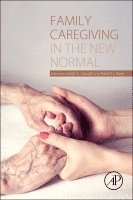
    Family Caregiving in the New Normal

    AvJoseph E. Gaugler,Robert L. Kane

    Häftad, Engelska, 2015

    692 kr

    Beställningsvara. Skickas inom 10-15 vardagar. Fri frakt över 249 kr.

    Beskrivning

    Family Caregiving in the New Normal discusses how the drastic economic changes that have occurred over the past few years have precipitated a new conversation on how family care for older adults will evolve in the future.

    This text summarizes the challenges and potential solutions scientists, policy makers, and clinical providers must address as they grapple with these changes, with a primary focus given to the elements that may impact how family caregiving is organized and addressed in subsequent decades, including sociodemographic trends like divorce, increased participation of women in the workforce, geographic mobility, fewer children in post-baby boom families, chronic illness trends, economic stressors, and the current policy environment.

    A section on the support of caregivers includes technology-based solutions that examine existing models, personal health records, and mobile applications, big data issues, decision-making support, person-centered approaches, crowd-sourced caregiving such as blogs and personal websites that have galvanized caregivers, and new methods to combine paid and unpaid forms of care.


    • Provides a concise "roadmap" of the demographic, economic, health trends, and policy challenges facing family caregivers
    • Presents potential solutions to caregiving so that scientists, policymakers, and clinical providers can best meet the needs of families and communities in the upcoming decades
    • Includes in-depth, diverse stories of caregivers of persons with different diseases who share perspectives
    • Covers person-centered care approaches to family caregiving that summarize effective community-based services of psychosocial intervention models
    • Examines how existing efficacious models can more effectively reach and serve individual families

    Produktinformation

    • Utgivningsdatum:2015-05-11
    • Mått:152 x 229 x 25 mm
    • Vikt:520 g
    • Format:Häftad
    • Språk:Engelska
    • Antal sidor:404
    • Förlag:Elsevier Science
    • ISBN:9780124170469

    Utforska kategorier

    • Hemvård inom Hälsa och familj
    • Socialt arbete och välfärd inom Samhälle och politik

    Mer om författaren

    Joseph E. Gaugler, PhD is a Professor in the School of Nursing and Center on Aging at The University of Minnesota.". Dr. Gaugler's research examines the sources and effectiveness of long-term care for chronically disabled older adults. A developmental psychologist with an interdisciplinary research focus, Dr. Gaugler's interests include Alzheimer's disease and long-term care, the longitudinal ramifications of family care for disabled adults, and the effectiveness of community-based and psychosocial services for chronically ill adults and their caregiving families. Underpinning these substantive areas, Dr. Gaugler also has interests in longitudinal and mixed methods.Dr. Gaugler currently serves as Editor-in-Chief for the Journal of Applied Gerontology and on the editorial boards of Journals of Gerontology: Psychological Sciences, Journals of Gerontology: Social Sciences, and Psychology and Aging. He was awarded the 2003 Springer Early Career Achievement Award in Adult Development and Aging Research, the 2011 M. Powell Lawton Distinguished Contribution Award for Applied Gerontology from the American Psychological Association (Division 20: Adult Development and Aging), the 2011 Dean's Award from the University of Minnesota School of Nursing, and the 2015 Gordon Streib Distinguished Academic Gerontologist Award from the Southern Gerontological Society. He is a Fellow of the Gerontological Society of America and the American Psychological Association. Robert L. Kane, MD, holds an endowed chair in Long-term Care and Aging at the University of Minnesota School of Public Health, where he was formerly the Dean. He directs the University of Minnesota's Center on Aging, the Minnesota Area Geriatric Education Center, the Clinical Outcomes Research Center, and an AHRQ-funded Evidence-based Practice Center. He has conducted numerous research studies on both the clinical care and the organization of care for older persons, especially those needing long-term care. He is the author or editor of 34 books and more than 500 journal articles and book chapters on geriatrics and health services research. He has analyzed long-term systems both in this country and abroad. Recent books include The Heart of Long-term Care, Assessing Older Persons, the 7th edition of Essentials of Clinical Geriatrics, Conducting Health Care Outcomes Research, and Meeting the Challenge of Chronic Illness. He and his sister, Joan West, have written an account of the struggles to get adequate long-term care for their mother, It Shouldn’t Be This Way. That experience led to his founding a national organization dedicated to improving long-term care, Professionals with Personal Experience with Chronic Care (PPECC), which has over 800 members. He recently wrote a book specifically to help caregivers of older persons, The Good Caregiver. He is a graduate of Harvard Medical School. His current research addresses both acute and long-term care for older persons, with special attention to the role of managed care, chronic disease, and disability, as well as systematic reviews of the literature on various topics. Dr. Kane has consulted to a number of national and international agencies, including the World Health Organization's Expert Committee on Aging. He has received the President’s Award from the American Society on Aging and the Polisher Award from the Gerontological Society of America, the Enrico Greppi Prize from the Italian Society of Gerontology and Geriatrics, and the British Geriatrics Society Medal for the Relief of Suffering amongst the Aged. He was elected to the University of Minnesota’s Academic Health Center’s Academy for Excellence in Health Research.

    Recensioner i media

    "While this impending challenge is formidable, this presentation will outline some possible solutions and other emerging forces that may help sustain family caregivers in the future." --The Gerontologist

    Innehållsförteckning

    • ForewordAlan B. Stevens and Rachael Watman1. Introduction: Family Caregiving in the New NormalJoseph E. Gaugler and Robert L. KaneSection I: Personal Perspectives: Caregiving in the New Normal2. Caregiving Roles Reversed: Becoming My Mother’s MotherMichele H. Kimball3. Complexity and Opportunities in Caregiving: A Story of Holding On and Letting GoChristine W. Hartmann4. Caregiver Woes in the Medicare System: A Tale of Two PatientsJerald Winakur5. The Caregiving Crucible: Crisis and OpportunityEmily KearnsSection II: Threats to Family Caregiving in the United States6. Factors Affecting the Future of Family Caregiving in the United StatesRobyn I. Stone7. Chronic Illness Trends and the Challenges to Family Caregivers: Organizational and Health System BarriersJennifer L. Wolff and Barry J. Jacobs8. Informal Care and Economic StressorsCourtney Harold Van HoutvenSection III: Policy Considerations and Family Caregiving9. The Policy and Political Environment of Family Caregiving: A Glass Half FullDebra J. Lipson10. Help for Family Caregivers Available from Government Programs and PoliciesPamela Doty and Brenda SpillmanSection IV: A New Vision for Supporting Caregivers in the Future11. Translational Research on Caregiving: Missing Links in the Translation ProcessElaine Wethington and Louis D. Burgio12. Information Technology to Support Aging: Implications for CaregivingGeorge Demiris13. Supporting Caregivers of Older Adults in Making Decisions: Current Tools and Future DirectionsTetyana P. Shippee, Kathleen Rowan and Carrie Henning-Smith14. Person-Centered Approaches to CaregivingKaren I. Connor, Hilary C. Siebens and Joshua Chodosh15. The Impact of the Internet and Social Media on CaregivingKatherina Nikzad-Terhune, Keith A. Anderson and Lori La Bey16. The Escalating Complexity of Family Caregiving: Meeting the ChallengeSusan C. Reinhard and Lynn Friss Feinberg17. Caregivers as Therapeutic Agents in Dementia Care: The Context of Caregiving and the Evidence Base for InterventionsLaura N. Gitlin and Nancy HodgsonConclusion18. A Perfect Storm? The Future of Family CaregivingJoseph E. Gaugler and Robert L. Kane