• Fri frakt över 249 kr
  • •
  • Snabba leveranser
  • •
  • Billiga böcker
Kundservice

Du är på sajten för privatpersoner.

Företag, bibliotek eller offentlig verksamhet?

Du handlar på classic.bokus.com, där alla dina funktioner finns intakta.
Till classic.bokus.com
Bokus logotyp. Gå till startsidan.
  • Erbjudanden
  • Student
  • Topplistor
  • Barn & ungdom
  • Bokus Play
  • E-böcker
  • Ljudböcker
  • Pocketböcker
  • Spel och pussel

Pocketfynda! Hundratals böcker för 49 kr/st →

Sidfot

Mina sidor

    Hjälp

    • Kundservice
    • Vanliga frågor och svar
    • Frakt och leverans
    • Retur vid ångerrätt
    • Reklamera vara
    • Betalning
    • Köpvillkor
    • Allmänna villkor
    • Information om webbplatsens tillgänglighet

    Om Bokus

    • Om oss
    • Pressrum
    • För studenter
    • För företag
    • För bibliotek och offentlig verksamhet
    • För leverantörer
    • Hållbarhet

    Populärt

    • Aktuella erbjudanden
    • Presentkort
    • Studentlitteratur
    • Nya böcker
    • Topplistor
    • Signerade böcker
    • Engelska böcker

    Inspiration

    • Boktips
    • BookTok
    • Barnbokskaraktärer
    • Populära författare
    Logotyp för Bokus
    Följ oss på Facebook (extern länk)Följ oss på Instagram (extern länk)Följ oss på YouTube (extern länk)Följ oss på TikTok (extern länk)
    bokus @ CookiesAnpassa cookiesIntegritetspolicyKöpvillkor
    Till Citymail hemsida (extern länk)Till Budbee hemsida (extern länk)Till Postnord hemsida (extern länk)Till Schenker hemsida (extern länk)Till Early Bird hemsida (extern länk)Till Walleys hemsida (extern länk)
    1. Medicin
    2. Andra medicinska specialiteter
    3. Patologi

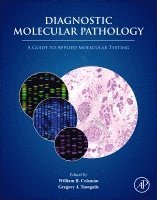
    Diagnostic Molecular Pathology

    A Guide to Applied Molecular Testing

    AvWilliam B. Coleman,Gregory J. Tsongalis

    Inbunden, Engelska, 2016

    1 521 kr

    Beställningsvara. Skickas inom 10-15 vardagar. Fri frakt över 249 kr.

    Beskrivning

    Diagnostic Molecular Pathology: A Guide to Applied Molecular Testing is organized around disease types (genetic disease, infectious disease, neoplastic disease, among others). In each section, the authors provide background on disease mechanisms and describe how laboratory testing is built on knowledge of these mechanisms. Sections are dedicated to general methodologies employed in testing (to convey the concepts reflected in the methods), and specific description of how these methods can be applied and are applied to specific diseases are described.

    The book does not present molecular methods in isolation, but considers how other evidence (symptoms, radiology or other imaging, or other clinical tests) is used to guide the selection of molecular tests or how these other data are used in conjunction with molecular tests to make diagnoses (or otherwise contribute to clinical workup). In addition, final chapters look to the future (new technologies, new approaches) of applied molecular pathology and how discovery-based research will yield new and useful biomarkers and tests.

    Diagnostic Molecular Pathology: A Guide to Applied Molecular Testing contains exercises to test readers on their understanding of how molecular diagnostic tests are utilized and the value of the information that can be obtained in the context of the patient workup. Readers are directed to an ancillary website that contains supplementary materials in the form of exercises where decision trees can be employed to simulate actual clinical decisions.


    • Focuses on the menu of molecular diagnostic tests available in modern molecular pathology or clinical laboratories that can be applied to disease detection, diagnosis, and classification in the clinical workup of a patient
    • Explains how molecular tests are utilized to guide the treatment of patients in personalized medicine (guided therapies) and for prognostication of disease
    • Features an ancillary website with self-testing exercises where decision trees can be employed to simulate actual clinical decisions
    • Highlights new technologies and approaches of applied molecular pathology and how discovery-based research will yield new and useful biomarkers and tests

    Produktinformation

    • Utgivningsdatum:2016-10-26
    • Mått:216 x 276 x 38 mm
    • Vikt:1 700 g
    • Format:Inbunden
    • Språk:Engelska
    • Antal sidor:582
    • Förlag:Elsevier Science
    • ISBN:9780128008867

    Utforska kategorier

    • Patologi inom Medicin

    Mer om författaren

    William B. Coleman, PhD is the Executive Officer for the American Society for Investigative Pathology (Rockville, MD). Prior to taking this position with the American Society for Investigative Pathology, Dr. Coleman spent 28 years at the University of North Carolina School of Medicine (Chapel Hill, NC), first as a postdoctoral fellow (1990-1995) and then as a faculty member (1995-2018) in the Department of Pathology and Laboratory Medicine. During his time at the UNC School of Medicine, Dr. Coleman served as Director of Graduate Studies for the Molecular and Cellular Pathology Ph.D. Program (2006-2012; now the Pathobiology and Translational Medicine Ph.D. Program), was a co-founder of the UNC Program in Translational Medicine and served as its Co-Director (2006-2015) and then its Director (2015-2018), was affiliated with the Curriculum in Toxicology, the Cancer Biology Training Program, and was a member of the UNC Lineberger Comprehensive Cancer Center. Dr. Coleman was active in teaching biomedical graduate students and is a four-time recipient of the Joe W. Grisham Award for Excellence in Graduate Student Teaching from the Molecular and Cellular Pathology graduate students at the UNC School of Medicine. Prior to becoming an employee, Dr. Coleman was active in the leadership of the American Society for Investigative Pathology, serving in various roles including President (2015-2016). Dr. Coleman was honored with the ASIP Outstanding Investigator Award in 2013 from the American Society for Investigative Pathology. He is also a long-time member of the American Association for Cancer Research. He serves as Senior Associate Editor for The American Journal of Pathology, and is an Associate Editor for BMC Cancer, and PLoS One, and serves on the editorial boards of Clinica Chimica Acta, Experimental and Molecular Pathology, Archives of Pathology and Laboratory Medicine, Laboratory Investigation, and Current Pathobiology Reports, and has served as an ad hoc reviewer for 99 other journals. Dr. Coleman’s major research interests are in the molecular pathogenesis of human cancers, with a specific interest in breast cancer epigenetics, liver carcinogenesis, and lung cancer biology. His research was funded by the NIH/NCI, The Susan G. Komen Breast Cancer Foundation, Friends for an Earlier Breast Cancer Test, and the UNC Lineberger Comprehensive Cancer Center. Dr. Coleman is the author of over 140 original research articles, reviews, and book chapters. In addition, Dr. Coleman has co-edited or co-authored ten books on topics related to molecular pathology, molecular diagnostics, and the molecular pathogenesis of human cancer. Gregory J. Tsongalis, PhD, HCLD, CC, FNACB., is the Vice Chair for Research and the Director of the Laboratory for Clinical Genomics and Advanced Technology (CGAT) in the Department of Pathology and Laboratory Medicine at the Dartmouth-Hitchcock Medical Center and Norris Cotton Cancer Center (NCCC) in Lebanon, NH. He is a Professor of Pathology and Laboratory Medicine at the Audrey and Theodor Geisel School of Medicine at Dartmouth in Hanover, NH and a member of the NCCC Molecular Therapeutics Program and the gastrointestinal and breast cancer clinical oncology groups. In 2016 he became a member of Dartmouth College’s Program in Experimental and Molecular Medicine (PEMM), and he has served on the advisory board of the Health Care Genetics Professional Science Master’s Degree Program and Diagnostic Genetic Sciences Program at the University of Connecticut (Storrs, CT). His area of expertise is in the development and implementation of clinical molecular diagnostic technologies. His research interests are in the pathogenesis of human cancers, personalized medicine and disruptive technologies. He has authored/edited twelve textbooks in the field of molecular pathology, published more than 230 peer reviewed manuscripts, and has been an invited speaker at both national and international meetings. He has served on numerous committees of the American Association for Clinical Chemistry, the American Society for Investigative Pathology, the Federation for American Societies for Experimental Biology, and the Association for Molecular Pathology (where he is a past President). He is active in the Alliance for Clinical Trials in Oncology, the Association for Molecular Pathology, the American Association for Clinical Chemistry, the American Association of Bioanalysts, and the American Society for Investigative Pathology. He serves on the editorial boards of 8 journals including Clinical Chemistry, Experimental and Molecular Pathology, and the Journal of Molecular Diagnostics. In 2016, Dr. Tsongalis received the Norris Cotton Cancer Center Award for Excellence, in 2017 the Association for Molecular Pathology (AMP) Jeffrey A. Kant Leadership Award, and in 2019 the American Society for Investigative Pathology Robbins Distinguished Educator Award. He also serves on numerous corporate scientific advisory boards.

    Recensioner i media

    "Diagnostic Molecular Pathology is destined to become an important cornerstone and go-to volume for pathologists, researchers, and clinicians—indeed anyone who wants to understand the approach and application of modern molecular techniques in disease detection and diagnosis. Drs. Coleman and Tsongalis—and their impressive stable of contributors—are to be congratulated for making the exciting and rapidly expanding science of molecular diagnosis accessible to the novice, while also providing the expert with important details on the nuances.  Beyond just a compendium of useful information, it is a well-curated journey through basic concepts, infectious diseases, malignancy, hematopathology, and genetic diseases—and even includes access to a website with lab test videos and decision-making exercises." --Richard N. Mitchell, MD, PhD (Brigham and Women's Hospital and Harvard Medical School)"With much fanfare, molecular techniques have revolutionized clinical medicine, from diagnosis to personalized medical therapeutics.  It is with this background that Diagnostic Molecular Pathology approaches the daunting task of summarizing the advances in the field from infectious disease, heritable and acquired genetic diseases, hematological malignancies, to pharmacogenomics.  In a comprehensive publication, the editors perform a yeoman’s effort in covering this dynamic and exciting field." --Lawrence M. Silverman, PhD (University of Virginia School of Medicine)"Diagnostic Molecular Pathology provides a panoramic view of diagnostic molecular pathology testing, written by leaders in the field.  It is a great reference and learning tool." --Dani S. Zander, MD (University of Cincinnati Medical Center)

    Innehållsförteckning

    • Section I: Introduction to Molecular TestingChapter 1. Basic Concepts in Molecular Pathology—Introduction to Molecular Testing in Human DiseaseChapter 2. Laboratory Approaches in Molecular Pathology—The Polymerase Chain ReactionChapter 3. Next-Generation Sequencing in the Clinical LaboratoryChapter 4. Automation of the Molecular Diagnostic LaboratorySection II: Molecular Testing in Infectious DiseaseChapter 5. Molecular Testing for Human Imunodeficiency VirusChapter 6. Molecular Testing in Hepatitis Virus Related DiseaseChapter 7. Molecular Testing for Human PapillomavirusesChapter 8. Molecular Testing for Herpes VirusesChapter 9. Molecular Testing for ParvovirusesChapter 10. Molecular Testing for PolyomavirusesChapter 11. Molecular Testing for Respiratory VirusesChapter 12. Molecular Testing for Diseases Associated with Bacterial InfectionsChapter 13. Agents Associated with Sexually Transmitted InfectionsChapter 14. Molecular Methods for Healthcare-Acquired InfectionsChapter 15. Molecular Testing in Emerging Infectious DiseasesSection III: Molecular Testing in Genetic DiseaseChapter 16. Noninvasive Prenatal Screening (NIPS) for Fetal AneuploidiesChapter 17. Molecular Testing in Inherited CardiomyopathiesChapter 18. Molecular Diagnostics for CoagulopathiesChapter 19. Molecular Diagnosis of Cystic FibrosisChapter 20. Molecular Testing in HemochromatosisSection IV: Molecular Testing in OncologyChapter 21. Molecular Testing in Breast CancerChapter 22. Molecular Pathology of Prostate CancerChapter 23. Molecular Testing in Lung CancerChapter 24. Molecular Testing in Colorectal CancerChapter 25. Molecular Pathology and Testing in Melanocytic TumorsChapter 26. Molecular Testing for GlioblastomaChapter 27. Molecular Testing in Pancreatic CancerChapter 28. Molecular Testing in Gynecologic CancerChapter 29. The Emerging Genetic Landscape in Renal Cell CarcinomaChapter 30. Molecular Testing in Thyroid CancerChapter 31. Molecular Testing in Pediatric CancersSection V: Molecular Testing in HematopathologyChapter 32. Molecular Testing in Chronic Myelogenous LeukemiaChapter 33. Molecular Testing in Acute Myeloid LeukemiaChapter 34. Molecular Testing in Myeloproliferative NeoplasmsChapter 35. Molecular Testing in the Assessment of Bone Marrow Transplant EngraftmentSection VI: Molecular Testing in Personalized MedicineChapter 36. Personalized Medicine in Cardiovascular DiseaseChapter 37. Personalized Medicine for CoagulopathiesChapter 38. Personalized Medicine for Hepatitis C VirusChapter 39. Personalized Medicine in Cancer TreatmentSection VII: The Future of Molecular TestingChapter 40. Imaging Mass Spectrometry in Clinical PathologyChapter 41. Whole Genome Sequencing in the Molecular Pathology Laboratory