• Fri frakt över 249 kr
  • •
  • Snabba leveranser
  • •
  • Billiga böcker
Kundservice

Du är på sajten för privatpersoner.

Företag, bibliotek eller offentlig verksamhet?

Du handlar på classic.bokus.com, där alla dina funktioner finns intakta.
Till classic.bokus.com
Bokus logotyp. Gå till startsidan.
  • Erbjudanden
  • Nyheter
  • Student
  • Topplistor
  • Barn & ungdom
  • Bokus Play
  • E-böcker
  • Pocketböcker
  • Spel & pussel

10% studentrabatt med kod TERM26

Sidfot

Mina sidor

    Hjälp

    • Kundservice
    • Vanliga frågor och svar
    • Frakt och leverans
    • Retur vid ångerrätt
    • Reklamera vara
    • Betalning
    • Köpvillkor
    • Allmänna villkor
    • Information om webbplatsens tillgänglighet

    Om Bokus

    • Om oss
    • Pressrum
    • För studenter
    • För företag
    • För bibliotek och offentlig verksamhet
    • För leverantörer
    • Hållbarhet

    Populärt

    • Aktuella erbjudanden
    • Presentkort
    • Studentlitteratur
    • Nya böcker
    • Topplistor
    • Signerade böcker
    • Engelska böcker

    Inspiration

    • Boktips
    • BookTok
    • Populära bokserier
    • Barnbokskaraktärer
    • Populära författare
    Logotyp för Bokus
    Följ oss på Facebook (extern länk)Följ oss på Instagram (extern länk)Följ oss på YouTube (extern länk)Följ oss på TikTok (extern länk)
    bokus @ CookiesAnpassa cookiesIntegritetspolicyKöpvillkor
    Till Citymail hemsida (extern länk)Till Budbee hemsida (extern länk)Till Postnord hemsida (extern länk)Till Schenker hemsida (extern länk)Till Early Bird hemsida (extern länk)Till Walleys hemsida (extern länk)
    1. Naturvetenskap och teknik
    2. Matematik och naturvetenskap
    3. Biologi
    4. Zoologi

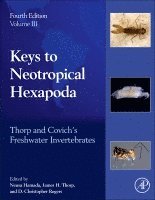
    Thorp and Covich's Freshwater Invertebrates

    Volume 3: Keys to Neotropical Hexapoda

    AvNeusa Hamada,James H. Thorp

    Inbunden, Engelska, 2018

    2 150 kr

    Beställningsvara. Skickas inom 5-8 vardagar. Fri frakt över 249 kr.

    Beskrivning

    Thorp and Covich's Freshwater Invertebrates, Fourth Edition: Keys to Neotropical Hexapoda, Volume Three, provides a guide for identifying and evaluating a key subphylum, hexapoda, for Central America, South America and the Antarctic. This book is essential for anyone working in water quality management, conservation, ecology or related fields in this region, and is developed to be the most modern and consistent set of taxonomic keys available. It is part of a series that is designed to provide a highly comprehensive, current set of keys for a given bioregion, with all keys written in a consistent style.

    This series can be used for a full spectrum of interested readers, from students, to university professors and government agencies.


    • Includes zoogeographic coverage of the entire Neotropics, from central M�xico and the Caribbean Islands, to the tip of South America
    • Identifies aquatic springtails (Collembola) and insects to the genus level for many groups, and family or subfamily level for less well known taxa
    • Presents multiple keys, from higher to lower taxonomic levels that are appropriate for each users' level of scientific knowledge and needs
    • Provides a general introduction and sections on limitations, terminology and morphology, material preparation and preservation, and references

    Produktinformation

    • Utgivningsdatum:2018-11-16
    • Mått:216 x 276 x 42 mm
    • Vikt:2 490 g
    • Format:Inbunden
    • Språk:Engelska
    • Antal sidor:836
    • Upplaga:4
    • Förlag:Elsevier Science
    • ISBN:9780128042236

    Utforska kategorier

    • Zoologi inom Naturvetenskap och teknik
    • Marinbiologi inom Naturvetenskap och teknik
    • Djurböcker inom Djur och Natur

    Mer om författaren

    Is a research scientist in Brazil with almost 30 years of experience. Neusa has been at Coordenação de Pesquisas em Entomologia (CPEN) since 1989. In the past 10 years 90 journal articles, 3 books local to the Brazilian market have published and Neusa has contributed an additional 21 chapters to a variety of titles. Dr. James H. Thorp is a professor and senior scientist at the University of Kansas (Lawrence, KS, United States). Prior to 2001, he was a distinguished professor and dean at Clarkson University, department chair and professor at the University of Louisville, associate professor and director of the Calder Ecology Center at Fordham University, and research ecologist at Georgia’s Savannah River Ecology Laboratory. He received his Baccalaureate from the University of Kansas and Masters and PhD degrees from North Carolina State. Prof. Thorp has been on the editorial board of three freshwater journals and is a former president of the International Society for River Science. His research interests run the gamut from organismal biology to community, ecosystem, and macrosystem ecology. While his research emphasizes aquatic invertebrates, he also studies fish ecology, especially food webs related. He has published more than 150 research articles and 10 books, including five volumes so far in the fourth edition of Thorp and Covich’s Freshwater Invertebrates.Dr. D. Christopher Rogers is a research zoologist at the University of Kansas with the Kansas Biological Survey and is affiliated with the Biodiversity Institute, with numerous research projects all over the world. He received his PhD degree from the University of New England in Armidale, NSW, Australia. Christopher specializes in freshwater and terrestrial crustaceans (particularly Branchiopoda and Malacostraca) and the invertebrate fauna of seasonally astatic wetlands on a global scale. He has more than 150 peer-reviewed publications in crustaceantaxonomy and invertebrate ecology, as well as published popular and scientific field guides and identification manuals to freshwater invertebrates. Christopher is an Associate Editor for the Journal of Crustacean Biology and a founding member of the Southwest Association of Freshwater Invertebrate Taxonomists. He has been involved in aquatic invertebrate conservation efforts all over the world.

    Innehållsförteckning

    • 1. Introduction2. Collembola3. Ephemeroptera4. Plecoptera5. Orthoptera6. Blattodea7. Hemiptera8. Megaloptera9. Neuroptera10. Trichoptera11. Lepidoptera12. Hymenoptera13. Mecoptera14. Odanata Introduction15. Coleoptera Introduction16. Diptera Introduction