• Fri frakt över 249 kr
  • •
  • Snabba leveranser
  • •
  • Billiga böcker
Kundservice

Du är på sajten för privatpersoner.

Företag, bibliotek eller offentlig verksamhet?

Du handlar på classic.bokus.com, där alla dina funktioner finns intakta.
Till classic.bokus.com
Bokus logotyp. Gå till startsidan.
  • Erbjudanden
  • Nyheter
  • Student
  • Topplistor
  • Barn & ungdom
  • Bokus Play
  • E-böcker
  • Pocketböcker
  • Spel & pussel

10% rabatt på allt med kod NYSTART10 →

Sidfot

Mina sidor

    Hjälp

    • Kundservice
    • Vanliga frågor och svar
    • Frakt och leverans
    • Retur vid ångerrätt
    • Reklamera vara
    • Betalning
    • Köpvillkor
    • Allmänna villkor
    • Information om webbplatsens tillgänglighet

    Om Bokus

    • Om oss
    • Pressrum
    • För studenter
    • För företag
    • För bibliotek och offentlig verksamhet
    • För leverantörer
    • Hållbarhet

    Populärt

    • Aktuella erbjudanden
    • Presentkort
    • Studentlitteratur
    • Nya böcker
    • Topplistor
    • Signerade böcker
    • Engelska böcker

    Inspiration

    • Boktips
    • BookTok
    • Populära bokserier
    • Barnbokskaraktärer
    • Populära författare
    Logotyp för Bokus
    Följ oss på Facebook (extern länk)Följ oss på Instagram (extern länk)Följ oss på YouTube (extern länk)Följ oss på TikTok (extern länk)
    bokus @ CookiesAnpassa cookiesIntegritetspolicyKöpvillkor
    Till Citymail hemsida (extern länk)Till Budbee hemsida (extern länk)Till Postnord hemsida (extern länk)Till Schenker hemsida (extern länk)Till Early Bird hemsida (extern länk)Till Walleys hemsida (extern länk)
    1. Medicin
    2. Omvårdnad och medicinska stödfunktioner
    3. Rehabilitering

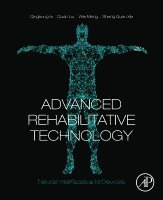
    Advanced Rehabilitative Technology

    Neural Interfaces and Devices

    AvQingsong Ai,Quan Liu

    Häftad, Engelska, 2018

    1 996 kr

    Beställningsvara. Skickas inom 10-15 vardagar. Fri frakt över 249 kr.

    Beskrivning

    Advanced Rehabilitative Technology: Neural Interfaces and Devices teaches readers how to acquire and process bio-signals using biosensors and acquisition devices, how to identify the human movement intention and decode the brain signal, how to design physiological and musculoskeletal models and establish the neural interfaces, and how to develop neural devices and control them efficiently using biological signals. The book takes a multidisciplinary theme between the engineering and medical field, including sections on neuromuscular/brain signal processing, human motion and intention recognition, biomechanics modelling and interfaces, and neural devices and control for rehabilitation.

    Each chapter goes through a detailed description of the bio-mechatronic systems used and then presents implementation and testing tactics. In addition, it details new neural interfaces and devices, some of which have never been published before in any journals or conferences. With this book, readers will quickly get up-to-speed on the most recent and future advancements in bio-mechatronics engineering for applications in rehabilitation.


    • Presents insights into emerging technologies and developments that are currently used or on the horizon in biological systems and mechatronics for rehabilitative purposes
    • Gives a comprehensive background of biological interfaces and details of new advances in the field
    • Addresses the challenges of rehabilitative applications in areas of bio-signal processing, bio-modelling, neural and muscular interface, and neural devices.
    • Provides substantial background materials and relevant case studies for each subject

    Produktinformation

    • Utgivningsdatum:2018-08-20
    • Mått:191 x 235 x 19 mm
    • Vikt:590 g
    • Format:Häftad
    • Språk:Engelska
    • Antal sidor:276
    • Förlag:Elsevier Science
    • ISBN:9780128145975

    Utforska kategorier

    • Rehabilitering inom Medicin
    • Biomedicinsk teknik inom Medicin

    Mer om författaren

    Qingsong Ai is currently a Professor at Wuhan University of Technology and a Senior Editor of Cogent Engineering. He is an author of more than 50 technical publications, proceedings, and editorials. In recent years, he has directed more than 10 research projects. His research interests include signal processing, rehabilitation robots, and advanced manufacturing technology. Quan Liu is currently chair professor at the School of Information Engineering at Wuhan University of Technology. In the past five years, she authored more than 100 technical publications, proceedings, editorials, and books. She has directed more than 20 research projects. Her research interests include signal processing, embedded systems, and robots and electronics. Prof. Liu received two national awards and three provincial and ministerial awards. She was awarded as the “National Excellent Teacher” in 2007. She is a Council Member of the Chinese Association of Electromagnetic Compatibility and the Hubei Institute of Electronics. Wei Meng is currently a lecturer at the School of Information Engineering, Wuhan University of Technology. His research interests include robot-assisted rehabilitation, human–robot interaction, and iterative learning control. He has co-authored five books, published more than 80 academic journal and conference papers, and holds 22 patents. Sheng Quan Xie is currently chair professor in robotics and autonomous systems at the Faculty of Engineering, University of Leeds. He has published seven books, 15 book chapters, and more than 300 international journal and conference papers. His current research interests include medical and rehabilitation robots and advanced robot control. Professor Xie was elected a Fellow of The Institution of Professional Engineers New Zealand in 2016. He has also served as a Technical Editor of the IEEE/ASME TRANSACTIONS ON MECHATRONICS.

    Innehållsförteckning

    • 1. Introduction2. State of the Art3. Neuromuscular Signal Acquisition and Pre-Processing4. EMG-Based Motion Recognition5. Brain Signal Acquisition and Pre-Processing6. EEG-Based Brain Intention Recognition7. Neuromuscular Modelling8. Neural Interfaces9. Neural Devices10. Conclusion