• Fri frakt över 249 kr
  • •
  • Snabba leveranser
  • •
  • Billiga böcker
Kundservice

Du är på sajten för privatpersoner.

Företag, bibliotek eller offentlig verksamhet?

Du handlar på classic.bokus.com, där alla dina funktioner finns intakta.
Till classic.bokus.com
Bokus logotyp. Gå till startsidan.
  • Erbjudanden
  • Nyheter
  • Student
  • Topplistor
  • Barn & ungdom
  • Bokus Play
  • E-böcker
  • Pocketböcker
  • Spel & pussel

10% rabatt på allt med kod: NYSTART10 →

Sidfot

Mina sidor

    Hjälp

    • Kundservice
    • Vanliga frågor och svar
    • Frakt och leverans
    • Retur vid ångerrätt
    • Reklamera vara
    • Betalning
    • Köpvillkor
    • Allmänna villkor
    • Information om webbplatsens tillgänglighet

    Om Bokus

    • Om oss
    • Pressrum
    • För studenter
    • För företag
    • För bibliotek och offentlig verksamhet
    • För leverantörer
    • Hållbarhet

    Populärt

    • Aktuella erbjudanden
    • Presentkort
    • Studentlitteratur
    • Nya böcker
    • Topplistor
    • Signerade böcker
    • Engelska böcker

    Inspiration

    • Boktips
    • BookTok
    • Populära bokserier
    • Barnbokskaraktärer
    • Populära författare
    Logotyp för Bokus
    Följ oss på Facebook (extern länk)Följ oss på Instagram (extern länk)Följ oss på YouTube (extern länk)Följ oss på TikTok (extern länk)
    bokus @ CookiesAnpassa cookiesIntegritetspolicyKöpvillkor
    Till Citymail hemsida (extern länk)Till Budbee hemsida (extern länk)Till Postnord hemsida (extern länk)Till Schenker hemsida (extern länk)Till Early Bird hemsida (extern länk)Till Walleys hemsida (extern länk)
    1. Naturvetenskap och teknik
    2. Teknik och industri
    3. Biokemisk teknik

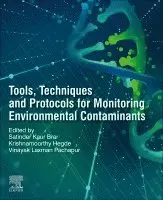
    Tools, Techniques and Protocols for Monitoring Environmental Contaminants

    AvSatinder Kaur Brar,Krishnamoorthy Hegde

    Häftad, Engelska, 2019

    2 244 kr

    Beställningsvara. Skickas inom 10-15 vardagar. Fri frakt över 249 kr.

    Beskrivning

    Tools, Techniques and Protocols for Monitoring Environmental Contaminants describes information on the strategic integration of available monitoring methods with molecular techniques, with a focus on omics (DNA, RNA and protein based) and molecular imprinted polymer and nanomaterial based advanced biosensors for environmental applications. It discusses the most commonly practiced analytic techniques, such as HPLC, MS, GCMS and traditional biosensors, giving an overview of the benefits of advanced biosensors over commonly practiced methods in the rapid and reliable assessment of environmental contaminants.

    As environmental contaminants have become one of the serious concerns in terms of their rapid growth and monitoring in the environment, which is often limited due to costly and laborious methods, this book provides a comprehensive update on their removal, the challenges they create for environmental regulatory agencies, and their diverse effects on terrestrial and aquatic environments.


    • Provides methods for assessing and monitoring environmental contaminants
    • Includes recent advancement in molecular techniques
    • Outlines rapid environmental monitoring methods
    • Explains the use of biosensors for environmental monitoring
    • Reviews monitoring methods beyond conventional analytic techniques

    Produktinformation

    • Utgivningsdatum:2019-06-05
    • Mått:191 x 235 x 27 mm
    • Vikt:790 g
    • Format:Häftad
    • Språk:Engelska
    • Antal sidor:432
    • Förlag:Elsevier Science
    • ISBN:9780128146798

    Utforska kategorier

    • Biokemisk teknik inom Naturvetenskap och teknik
    • Tillverkningsteknik inom Naturvetenskap och teknik
    • Miljöteknik inom Naturvetenskap och teknik

    Mer om författaren

    Satinder Kaur Brar is full professor at York University, Canada. She is leading the research group on the Bioprocessing and Nano-Enzyme Formulation Facility (BANEFF) at INRS. Her research interests lie in the development of finished products (formulations) of wastewater and wastewater sludge based value-added bioproducts, such as enzymes, organic acids, food bioproducts, platform chemicals and circular economy. The facility has so far led to the successful supervision of 30 PhDs, 8 Master’s and 6 postdoctoral students. She has collaborative programs with several industries in Canada and researchers from Argentina, Spain, Chile, Switzerland, France, Vietnam, China, USA, India, Thailand, Sri Lanka, Mexico, Morocco, Tunisia and Ivory Coast. She Editor-in-Chief of Nanotechnology for Environmental Engineering (Springer Journal) and has more than 400 publications, including ten books and handbooks that are academic standards and 6 patents. Krishnamoorthy Hegde. Krishnamoorthy Hegde is an FRQNT researcher at Institut National de la Recherche Scientifique (Eau, Terre et Environnement, INRS-ETE), Québec, Canada. His research interest lies in Green synthesis of functionalized polymers, Development of advanced biosensors for environmental applications, conversion of biomass waste and industrial waste for biofuel production, Technology development for treatment of environmental contaminants in effluents, waste water and drinking water, development for microbial and biocatalyst assisted degradation of petroleum crude wastes (bioremediation). He completed his PhD in Biotechnology from Indian Institute of Technology Guwahati in 2014 and holds more than 8 years’ industrial and academic research experience in the field of molecular biology, Protein Chemistry, Genetic Engineering Technology, metabolic engineering, biocatalysis, Bioprocess Development, and renewable energy. During his industrial research tenure, he worked for nearly 3 years, as a project leader at his former work place (Navya Biologicals Pvt. Ltd., India) towards metabolic pathway engineering of yeast (Saccharomyces cerevisiae, Pichia pastoris) for production of therapeutic recombinant proteins. One of the upstream metabolic engineering project he was involved as a lead researcher in the year 2007-2008 is now at the finishing stage (formulation) to release its product to market in India. Further, during his industrial postdoctoral research in India, he contributed significantly at Hindustan Petroleum Corporation Limited, Green R&D (HPCL GRD), India towards sustainable biocatalyst development, development of novel technology for bioremediation and effluent waste treatment for petrochemical wastes, technology transfer and field trials of the ‘in-house’ techniques developed at laboratory scale in petroleum refineries. In addition, he also worked on industrial-academic collaborative projects towards pathway engineering and strain improvement for biobutanol production during his industrial postdoctoral research. His research contribution is credited with more than 25 peer reviewed publications and 5 patents. Dr. Pachapur is currently a researcher at CRIQ (Research Center Industrial Du Québec) as industrial partner and Institut National de la Recherche Scientifique, (Eau, Terre et Environnement, INRS-ETE) as university partner under the receipt of "MITACS Accelerate Scholarship-2018". Dr. Pachapur also holds the "FRQNT Post-Doctoral Merit scholarship-2017," carried out at LAVAL University (Department of Civil Engineering and Water Engineering) on novel hydrolysis for forest residues. Dr. Pachapur completed his Ph.D in Environmental Biotechnology from INRS-ETE in 2017 on Bio-hydrogen production using co-culture system. During PhD tenure, he has achieved 10 article publications across international journals (8 research and 2 reviews) and 1 US and CANADA patent submission. Recently his Ph.D thesis was awarded as "BEST THESIS PRIZE FOR INOVATION-2017" across three INRS centers. At "National Biodiesel Conference" in San Diego, U.S.A in January 2017, his Ph.D report was recognized as "Next Generation Scientists" and presentation was awarded with a scholarship. Dr. Pachapur has nearly 8+ years of industrial and academic experience in the related field of molecular, microbiology, fermentation, analytical and proteomics platforms. Working on emerging areas of industrial biotechnology such as bioremediation using enzymes, bio-valorization of industry wastes, development of novel-green method, molecular profiling on microbial pathways, co-culture fermentation for biofuels and platform chemicals production from industrial wastes. Till now, Dr. Pachapur has achieved 25+ peer reviewed publications across internationals journals, book chapters with above 300 citations, 10 research communications in conferences and 2 patent submissions to his credit.

    Innehållsförteckning

    • Overview of Environmental monitoring methodology1. An overview of analytical methodology for environmental monitoring2. A perspective of advanced biosensors for environmental monitoring3. An overview of sensitivity and selectivity of biosensors4. Potential application of advanced sensor systems for real time monitoring of waste water treatment plantsDNA and RNA and aptamer based techniques5. An overview of DNA/RNA based monitoring tools and biosensors. Benefits and applications in environmental toxicology6. Recent advances in oligonucleotide based sensor technology for detection of pharmaceuticals in the environment7. Recent advances in oligonucleotide based sensor technology for detection of endocrine disrupting chemicals (EDC) in the environment8. Oligonucleotide based biosensors for detection of environmental heavy metal contaminantsProtein/Metabolite based Techniques (DNAzymes, Aptazymes, Enzymes, Antibody etc.)9. An overview of Protein/metabolite based advanced monitoring tools and biosensors. Benefits and applications in environmental toxicology10. Advances in protein based biosensors for detection of pharmaceutical contaminants in the environment11. Advances in protein based biosensors for detection of pesticide contaminants in the environment12. Advances in protein based biosensors for detection of metal contaminants in the environment13. Advances in whole cell based biosensors for environmental monitoring14. Recent trends in advancement of antibody based biosensor systems for environmental monitoring15. An overview of enzyme based biosensors for environmental monitoringSynthetic polymer/other methods16. An overview of advanced monitoring tools and sensors. Benefits and applications in environmental toxicology17. Molecular imprinted polymer based biosensors for detection of pharmaceutical contaminants in the environment18. Molecular imprinted polymer based biosensors for detection of pesticide contaminants in the environment19. Molecular imprinted polymer based biosensors for detection of metal contaminants in the environment20. Recent advances in nanomaterial based sensors as tool for environmental monitoring