• Fri frakt över 249 kr
  • •
  • Snabba leveranser
  • •
  • Billiga böcker
Kundservice

Du är på sajten för privatpersoner.

Företag, bibliotek eller offentlig verksamhet?

Du handlar på classic.bokus.com, där alla dina funktioner finns intakta.
Till classic.bokus.com
Bokus logotyp. Gå till startsidan.
  • Erbjudanden
  • Nyheter
  • Student
  • Topplistor
  • Barn & ungdom
  • Bokus Play
  • E-böcker
  • Pocketböcker
  • Spel & pussel

10% rabatt på allt med kod: NYSTART10 →

Sidfot

Mina sidor

    Hjälp

    • Kundservice
    • Vanliga frågor och svar
    • Frakt och leverans
    • Retur vid ångerrätt
    • Reklamera vara
    • Betalning
    • Köpvillkor
    • Allmänna villkor
    • Information om webbplatsens tillgänglighet

    Om Bokus

    • Om oss
    • Pressrum
    • För studenter
    • För företag
    • För bibliotek och offentlig verksamhet
    • För leverantörer
    • Hållbarhet

    Populärt

    • Aktuella erbjudanden
    • Presentkort
    • Studentlitteratur
    • Nya böcker
    • Topplistor
    • Signerade böcker
    • Engelska böcker

    Inspiration

    • Boktips
    • BookTok
    • Populära bokserier
    • Barnbokskaraktärer
    • Populära författare
    Logotyp för Bokus
    Följ oss på Facebook (extern länk)Följ oss på Instagram (extern länk)Följ oss på YouTube (extern länk)Följ oss på TikTok (extern länk)
    bokus @ CookiesAnpassa cookiesIntegritetspolicyKöpvillkor
    Till Citymail hemsida (extern länk)Till Budbee hemsida (extern länk)Till Postnord hemsida (extern länk)Till Schenker hemsida (extern länk)Till Early Bird hemsida (extern länk)Till Walleys hemsida (extern länk)
    1. Naturvetenskap och teknik
    2. Geovetenskap
    3. Geovetenskap

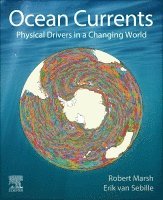
    Ocean Currents

    Physical Drivers in a Changing World

    AvRobert Marsh,Erik van Sebille

    Häftad, Engelska, 2021

    1 477 kr

    Beställningsvara. Skickas inom 10-15 vardagar. Fri frakt över 249 kr.

    Beskrivning

    Ocean Currents: Physical Drivers in a Changing World opens with a general introduction to the character, measurement, and simulation of ocean currents, leading to a physical and dynamical framework for understanding the wide variety of flows encountered in the oceans. The book comprises chapters covering distinct aspects of contrasting ocean currents: broad and slow, deep and shallow, narrow and swift, large scale and small scale, low latitudes and high latitudes, and moving in horizontal and vertical planes. Through this approach the authors cover a wide range of applications, from local to global, with considerable geographical context.

    • Provides analyses of ocean observations and numerical model simulations, highlighting the pathways and drift associated with ocean currents, around the World Ocean, linked to online exercises for instructors and students that extend this perspective
    • Presents applications to natural phenomena, showing how ocean currents shape marine ecosystems, helping researchers understand the distribution and adaptation of life in the oceans
    • Addresses societal challenges, specifically how ocean currents disperse pollutants (e.g. plastic) from coastal sources and how the global ocean circulation is central to our changing climate, helping students and researchers develop an interdisciplinary approach to global environmental change

    Produktinformation

    • Utgivningsdatum:2021-06-25
    • Mått:191 x 235 x 30 mm
    • Vikt:1 110 g
    • Format:Häftad
    • Språk:Engelska
    • Antal sidor:380
    • Förlag:Elsevier Science
    • ISBN:9780128160596

    Utforska kategorier

    • Geovetenskap inom Naturvetenskap och teknik
    • Biovetenskap inom Naturvetenskap och teknik

    Mer om författaren

    Professor Robert Marsh holds a Chair in Oceanography and Climate at the University of Southampton. With disciplinary expertise in Physical Oceanography, he has a wide range of experience across ocean and climate science, and specifically an in-depth knowledge of ocean currents. Examples of applied studies include the influences of ocean currents on sea turtle hatchlings, volcanic pumice and icebergs. He also co-pioneered the development and use of ocean, climate and Earth System models, and the water mass transformation framework that provides a novel perspective on physical and biogeochemical processes in the oceans. He has extensive experience of undergraduate and postgraduate oceanography teaching, both in the classroom and in the field. He is lead or co-author of around 100 peer-reviewed publications. Dr Erik van Sebille is an Professor in Oceanography at Utrecht University, investigating the time scales and pathways of the global ocean circulation. His research focuses on how ocean currents transport heat and nutrients, as well as marine organisms and plastics between different regions. He has led the “Tracking Of Plastic In Our Seas” (TOPIOS) project, funded by European Research Council Starting Grant. He won the 2016 European Geosciences Union (EGU) Ocean Division Outstanding Young Scientist Award, a 2019 American Geophysical Union (AGU) James B. Macelwane Medal and the 2020 European Research Council (ERC) Public Engagement with Research Award in the category Press & media relations. He is lead or co-author of more than 100 peer-reviewed publications.

    Innehållsförteckning

    • 1. Introduction to ocean currents - basic principles of cause and effect, measurement and modelling tools, etc.2. Global gyres/Ekman drift - slow background flows and evolution/plastics/volcanic pumice/tsunami debris3. Global western boundary currents and life - swift flows and marine life; dispersal of turtle hatchlings4. Global eastern boundary currents and life - European Slope Current; Californian, Humboldt and Benguela Currents; links to upwelling and shifting ecosystems5. Currents near the Equator and fast trans-basin flows - links to tropical climate variability (especially El Nino)6. Connecting Oceans with upper ocean flows - Agulhas and Tasman leakage (connecting Pacific, Indian and Atlantic Oceans)7. Polar currents, icebergs and sea ice - the Antarctic Coastal Current and the Labrador Current (conveying icebergs); the East Greenland Current (and sea ice)8. Connecting shallow (warm) and deep (cold) currents with climate - the Atlantic Meridional Overturning Circulation; the global Conveyor Belt circulation9. Seasonal flows in shallow shelf seas (around the world) and implications for pollution/biology10. Indigenous (ancient) knowledge of ocean currents - e.g., colonisation of Australia, Polynesia11. Utility of ocean currents for seafarers in recorded history - e.g., use of Gulf Stream for trans-Atlantic trade12. Research Challenges and the Future - How might new technologies help us to develop a more complete understanding of ocean currents? How might currents change with climate, how might they change climate?