• Fri frakt över 249 kr
  • •
  • Snabba leveranser
  • •
  • Billiga böcker
Kundservice

Du är på sajten för privatpersoner.

Företag, bibliotek eller offentlig verksamhet?

Du handlar på classic.bokus.com, där alla dina funktioner finns intakta.
Till classic.bokus.com
Bokus logotyp. Gå till startsidan.
  • Erbjudanden
  • Nyheter
  • Student
  • Topplistor
  • Barn & ungdom
  • Bokus Play
  • E-böcker
  • Pocketböcker
  • Spel & pussel

10% rabatt på allt med kod: NYSTART10 →

Sidfot

Mina sidor

    Hjälp

    • Kundservice
    • Vanliga frågor och svar
    • Frakt och leverans
    • Retur vid ångerrätt
    • Reklamera vara
    • Betalning
    • Köpvillkor
    • Allmänna villkor
    • Information om webbplatsens tillgänglighet

    Om Bokus

    • Om oss
    • Pressrum
    • För studenter
    • För företag
    • För bibliotek och offentlig verksamhet
    • För leverantörer
    • Hållbarhet

    Populärt

    • Aktuella erbjudanden
    • Presentkort
    • Studentlitteratur
    • Nya böcker
    • Topplistor
    • Signerade böcker
    • Engelska böcker

    Inspiration

    • Boktips
    • BookTok
    • Populära bokserier
    • Barnbokskaraktärer
    • Populära författare
    Logotyp för Bokus
    Följ oss på Facebook (extern länk)Följ oss på Instagram (extern länk)Följ oss på YouTube (extern länk)Följ oss på TikTok (extern länk)
    bokus @ CookiesAnpassa cookiesIntegritetspolicyKöpvillkor
    Till Citymail hemsida (extern länk)Till Budbee hemsida (extern länk)Till Postnord hemsida (extern länk)Till Schenker hemsida (extern länk)Till Early Bird hemsida (extern länk)Till Walleys hemsida (extern länk)
    1. Naturvetenskap och teknik
    2. Teknik och industri
    3. Maskinteknik och material

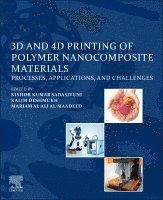
    3D and 4D Printing of Polymer Nanocomposite Materials

    Processes, Applications, and Challenges

    AvKishor Kumar Sadasivuni,Kalim Deshmukh

    Häftad, Engelska, 2019

    2 728 kr

    Beställningsvara. Skickas inom 10-15 vardagar. Fri frakt över 249 kr.

    Beskrivning

    3D and 4D Printing of Polymer Nanocomposite Materials: Processing, Applications, and Challenges covers advanced 3D and 4D printing processes and the latest developments in novel polymer-based printing materials, thus enabling the reader to understand and benefit from the advantages of this groundbreaking technology. The book presents processes, materials selection, and printability issues, along with sections on the preparation of polymer composite materials for 3D and 4D printing. Across the book, advanced printing techniques are covered and discussed thoroughly, including fused deposition modeling (FDM), selective laser sintering (SLS), selective laser melting (SLM), electron beam melting (EBM), inkjet 3D printing (3DP), stereolithography (SLA), and 3D plotting.

    Finally, major applications areas are discussed, including electronic, aerospace, construction and biomedical applications, with detailed information on the design, fabrication and processing methods required in each case.


    • Provides a thorough, clear understanding of polymer preparation techniques and 3D and 4D printing processes, with a view to specific applications
    • Examines synthesis, formation methodology, the dispersion of fillers, characterization, properties, and performance of polymer nanocomposites
    • Explores the possibilities of 4D printing, covering the usage of stimuli responsive hydrogels and shape memory polymers

    Produktinformation

    • Utgivningsdatum:2019-10-12
    • Mått:191 x 235 x undefined mm
    • Vikt:1 130 g
    • Format:Häftad
    • Språk:Engelska
    • Antal sidor:592
    • Förlag:Elsevier Science
    • ISBN:9780128168059

    Utforska kategorier

    • Maskinteknik och material inom Naturvetenskap och teknik
    • Tillverkningsteknik inom Naturvetenskap och teknik

    Mer om författaren

    Dr. Kishor Kumar Sadasivuni is an Assistant Professor at the Center for Advanced Materials, Qatar University, Doha, Qatar, with expertise in polymer composite materials and high-performance polymer nanocomposites for industrial applications. Since 2009, he has promoted interdisciplinary collaborations in nanocomposites and industrial technologies. His research includes sensor technology, piezoelectrics, energy storage, and flexible electronics. His prolific academic output encompasses numerous journal articles, book chapters, and edited volumes, with his publications amassing more than 17,000 citations. Dr. Kalim Deshmukh is a senior researcher at the New Technologies Research Centre, University of West Bohemia in Pilsen, Czech Republic. He has over 20 years of research experience in nanomaterials and polymeric materials, with particular expertise in polymer blends, nanocomposites, and nanohybrids. His work emphasizes nanoscale dispersion, interfacial chemistry, and structure–property relationships that influence material performance in applications such as energy storage, gas sensing, biosensing, electromagnetic interference (EMI) shielding, and high-k dielectrics. He has authored more than 200 publications, including original research articles and review papers, in leading international journals and with major publishers, such as the Royal Society of Chemistry (RSC), American Chemical Society (ACS), Elsevier, Wiley-VCH, Springer, and Taylor & Francis. In addition to his research contributions, he has edited or co-edited several books published by ACS, RSC, Elsevier, Springer, Wiley-VCH, and Wiley Scrivener. Professor Mariam AlAli AlMaadeed is Vice President for Research and Graduate Studies, Professor, Qatar University, Doha, Qatar. She received her Ph.D. in Materials Science from Alexandria University in Alexandria, Egypt in 2001, and joined the Physics Department at Qatar University in the same year. Prof. AlMaadeed has excellent experience and a large amount of internationally recognized work in the field of polymers, characterization and structure, as well as in nanocomposites and nanotechnology. Her work is featured in more than 130 journals and conference publications. Prof. AlMaadeed has given many consultations and workshops to a diverse group of organizations, across industry, government ministries, and communities. She is currently a member in many advisory committees and editorial board bodies such as Advanced Manufacturing: Polymer & Composites Science, Taylor and Francis and Emergent Materials, Springer. Prof. AlMaadeed has designed and contributed to many workshops, symposiums and conferences in the field of materials science, and in teaching and learning strategies. She received the Physics State Award for 2010, the Gulf Petrochemical Association (GPCA) Plastic Excellence Award in 2014 and the ISESCO Prize in Science & Technology 2016.

    Innehållsförteckning

    • 1. Introduction to 3D and 4D printing technology: State of the art and recent trends2. 3D and 4D printing of nanomaterials: Processing considerations for reliable printed nanocomposites3. Polymer-based conductive composites for 3D and 4D printing of electrical circuits4. 3D and 4D printing of pH-responsive and functional polymers and their composites5. Additive manufacturing (AM) of medical devices and scaffolds for tissue engineering based on 3D and 4D printing6. Shape memory polymer blends and composites for 3D and 4D printing applications7. Fabrication of 3D and 4D polymer micro- and nanostructures based on electrospinning8. Multifunctional polymer composites for 3D and 4D printing9. Graphene and graphene oxide-reinforced 3D and 4D printable composites10. 3D and 4D printing of polymer/CNTs-based conductive composites11. Medical and biomedical applications of 3D and 4D printed polymer nanocomposites12. Carbon black-reinforced 3D and 4D printable conductive polymer composites13. Photoactivate resin formulations and composites for optical 3D and 4D printing of functional materials and devices14. Hydrogels and hydrogel composites for 3D and 4D printing applications15. 3D and 4D printing of biomaterials and biocomposites, bioinspired composites, and related transformers16. 3D and 4D printed polymer composites for electronic applications17. Fundamentals and applications of 3D and 4D printing of polymers: Challenges in polymer processing and prospects of future research