• Fri frakt över 249 kr
  • •
  • Snabba leveranser
  • •
  • Billiga böcker
Kundservice

Du är på sajten för privatpersoner.

Företag, bibliotek eller offentlig verksamhet?

Du handlar på classic.bokus.com, där alla dina funktioner finns intakta.
Till classic.bokus.com
Bokus logotyp. Gå till startsidan.
  • Erbjudanden
  • Nyheter
  • Student
  • Topplistor
  • Barn & ungdom
  • Bokus Play
  • E-böcker
  • Pocketböcker
  • Spel & pussel

10% rabatt på allt med kod: NYSTART10 →

Sidfot

Mina sidor

    Hjälp

    • Kundservice
    • Vanliga frågor och svar
    • Frakt och leverans
    • Retur vid ångerrätt
    • Reklamera vara
    • Betalning
    • Köpvillkor
    • Allmänna villkor
    • Information om webbplatsens tillgänglighet

    Om Bokus

    • Om oss
    • Pressrum
    • För studenter
    • För företag
    • För bibliotek och offentlig verksamhet
    • För leverantörer
    • Hållbarhet

    Populärt

    • Aktuella erbjudanden
    • Presentkort
    • Studentlitteratur
    • Nya böcker
    • Topplistor
    • Signerade böcker
    • Engelska böcker

    Inspiration

    • Boktips
    • BookTok
    • Populära bokserier
    • Barnbokskaraktärer
    • Populära författare
    Logotyp för Bokus
    Följ oss på Facebook (extern länk)Följ oss på Instagram (extern länk)Följ oss på YouTube (extern länk)Följ oss på TikTok (extern länk)
    bokus @ CookiesAnpassa cookiesIntegritetspolicyKöpvillkor
    Till Citymail hemsida (extern länk)Till Budbee hemsida (extern länk)Till Postnord hemsida (extern länk)Till Schenker hemsida (extern länk)Till Early Bird hemsida (extern länk)Till Walleys hemsida (extern länk)
    1. Data och IT
    2. Informationsteknik: allmänt

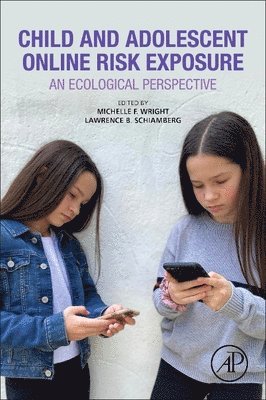
    Child and Adolescent Online Risk Exposure

    An Ecological Perspective

    AvMichelle F. Wright,Lawrence B. Schiamberg

    Häftad, Engelska, 2020

    1 190 kr

    Beställningsvara. Skickas inom 10-15 vardagar. Fri frakt över 249 kr.

    Beskrivning

    Child and Adolescent Online Risk Exposure: An Ecological Perspective focuses on online risks and outcomes for children and adolescents using an ecological perspective (i.e., the intersection of individuals in relevant contexts) for a better understanding of risks associated with the youth online experience. The book examines the specific consequences of online risks for youth and demonstrates how to develop effective and sensitive interventions and policies. Sections discuss why online risks are important, individual and contextual factors, different types of risk, online risks among special populations, such as LGBT youth, physically or intellectually disabled youth, and ethnic and religious minorities, and intervention efforts.

    • Examines online risks such as problematic internet use, contact risk behaviors, online exploitation, online hate, cyberbullying, and cyberstalking
    • Explores the concept of digital citizenship
    • Includes theoretical considerations and the prevalence of online risks
    • Covers policy and intervention recommendations for reducing online risks

    Produktinformation

    • Utgivningsdatum:2020-11-24
    • Mått:152 x 229 x 29 mm
    • Vikt:750 g
    • Format:Häftad
    • Språk:Engelska
    • Antal sidor:472
    • Förlag:Elsevier Science
    • ISBN:9780128174999

    Utforska kategorier

    • Informationsteknik: allmänt inom Data och IT
    • Sociala grupper och identitet inom Samhälle och politik
    • Barnpsykologi och utvecklingspsykologi inom Psykologi och pedagogik

    Mer om författaren

    Dr. Wright is a national and international expert on online risks among children, adolescents, and adults, and she has written extensively on the nature of online risks, the measurement of online risks, and the contextual factors that impact the likelihood of experiencing online risks. She has edited three books related to online risks and served as editor of five special issues on online risks. She has also written over 75 journal articles and book chapters related to the topic of online risks, and she was responsible for co-editing a report, Meaning of Online Problematic Situations for Children. Results of Qualitative Cross-Cultural Investigation of Nine European Countries, for the European Kids Online IV project. The report brought together qualitative research with children and adolescents on their exposure to online risks (and opportunities). Dr. Schiamberg has focused on two arenas of human development: 1) adolescent bullying, including the ecological contexts of bullying, particularly family factors, including the following: a) Barboza, G.E., Schiamberg, L.B., Oehmke, J., Korzeniewski, S.J., Post, L.A., & Heraux, C.G. (2009), Individual characteristics and the multiple contexts of adolescent bullying: An ecological perspective, Journal of Youth and Adolescence, 38(1), 101-121; b) Schiamberg, L, Barboza, G., Chee, G. and Hsieh, M. (2015). The adolescent-parent context and positive youth development in the ecology of cyberbullying. In M.F. Wright (ed.), A social-ecological approach to cyberbullying, Nova Science Publishers, 151-183; and 2) elder abuse in the community and, particularly in nursing homes, including contextual perspectives of physical abuse, emotional abuse and resident-on-resident abuse. He has previously served, in an advisory capacity, on the EPA Children’s Health Protection Advisory Committee and on the CDC Advisory Committee for Elder Abuse.

    Innehållsförteckning

    • PrefaceSection I: Introduction1. Introduction Lawrence B. Schiamberg and Michelle F. WrightSection II: Types of Online Risks2. Problematic internet use: causes, consequences, and future directions Michelle F. Wright, Tali Heiman and Dorit Olenik-Shemesh3. The process of exploitation and victimization of adolescents in digital environments: the contribution of authenticity and self-exploration John D. Ranney4. Online contact risk behaviors and risk factors among Japanese high school studentsIkuko Aoyama5. Understanding child and adolescent cyberbullyingOonagh L. Steer, Peter J.R. Macaulay and Lucy R. Betts6. Online aggression and romantic relationships in adolescenceChelsea Olson and Amy Bellmore7. The longitudinal associations of cyberbullying and cybervictimization: preliminary findings from a two-wave studyFatih Bayraktar and Michelle F. Wright8. The rising threat of cyberhate for young people around the globeSheri Bauman, Vanessa M. Perry and Sebastian Wachs9. Same incident, different story? Investigating early adolescents’ negative online peer interactions from different perspectivesSara Pabian, Sara Erreygers, Kathleen Van Royen and Heidi VandeboschSection III: Special Populations and Online Risks10. Parental vigilance, low self-control, and Internet dependency among rural adolescentsMagda Javakhishvili and Alexander T. Vazsonyi11. Cyberbullying perpetration and victimization among ethnic minority youth in the United States: similarities or differences across groups?Guadalupe Espinoza and Fardusa Rashid Ismail12. Racial and ethnic diversity in the social ecology of online harassment and cybervictimization: the adolescent school contextGia Elise Barboza and Lawrence B. Schiamberg13. Cyberbullying and cybervictimization among youth with disabilitiesMorgan A. Eldridge, Michelle L. Kilpatrick Demaray, Jonathan D. Emmons and Logan N. Riffle14. The negative online experiences of maltreated children and adolescentsMichelle F. Wright15. LGBTQ youth and digital media: online risksTyler Hatchel, Cagil Torgal, America J. El Sheikh, Luz E. Robinson, Alberto Valido and Dorothy L. Espelage16. Gendered nature of digital abuse in romantic relationships in adolescenceBeatriz VÍllora, Santiago Yubero, Elisa Larrañaga and Raúl NavarroSection IV: Interventions and Policies17. Advances in the cyberbullying literature: theory-based interventionsChristopher P. Barlett, Matthew M. Simmers and Luke W. Seyfert18. Online risk interventions: implications of theory of mind and other considerationsTina Montreuil and Hagit Malikin19. Using focus groups and quality circles to enable pupil voice in European teenagers from socioeconomically disadvantaged backgroundsNoel Purdy, Jayne Hamilton, Peter K. Smith, Catherine Culbert, Herbert Scheithauer, Nora Fiedler, Antonella Brighi, Consuelo Mameli, Annalisa Guarini, Damiano Menin, Trijntje Völlink and Roy A. Willems20. ConclusionMichelle F. Wright and Lawrence B. Schiamberg