• Fri frakt över 249 kr
  • •
  • Snabba leveranser
  • •
  • Billiga böcker
Kundservice

Du är på sajten för privatpersoner.

Företag, bibliotek eller offentlig verksamhet?

Du handlar på classic.bokus.com, där alla dina funktioner finns intakta.
Till classic.bokus.com
Bokus logotyp. Gå till startsidan.
  • Erbjudanden
  • Student
  • Topplistor
  • Barn & ungdom
  • Bokus Play
  • E-böcker
  • Ljudböcker
  • Pocketböcker
  • Spel och pussel

Skapa nya rutiner – hälsoböcker upp till 50% →

Sidfot

Mina sidor

    Hjälp

    • Kundservice
    • Vanliga frågor och svar
    • Frakt och leverans
    • Retur vid ångerrätt
    • Reklamera vara
    • Betalning
    • Köpvillkor
    • Allmänna villkor
    • Information om webbplatsens tillgänglighet

    Om Bokus

    • Om oss
    • Pressrum
    • För studenter
    • För företag
    • För bibliotek och offentlig verksamhet
    • För leverantörer
    • Hållbarhet

    Populärt

    • Aktuella erbjudanden
    • Presentkort
    • Studentlitteratur
    • Nya böcker
    • Topplistor
    • Signerade böcker
    • Engelska böcker

    Inspiration

    • Boktips
    • BookTok
    • Barnbokskaraktärer
    • Populära författare
    Logotyp för Bokus
    Följ oss på Facebook (extern länk)Följ oss på Instagram (extern länk)Följ oss på YouTube (extern länk)Följ oss på TikTok (extern länk)
    bokus @ CookiesAnpassa cookiesIntegritetspolicyKöpvillkor
    Till Citymail hemsida (extern länk)Till Budbee hemsida (extern länk)Till Postnord hemsida (extern länk)Till Schenker hemsida (extern länk)Till Early Bird hemsida (extern länk)Till Walleys hemsida (extern länk)
    1. Medicin
    2. Medicin: icke kliniska discipliner

    Logic and Critical Thinking in the Biomedical Sciences

    Volume 2: Deductions Based Upon Quantitative Data

    AvJules J. Berman

    Häftad, Engelska, 2020

    1 261 kr

    Beställningsvara. Skickas inom 10-15 vardagar. Fri frakt över 249 kr.

    Fler format och utgåvor

    E-bok

    1 754 kr

    Häftad

    1 265 kr

    E-bok

    1 754 kr

    Beskrivning

    All too often, individuals engaged in the biomedical sciences assume that numeric data must be left to the proper authorities (e.g., statisticians and data analysts) who are trained to apply sophisticated mathematical algorithms to sets of data. This is a terrible mistake. Individuals with keen observational skills, regardless of their mathematical training, are in the best position to draw correct inferences from their own data and to guide the subsequent implementation of robust, mathematical analyses. Volume 2 of Logic and Critical Thinking in the Biomedical Sciences provides readers with a repertoire of deductive non-mathematical methods that will help them draw useful inferences from their own data.Volumes 1 and 2 of Logic and Critical Thinking in the Biomedical Sciences are written for biomedical scientists and college-level students engaged in any of the life sciences, including bioinformatics and related data sciences.

    • Demonstrates that a great deal can be deduced from quantitative data, without applying any statistical or mathematical analyses
    • Provides readers with simple techniques for quickly reviewing and finding important relationships hidden within large and complex sets of data
    • Using examples drawn from the biomedical literature, discusses common pitfalls in data interpretation and how they can be avoided
    Produktinformation

    • Utgivningsdatum:2020-07-09
    • Mått:191 x 235 x 18 mm
    • Vikt:590 g
    • Format:Häftad
    • Språk:Engelska
    • Antal sidor:290
    • Förlag:Elsevier Science
    • ISBN:9780128213698

    Utforska kategorier

    • Medicin: icke kliniska discipliner inom Medicin
    • Folkhälsa och hälsopedagogik inom Medicin

    Mer om författaren

    Jules J. Berman, Ph.D., M.D. holds degrees from MIT, Temple University, and the University of Miami. He served as Chief of Anatomic Pathology, Surgical Pathology, and Cytopathology at the Veterans Administration Medical Center in Baltimore, Maryland, with joint appointments at the University of Maryland Medical Center and at the Johns Hopkins Medical Institutions. He later served at the US National Cancer Institute as a medical officer and as program director for pathology informatics in the Cancer Diagnosis Program. Dr. Berman is a past president of the Association for Pathology Informatics and the 2011 recipient of the association’s Lifetime Achievement Award.Jules J. Berman, Ph.D., M.D. holds degrees from MIT, Temple University, and the University of Miami. He served as Chief of Anatomic Pathology, Surgical Pathology, and Cytopathology at the Veterans Administration Medical Center in Baltimore, Maryland, with joint appointments at the University of Maryland Medical Center and at the Johns Hopkins Medical Institutions. He later served at the US National Cancer Institute as a medical officer and as program director for pathology informatics in the Cancer Diagnosis Program. Dr. Berman is a past president of the Association for Pathology Informatics and the 2011 recipient of the association’s Lifetime Achievement Award. He has first-authored more than 100 journal articles and has written 18 science books. His most recent titles, published by Elsevier, include: -Taxonomic Guide to Infectious Diseases: Understanding the Biologic Classes of Pathogenic Organisms, 1st edition (2012) -Principles of Big Data: Preparing, Sharing, and Analyzing Complex Information (2013) -Rare Diseases and Orphan Drugs: Keys to Understanding and Treating the Common Diseases (2014) -Repurposing Legacy Data: Innovative Case Studies (2015) -Data Simplification: Taming Information with Open Source Tools (2016) -Precision Medicine and the Reinvention of Human Disease (2018) -Principles and Practice of Big Data: Preparing, Sharing, and Analyzing Complex Information, Second Edition (2018) -Taxonomic Guide to Infectious Diseases: Understanding the Biologic Classes of Pathogenic Organisms, 2nd edition (2019)

    Innehållsförteckning

    • 1. Learning what counting tells usSection 1.1. Science is mostly about counting stuff Section 1.2. Never count on an accurate count Section 1.3. Large samples cannot compensate for nonrepresentative data Section 1.4. The perils of combining data setsSection 1.5. Compositionality: Why small outnumbers large Section 1.6. Looking at data Section 1.7. Counting mutations Section 1.8. Chromosome length and the frequency of genetic diseases Section 1.9. Counting instances of species Section 1.10. Counting garbage Glossary References 2. Drawing inferences from absences of data values Section 2.1. When the important data is what you do not see Section 2.2. The power of negative thinking Section 2.3. Absence of x-rays emitted by hot cups of coffee Section 2.4. Absence of laboratory findings in SIDS (sudden infant death syndrome) Section 2.5. Absence of lethal toxicity resulting from damage to the epigenome and systems that regulate gene expressionSection 2.6. Absence of deficiency diseases among highly conserved genesSection 2.7. Absence of shared conserved noncoding elements Section 2.8. Absence of animals with built-in wheels Section 2.9. Absence of microcancers Section 2.10. Absence of frogs on small islands Section 2.11. Absence of great apes roaming outside Africa Section 2.12. Absence of penguins in northern hemisphere Section 2.13. Absence of samarium-146 isotope from earth Section 2.14. Obligation to look for absences Glossary References 3. Drawing inferences from data ranges Section 3.1. Why are data ranges important? Section 3.2. The range of dust sizes that cause human disease Section 3.3. When tumor cells have very small nuclei Section 3.4. The range of heights that animals can jump Section 3.5. Blood chemistry Section 3.6. Narrow ranges of enzyme activity Section 3.7. The number of different types of cancers Section 3.8. Limits imposed by the dynamic range of measuring instruments Glossary References 4. Drawing inferences from outliers and exceptions Section 4.1. One is the loneliest number Section 4.2. Ozone, the outlier that couldn’t be believed Section 4.3. Neoplasms having very short latency periods Section 4.4. Outliers as sentinels for common diseases Section 4.5. How exceptions elucidate pathogenesis Section 4.6. Finding the outliers Glossary References 5. What we learn when our data are abnormal Section 5.1. Creating normal distributions Section 5.2. Pareto’s principle and Zipf distribution in biological systems Section 5.3. Pareto’s bias: Favoring the common items Section 5.4. Recognizing composite diseases Section 5.5. Multimodality in population data Section 5.6. Removing some of the mystery around ovarian cancers Section 5.7. Living with Berkson’s paradox Glossary References 6. Using time to solve cause and effect dilemmas Section 6.1. Timing is everything Section 6.2. Does anybody really know what time it is? Section 6.3. Temporal paradoxes Section 6.4. Timing the progression of cancer development Section 6.5. When the temporal sequence is observed incorrectly Section 6.6. Smoke and mirrors Section 6.7. Refusing simple answers Section 6.8. Dose-dependent effects and the fallacy of causation Section 6.9. Time-window bias Section 6.10. Replacing causation with pathogenesis Glossary References 7. Heuristic methods that use random numbers Section 7.1. The value of randomness Section 7.2. Repeated sampling Section 7.3. Monte Carlo simulations for tumor growth and metastasis Section 7.4. A seemingly unlikely string of occurrences Section 7.5. Cancer is not caused by bad luck Section 7.6. Several approaches to the birthday problem Section 7.7. Modeling cancer incidence by age Section 7.8. The Monty Hall puzzle Glossary References 8. Estimations for biomedical data Section 8.1. The inestimable value of estimates Section 8.2. The limit of hemoglobin concentration in red blood cells Section 8.3. CODIS: How to do it all without having it all Section 8.4. Some useful approximation methods Section 8.5. Some useful numbers Glossary References
    Hoppa över listan

    Mer från samma författare

    Jules J. Berman - Principles of Big Data, Häftad

    Principles of Big Data

    Jules J. Berman

    Häftad, 2013

    564 kr

    Jules J. Berman - Principles of Big Data, E-bok

    Principles of Big Data

    Jules J. Berman

    E-bok
    2013

    650 kr

    Jules J. Berman - Taxonomic Guide to Infectious Diseases, Inbunden

    Taxonomic Guide to Infectious Diseases

    Jules J. Berman

    Inbunden, 2012

    713 kr

    Jules J. Berman - Taxonomic Guide to Infectious Diseases, E-bok

    Taxonomic Guide to Infectious Diseases

    Jules J. Berman

    E-bok
    2012

    796 kr

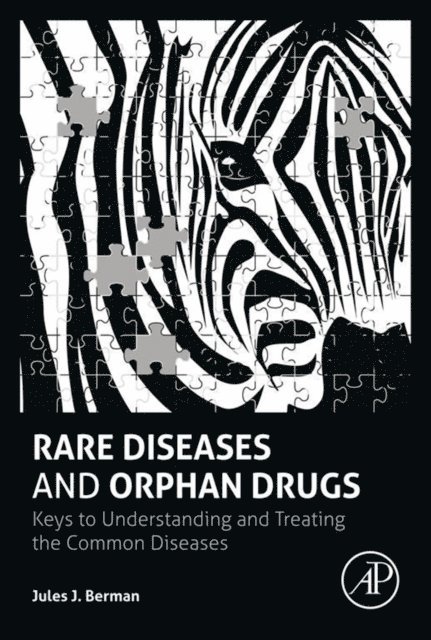
    Jules J. Berman - Rare Diseases and Orphan Drugs, Inbunden

    Rare Diseases and Orphan Drugs

    Jules J. Berman

    Inbunden, 2014

    764 kr

    Jules J. Berman - Rare Diseases and Orphan Drugs, E-bok

    Rare Diseases and Orphan Drugs

    Jules J. Berman

    E-bok
    2014

    786 kr

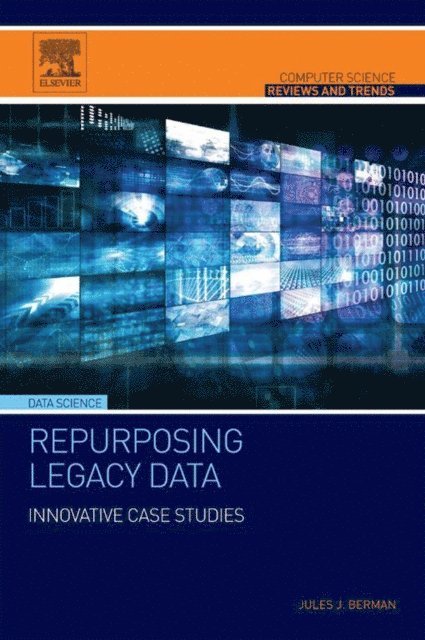
    Jules J. Berman - Repurposing Legacy Data, Häftad

    Repurposing Legacy Data

    Jules J. Berman

    Häftad, 2015

    502 kr

    Jules J. Berman - Repurposing Legacy Data, E-bok

    Repurposing Legacy Data

    Jules J. Berman

    E-bok
    2015

    567 kr

    Jules J. Berman - Data Simplification, Häftad

    Data Simplification

    Jules J. Berman

    Häftad, 2016

    572 kr

    Jules J. Berman - Data Simplification, E-bok

    Data Simplification

    Jules J. Berman

    E-bok
    2016

    677 kr

    Hoppa över listan

    Du kanske också är intresserad av

    Jules J. Berman - Logic and Critical Thinking in the Biomedical Sciences, E-bok

    Logic and Critical Thinking in the Biomedical Sciences

    Jules J. Berman

    E-bok
    2020

    1 754 kr

    Jules J. Berman - Logic and Critical Thinking in the Biomedical Sciences, E-bok

    Logic and Critical Thinking in the Biomedical Sciences

    Jules J. Berman

    E-bok
    2020

    1 754 kr

    Jules J. Berman - Logic and Critical Thinking in the Biomedical Sciences, Häftad

    Logic and Critical Thinking in the Biomedical Sciences

    Jules J. Berman

    Häftad, 2020

    1 265 kr

    Jules J. Berman - Repurposing Legacy Data, E-bok

    Repurposing Legacy Data

    Jules J. Berman

    E-bok
    2015

    567 kr

    Jules J. Berman - Principles of Big Data, E-bok

    Principles of Big Data

    Jules J. Berman

    E-bok
    2013

    650 kr

    Jules J. Berman - Biomedical Informatics, Häftad

    Biomedical Informatics

    Jules J. Berman

    Häftad, 2006

    2 816 kr

    Jules J. Berman - Rare Diseases and Orphan Drugs, E-bok

    Rare Diseases and Orphan Drugs

    Jules J. Berman

    E-bok
    2014

    786 kr

    Jules J. Berman - Methods in Medical Informatics, Inbunden

    Methods in Medical Informatics

    Jules J. Berman

    Inbunden, 2010

    3 036 kr

    Jules J. Berman - Data Simplification, E-bok

    Data Simplification

    Jules J. Berman

    E-bok
    2016

    677 kr

    Jules J. Berman - Taxonomic Guide to Infectious Diseases, Häftad

    Taxonomic Guide to Infectious Diseases

    Jules J. Berman

    Häftad, 2019

    1 468 kr