• Fri frakt över 249 kr
  • •
  • Snabba leveranser
  • •
  • Billiga böcker
Kundservice

Du är på sajten för privatpersoner.

Företag, bibliotek eller offentlig verksamhet?

Du handlar på classic.bokus.com, där alla dina funktioner finns intakta.
Till classic.bokus.com
Bokus logotyp. Gå till startsidan.
  • Erbjudanden
  • Nyheter
  • Student
  • Topplistor
  • Barn & ungdom
  • Bokus Play
  • E-böcker
  • Pocketböcker
  • Spel & pussel

10% rabatt på allt med kod: NYSTART10 →

Sidfot

Mina sidor

    Hjälp

    • Kundservice
    • Vanliga frågor och svar
    • Frakt och leverans
    • Retur vid ångerrätt
    • Reklamera vara
    • Betalning
    • Köpvillkor
    • Allmänna villkor
    • Information om webbplatsens tillgänglighet

    Om Bokus

    • Om oss
    • Pressrum
    • För studenter
    • För företag
    • För bibliotek och offentlig verksamhet
    • För leverantörer
    • Hållbarhet

    Populärt

    • Aktuella erbjudanden
    • Presentkort
    • Studentlitteratur
    • Nya böcker
    • Topplistor
    • Signerade böcker
    • Engelska böcker

    Inspiration

    • Boktips
    • BookTok
    • Populära bokserier
    • Barnbokskaraktärer
    • Populära författare
    Logotyp för Bokus
    Följ oss på Facebook (extern länk)Följ oss på Instagram (extern länk)Följ oss på YouTube (extern länk)Följ oss på TikTok (extern länk)
    bokus @ CookiesAnpassa cookiesIntegritetspolicyKöpvillkor
    Till Citymail hemsida (extern länk)Till Budbee hemsida (extern länk)Till Postnord hemsida (extern länk)Till Schenker hemsida (extern länk)Till Early Bird hemsida (extern länk)Till Walleys hemsida (extern länk)
    1. Naturvetenskap och teknik
    2. Matematik och naturvetenskap
    3. Biologi

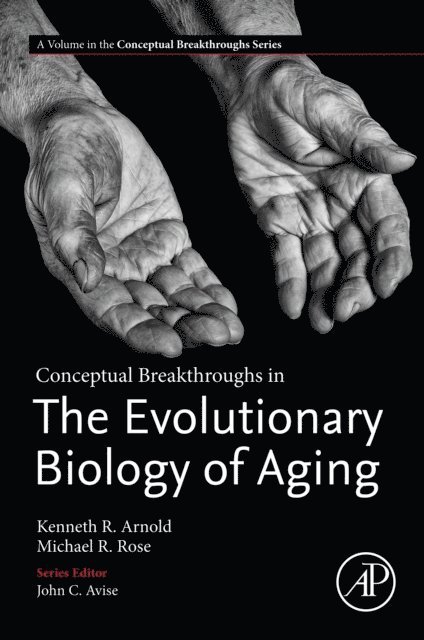
    Conceptual Breakthroughs in The Evolutionary Biology of Aging

    AvKenneth R. Arnold,Michael R. Rose

    Häftad, Engelska, 2023

    Del i serien Conceptual Breakthroughs

    1 175 kr

    Beställningsvara. Skickas inom 10-15 vardagar. Fri frakt över 249 kr.

    Beskrivning

    Conceptual Breakthroughs in the Evolutionary Biology of Aging continues the innovative Conceptual Breakthroughs series by providing a comprehensive outline of the major breakthroughs that built the evolutionary biology of aging as a leading scientific field. Following the evolutionary study of aging from its humble origins to the present, the book's chapters treat the field's breakthroughs one at a time. Users will find a concise and accessible analysis of the science of aging viewed through an evolutionary lens. Building upon widely-cited studies conducted by author Michael Rose, this book covers 30 subsequent years of growth and development within the field.

    The book highlights key publications for those who are not experts in the field, providing an important resource for researchers. Given the prevailing interest in changing the aging process dramatically, it is a powerful tool for readers who have a vested interest in understanding its causes and future control measures.

    • Reviews cell-molecular theories of aging in the light of evolutionary biology
    • Offers an evolutionary analysis of prospects for mitigating aging not commonly discussed within private and public sectors
    • Provides readers with a radically different perspective on contemporary biological gerontology, specifically through the lens of evolutionary biology

    Produktinformation

    • Utgivningsdatum:2023-07-13
    • Mått:152 x 229 x 19 mm
    • Vikt:500 g
    • Format:Häftad
    • Språk:Engelska
    • Serie:Conceptual Breakthroughs
    • Antal sidor:308
    • Förlag:Elsevier Science
    • ISBN:9780128215456

    Utforska kategorier

    • Biologi inom Naturvetenskap och teknik

    Mer om författaren

    Kenneth R. Arnold is a Graduate Researcher at the University of California at Irvine, working with Dr. Michael Rose in the Department of Ecology and Evolutionary Biology. He is also the Laboratory Stock Manager in the Laboratory of Dr. Michael Rose and Dr. Laurence Mueller at UCI. His studies and area of expertise deal with evolutionary biology and genomic trajectories Michael Rose is a Distinguished Professor of Ecology and Evolutionary Biology at the University of California at Irvine. Since 2006, he also serves as the Director of the Network for Experimental Research on Evolution. Dr. Rose is widely recognized as a leading researcher in evolutionary biology, specifically the effects of this on aging humans; he published a groundbreaking book on this subject in 1991. In addition to this book publication, Dr. Rose has written hundreds of academic journal papers on evolution, evolutionary biology, and the evolution of aging. John C. Avise is a Distinguished Professor at the University of California at Irvine, and an elected member of the National Academy of Sciences, the American Academy of Arts and Sciences, and the American Philosophical Society. His research utilizes molecular markers to study the ecology and evolution of wild animals on topics ranging from genetic parentage and mating behaviors to gene flow, hybridization, phylogeography, speciation, and phylogeny. He has published more than 340 scientific articles and 25 books on a wide variety of evolutionary genetic topics.

    Recensioner i media

    "...serves as an update of the previous volume, and as such is extremely useful…. [C]onsists of 59 short chapters, each defining a standard paradigm and then describing the conceptual breakthrough that transformed it…. [A]n excellent book, distinguished by its high level of intellectual rigor and firm grounding in the evolutionary paradigm, is essential reading for anyone who wants to understand biogerontology.... Its clarity and presentation in easily digestible, bite-sized chunks makes it well suited for university courses on aging." --David Gems, The Quarterly Review of Biology

    Innehållsförteckning

    • 1. Natural Selection is the Ultimate Determinant of Aging2. Basic Mathematics of Selection with Age-Structure and Matching Lab Data3. First Explanation of Aging by Age-Specific Patterns of Selection4. First Proposal of the General Idea of Declining Force of Natural Selection5. Hypotheses for the Evolutionary Genetics of Aging6. Absence of a Lansing effect in Inbred Drosophila7. Presence of Aging in a Fish with Continued Adult Growth8. Mathematical Derivation of the Forces of Natural Selection9. Falsification of the Somatic Mutation Theory10. Falsification of the Translation Error Catastrophe Theory11. Proposal of Experimental Designs to Test Evolutionary Theories of Aging12. Accidental Evolutionary Postponement of Aging13. Experimental Evolution of Accelerated Aging in Tribolium14. Development of Evolutionary Genetics in Age-Structured Populations15. Application of Charlesworth’s Theory to the Evolution of Aging16. Full Development of Evolutionary Genetic Theory for Aging17. Quantitative Genetics tests of Hypotheses for the Evolution of Aging18. Reproducible Mitigation of Aging by Postponing the Decline in Forces of Natural Selection19. Discovery and Characterization of Caenorhabditis elegans Mutants with Extended Lifespan20. Further Mathematical Characterization of Evolution with Antagonistic Pleiotropy21. Genetic Covariation is Shifted to Positive Values by Inbreeding22. Additional Experiments Supporting Antagonistic Pleiotropy23. Direct Demonstration of Non-Aging in Fissile Species24. Genotype-by-Environment Interaction Shown for Aging25. Evolutionary Physiology of Aging26. Accelerated Senescence Explained in terms of Inbreeding Depression27. Reverse Evolution of Aging28. Genetic Analysis of Aging in Males29. Quantitative Genetic Analysis of How Many Genes Determine Aging30. Evidence for Senescence in the Wild31. Molecular Genetic Variation at Selected Loci in the Evolution of Aging32. The Evolutionary Logic of Extending Lifespan by Dietary Restriction33. Selection for Stress Resistance Increases Lifespan34. In Late Adult Life, Mortality Rates Stop Increasing35. Evolution of Increased Longevity Among Mammals in the Wild and the Lab36. Evolutionary Physiology of Dietary Restriction37. Genetic Association between Dauer Metabolic Arrest and Increased Lifespan38. Experimental Evolution of Aging is Connected to Development39. Evidence for Mutation Accumulation affecting Virility Aging40. Deep Physiological Research into the Evolution of Aging Supports Organismal Mechanisms41. Late-life Mortality Plateaus Explained using Evolutionary Theory42. Falsification of Lifelong Heterogeneity Models for the Cessation of Aging43. Discovery of Drosophila Mutants Sometimes Increasing Longevity44. Nematode Longevity Mutants show Antagonistic Pleiotropy45. Experimental Evolution of Life-History fits the Evolutionary Analysis of Late Life46. Breakdown in Correlations between Stress Resistance and Aging47. Alternative Indicators for the Forces of Natural Selection Proposed48. Development of Demographic Models that Separate Aging from Dying49. Genome-wide Sequencing of Experimentally Evolved Aging Reveals Many Genetic Sites50. Studying the Evolutionary Origins of Aging in Bacteria51. Evolutionary Transcriptomics also reveal Complex Physiology of Aging52. Late Life is Physiologically Different from Aging53. Genomic Studies of Centenarians Having Low Scientific Power54. Evolutionary Genetic Effects Produce Two Evolutionary Biologies of Aging55. Experimental Evolution can Produce Non-Aging Young Adults56. The Heart is Implicated in the Evolution of Aging57. Machine Learning Unpacks the Genomics of the Evolution of Aging