Michael R. Rose - Böcker
Visar alla böcker från författaren Michael R. Rose. Handla med fri frakt och snabb leverans.
7 produkter
7 produkter
1 154 kr
Skickas inom 7-10 vardagar
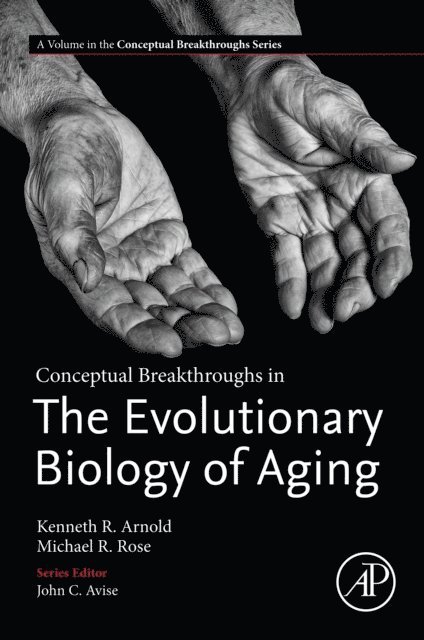
Conceptual Breakthroughs in the Evolutionary Biology of Aging continues the innovative Conceptual Breakthroughs series by providing a comprehensive outline of the major breakthroughs that built the evolutionary biology of aging as a leading scientific field. Following the evolutionary study of aging from its humble origins to the present, the book's chapters treat the field's breakthroughs one at a time. Users will find a concise and accessible analysis of the science of aging viewed through an evolutionary lens. Building upon widely-cited studies conducted by author Michael Rose, this book covers 30 subsequent years of growth and development within the field.The book highlights key publications for those who are not experts in the field, providing an important resource for researchers. Given the prevailing interest in changing the aging process dramatically, it is a powerful tool for readers who have a vested interest in understanding its causes and future control measures. Reviews cell-molecular theories of aging in the light of evolutionary biology Offers an evolutionary analysis of prospects for mitigating aging not commonly discussed within private and public sectors Provides readers with a radically different perspective on contemporary biological gerontology, specifically through the lens of evolutionary biology
The Long Tomorrow: How Advances in Evolutionary Biology Can Help Us Postpone Aging
Inbunden, Engelska, 2005
669 kr
Skickas inom 3-6 vardagar
948 kr
Skickas inom 5-8 vardagar
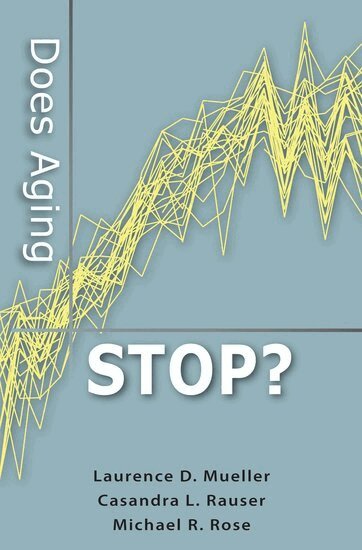
Does Aging Stop? reveals the most paradoxical finding of recent aging research: the cessation of demographic aging. The authors show that aging stops at the level of the individual organism, and explain why evolution allows this. The implications of this counter-intuitive conclusion are profound, and aging research now needs to accept three uncomfortable truths. First, aging is not a cumulative physiological process. Second, the fundamental theory that is required to explain, manipulate, and probe the phenomena of aging comes from evolutionary biology. Third, strong-inference experimental strategies for aging must be founded in evolutionary research, not cell or molecular biology. The result of fifteen years of research bringing together new applications of evolutionary theory, new models for demography, and massive experimentation, Does Aging Stop? advances an entirely new foundation for the scientific study of aging.
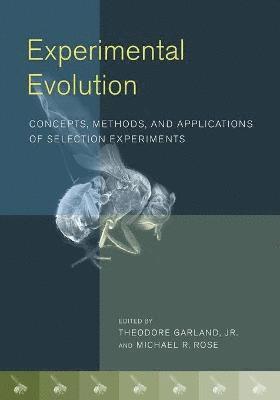
Experimental Evolution
Concepts, Methods, and Applications of Selection Experiments
Häftad, Engelska, 2009
439 kr
Skickas inom 7-10 vardagar
Experimental approaches to evolution provide indisputable evidence of evolution by directly observing the process at work. Experimental evolution deliberately duplicates evolutionary processes - forcing life histories to evolve, producing adaptations to stressful environmental conditions, and generating lineage splitting to create incipient species. This unique volume summarizes studies in experimental evolution, outlining current techniques and applications, and presenting the field's full range of research - from selection in the laboratory to the manipulation of populations in the wild. It provides work on such key biological problems as the evolution of Darwinian fitness, sexual reproduction, life history, athletic performance, and learning.
361 kr
Skickas inom 7-10 vardagar
Extending the human life-span past 120 years. The "green" revolution. Evolution and human psychology. These subjects make today's newspaper headlines. Yet much of the science underlying these topics stems from a book published nearly 140 years ago--Charles Darwin's On the Origin of Species. Far from an antique idea restricted to the nineteenth century, the theory of evolution is one of the most potent concepts in all of modern science. In Darwin's Spectre, Michael Rose provides the general reader with an introduction to the theory of evolution: its beginning with Darwin, its key concepts, and how it may affect us in the future. First comes a brief biographical sketch of Darwin. Next, Rose gives a primer on the three most important concepts in evolutionary theory--variation, selection, and adaptation. With a firm grasp of these concepts, the reader is ready to look at modern applications of evolutionary theory. Discussing agriculture, Rose shows how even before Darwin farmers and ranchers unknowingly experimented with evolution. Medical research, however, has ignored Darwin's lessons until recently, with potentially grave consequences.Finally, evolution supplies important new vantage points on human nature. If humans weren't created by deities, then our nature may be determined more by evolution than we have understood. Or it may not be. In this question, as in many others, the Darwinian perspective is one of the most important for understanding human affairs in the modern world. Darwin's Spectre explains how evolutionary biology has been used to support both valuable applied research, particularly in agriculture, and truly frightening objectives, such as Nazi eugenics. Darwin's legacy has been a comfort and a scourge. But it has never been irrelevant.
2 100 kr
Skickas inom 10-15 vardagar
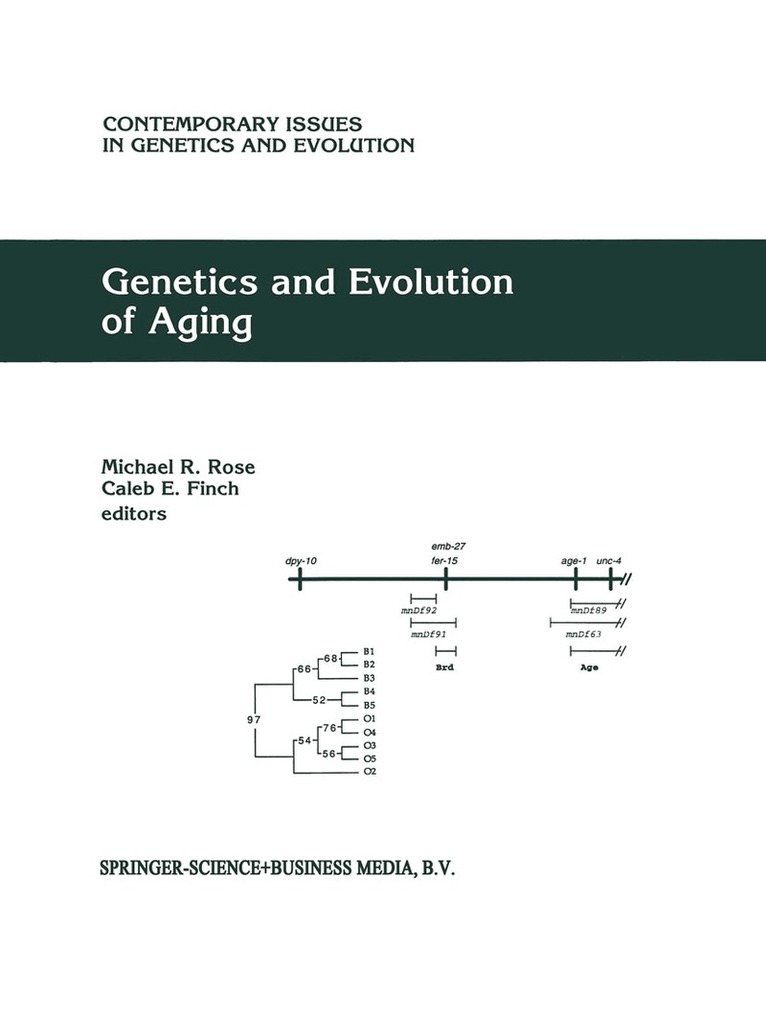
The study of ageing has recently been transformed by the application of tools and ideas from genetics and evolution. This development began in 1980, and has since been gathering momentum. This volume collects most of the principles contributing to this new direction in ageing research. Additionally the book incorporates elements from both molecular genetics and evolutionary genetics, uniting two divergent strategies in the study of ageing. Some of the book's articles are more molecular, and some are more evolutionary in their orientation, while other contributions combine both approaches. The book should thus be of broad interest through all "levels" of biology, from molecular biology to evolution biology. The phylogenetic diversity covered by the articles is also fairly great: from yeast to plants, nematodes to Drosophila, and rodents to man. Nonetheless, there is a unity in the treatment, with questions like mutation-accumulation, number of loci, and the possibility of postponing ageing arising repeatedly throughout the discussions of particular taxonomic groups. This volume should be a good starting place for graduate students interested in biological ageing research.It is also a convenient collection for research workers in the area, who may need to track down an important idea or result. Finally, the book as a whole provides a bracing overview of biological ageing.
2 163 kr
Skickas inom 10-15 vardagar
The study of aging has recently been transformed by the application of tools and ideas from genetics and evolution. This development began in 1980, and has since been gathering momentum. The present volume collects most of the principles contributing to this new direction in aging research. Additionally the book incorporates elements from both molecular genetics and evolutionary genetics, uniting two divergent strategies in the study of aging. Some of the book's articles are more molecular, and some are more evolutionary in their orientation, some contributions combine both approaches in a way that has rarely been seen. The book will thus be of broad interest through all 'levels' of biology, from molecular biology to evolutionary biology. The phylogenetic diversity covered by the articles is also fairly great: from yeast to plants, nematodes to Drosophila, and rodents to man. Nonetheless, there is a unity to the treatment, with questions like mutation-accumulation, number of loci, and the possibility of postponing aging arising repeatedly throughout the discussions of particular taxonomic groups.There are few better starting places for graduate students interested in biological aging research than this volume. It is also a convenient collection for research workers in the area, who may need to track down an important idea or result. Finally, the book as a whole provides a bracing overview of biological aging.