• Fri frakt över 249 kr
  • •
  • Snabba leveranser
  • •
  • Billiga böcker
Kundservice

Du är på sajten för privatpersoner.

Företag, bibliotek eller offentlig verksamhet?

Du handlar på classic.bokus.com, där alla dina funktioner finns intakta.
Till classic.bokus.com
Bokus logotyp. Gå till startsidan.
  • Erbjudanden
  • Nyheter
  • Student
  • Topplistor
  • Barn & ungdom
  • Bokus Play
  • E-böcker
  • Pocketböcker
  • Spel & pussel

10% rabatt på allt med kod: NYSTART10 →

Sidfot

Mina sidor

    Hjälp

    • Kundservice
    • Vanliga frågor och svar
    • Frakt och leverans
    • Retur vid ångerrätt
    • Reklamera vara
    • Betalning
    • Köpvillkor
    • Allmänna villkor
    • Information om webbplatsens tillgänglighet

    Om Bokus

    • Om oss
    • Pressrum
    • För studenter
    • För företag
    • För bibliotek och offentlig verksamhet
    • För leverantörer
    • Hållbarhet

    Populärt

    • Aktuella erbjudanden
    • Presentkort
    • Studentlitteratur
    • Nya böcker
    • Topplistor
    • Signerade böcker
    • Engelska böcker

    Inspiration

    • Boktips
    • BookTok
    • Populära bokserier
    • Barnbokskaraktärer
    • Populära författare
    Logotyp för Bokus
    Följ oss på Facebook (extern länk)Följ oss på Instagram (extern länk)Följ oss på YouTube (extern länk)Följ oss på TikTok (extern länk)
    bokus @ CookiesAnpassa cookiesIntegritetspolicyKöpvillkor
    Till Citymail hemsida (extern länk)Till Budbee hemsida (extern länk)Till Postnord hemsida (extern länk)Till Schenker hemsida (extern länk)Till Early Bird hemsida (extern länk)Till Walleys hemsida (extern länk)
    1. Djur och Natur
    2. Naturböcker
    3. Växtböcker

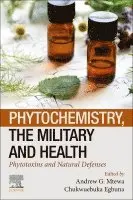
    Phytochemistry, the Military and Health

    Phytotoxins and Natural Defenses

    AvAndrew G. Mtewa,Chukwuebuka Egbuna

    Häftad, Engelska, 2021

    2 119 kr

    Beställningsvara. Skickas inom 10-15 vardagar. Fri frakt över 249 kr.

    Beskrivning

    Phytochemistry, the Military and Health: Phytotoxins and Natural Defenses comes as a response to the gap that there has for so long existed between phytochemistry and survival of both service personnel and civilian communities during and after conflicts. Armed conflicts cause a lot of devastation to communities and should be avoided as much as it can be possible. The devastation is usually evident in service provisions such as Health, Education, Water, and Food among many others. Both service personnel and civilians are affected to various degrees. Facilities usually end up being physically destroyed, with no essential supplies and/or having dysfunctional systems. Going with untreated wounds, communicable and non-communicable diseases for weeks with no medical interventions due to the conflicts, disease burdens heavily weigh down on communities as well as security personnel. To make the situation even more complicated, masses of people are forced to migrate for safety and security reasons, likely going with diseases along wherever they go. In such instances, phytochemicals become handy in providing solutions from first aid, basic analgesia, antimicrobials, and the general improvement of health.

    Phytochemicals are known to play a major role in the day to day management of diseases and health. There has been much research into their effectiveness as community medicines and as alternatives to conventional drugs. However, the role that phytochemicals play in the military, counterterrorism, and security has been overlooked. Phytochemistry, the Military and Health: Phytotoxins and Natural Defenses discusses the roles that phytochemicals play as friends and foes in the military, including insights aimed to help develop antidotes against phytochemicals and other chemical agents used maliciously as weapons. Filling a gap between drug discovery, security, and emergency medicine, this book describes which plants can be categorized for protection and controls, which can be helpful in times of conflicts and soon after conflicts, in military operations, and those that can be used as deterrents and as emergency medicines. Carefully designed to show the contribution that phytochemicals play in safety and security, this book is useful for researchers, regulators and anyone interested in plant chemistry.


    • Covers the contribution that phytochemicals play in safety and security
    • Contains insights that will help in the development of antidotes against phytochemical and other chemical weapons
    • Categorizes plants in terms of their usefulness as well as the potential security risks they possess

    Produktinformation

    • Utgivningsdatum:2021-03-02
    • Mått:152 x 229 x 31 mm
    • Vikt:1 040 g
    • Format:Häftad
    • Språk:Engelska
    • Antal sidor:606
    • Förlag:Elsevier Science
    • ISBN:9780128215562

    Utforska kategorier

    • Växtböcker inom Djur och Natur
    • Botanik inom Naturvetenskap och teknik
    • Organisk kemi inom Naturvetenskap och teknik

    Mer om författaren

    A member of the American Chemical Society (ACS), the Phytochemistry Society of Europe (PSE), the National Organization for the Professional Advancement of Black Chemists and Chemical Engineers (NOBCChE), and an Associate Member of the Royal Society of Chemistry (RSC), Andrew is a Medicinal Chemist trained under the Wellcome Center for Anti-infectives Research (WCAiR) at the Division of Biological Chemistry and Drug Discovery, School of Life Sciences, University of Dundee in Scotland as part of his PhD studies. He also did his PhD at the Mbarara University of Science and Technology under the Pharm-Biotechnology and Traditional Medicine Centre in Uganda and attended a Phytochemistry PhD summer School at Kenya’s Egerton University on a DAAD scholarship. His main area of interest is drug design and development using medicinal chemistry aspects and various computational and synthetic techniques to obtain logical hits to leads for particular biological targets from synthetic scaffolds in various libraries, de novo as well as from natural products. He did his MSc degree in Applied Chemistry (Natural Product Chemistry). He has a passion to coach and train upcoming drug discoverers to search for drugs beyond plant extracts to compound level towards optimization. Before joining the academia, Andrew served in various portfolios including but not limited to being Quality Assurance Manager for Valid Nutrition’s therapeutic foods’ factory, assistant Quality Manager (Shifts controller) for Alliance one international tobacco processors and graduate trainee for the Japanese Tobacco International (JTI), Malawi factory. He founded Leptons Scientific consultants in 2011 and has provided consultancy services in his areas of expertise to various clients. For close to a decade now, Andrew has also been researching military strategies, security and weaponry among others. He studied intelligence analysis and is trained in H2H close combat. He has published various journal articles and book chapters with various publishers such as Elsevier and is a reviewer for various journals including Systematic Reviews, Tuberculosis and of late, the African Health Sciences among others. Apart from this book, he is also the lead editor of the book ‘Poisonous Plants and Phytochemicals in Drug Discovery’ by Wiley. Currently, Andrew is a Chemistry lecturer at the Malawi University of Science and Technology in Malawi. Chukwuebuka Egbuna (PhD) is a chartered chemist and academic researcher. He is a member of the Institute of Chartered Chemists of Nigeria (ICCON), the Nigerian Society of Biochemistry and Molecular Biology (NSBMB), and the Royal Society of Chemistry (RSC) (United Kingdom). Dr. Egbuna is the founder and editor of the Elsevier book series on Drug Discovery Update. The series includes books, monographs, and edited collections from all areas of drug discovery including emerging therapeutic claims for the treatment of diseases. He has published research articles in many international journals of repute and is ranked among the top 500 Nigerian scientists in SciVal/SCOPUS. He has edited more than 25 books with Elsevier, Springer, Wiley, and Taylor & Francis. His most recent book is the three volume Coronavirus Drug Discovery, published by Elsevier. Dr. Egbuna is the founder and the publishing director of IPS Intelligentsia Publishing Services.

    Innehållsförteckning

    • 1. Introduction to phytochemicals and the militaryPart A: Uses and historical perspectives of plants and their chemicals2. Historical use of plants in warfare3. Importance of forests to the military beyond physical training4. Phytochemicals used in body agility and remediation from tissue mutilation5. Important histaminic and antihistaminic plants and their potential role in military operations6. Plants as warfare strategic tools7. Phyto-therapy against conflict related trauma8. Important plants in emergency military surgical procedures9. Potential wartime phyto-sedatives for the field10. Useful plants and phytochemicals for wound healing and physical fitness11. Emergency phytomedicine during armed conflictsPart B: Plants and phytochemicals used as therapeutics12. War and conventional plant-based drug development13. Development of phyto-antidotes against chemical agents14. Molecular optimization of phytochemicals into weapons and antidotesPart C: The good and adverse sides of phytocompounds15. Important military amphibious phytotoxins16. Classes of phytochemical weapons17. Phytochemical based nano-particles as military foes and friends18. Nanotechnology-targeted herbal drug delivery as fast and efficient antidotes against systemic poisons19. Terrorism, counter-terrorism and phytochemicalsPart D: Mechanistic approach to phyto-chemical weapons20. Chemical and pharmacological mechanisms of nerve agent poisoning21. Mechanisms of phytochemicals as antidotes to chemical weapons22. Application of metabolomics in emergency phytochemical poisoning and remediationPart E: Management, protocols, regulation and future perspectives of phytochemicals23. Laboratory protocols on handling phytochemical warfare agents24. Detection and identification of phytochemical weapons25. Management and regulation of potential weaponizable plants26. All-plant emergency first aid kits innovations27. The future of phytochemicals in the military28. Conclusions