• Fri frakt över 249 kr
  • •
  • Snabba leveranser
  • •
  • Billiga böcker
Kundservice

Du är på sajten för privatpersoner.

Företag, bibliotek eller offentlig verksamhet?

Du handlar på classic.bokus.com, där alla dina funktioner finns intakta.
Till classic.bokus.com
Bokus logotyp. Gå till startsidan.
  • Erbjudanden
  • Nyheter
  • Student
  • Topplistor
  • Barn & ungdom
  • Bokus Play
  • E-böcker
  • Pocketböcker
  • Spel & pussel

10% rabatt på allt med kod: NYSTART10 →

Sidfot

Mina sidor

    Hjälp

    • Kundservice
    • Vanliga frågor och svar
    • Frakt och leverans
    • Retur vid ångerrätt
    • Reklamera vara
    • Betalning
    • Köpvillkor
    • Allmänna villkor
    • Information om webbplatsens tillgänglighet

    Om Bokus

    • Om oss
    • Pressrum
    • För studenter
    • För företag
    • För bibliotek och offentlig verksamhet
    • För leverantörer
    • Hållbarhet

    Populärt

    • Aktuella erbjudanden
    • Presentkort
    • Studentlitteratur
    • Nya böcker
    • Topplistor
    • Signerade böcker
    • Engelska böcker

    Inspiration

    • Boktips
    • BookTok
    • Populära bokserier
    • Barnbokskaraktärer
    • Populära författare
    Logotyp för Bokus
    Följ oss på Facebook (extern länk)Följ oss på Instagram (extern länk)Följ oss på YouTube (extern länk)Följ oss på TikTok (extern länk)
    bokus @ CookiesAnpassa cookiesIntegritetspolicyKöpvillkor
    Till Citymail hemsida (extern länk)Till Budbee hemsida (extern länk)Till Postnord hemsida (extern länk)Till Schenker hemsida (extern länk)Till Early Bird hemsida (extern länk)Till Walleys hemsida (extern länk)
    1. Naturvetenskap och teknik
    2. Teknik och industri
    3. Agronomi och lantbruk

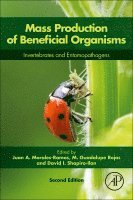
    Mass Production of Beneficial Organisms

    Invertebrates and Entomopathogens

    AvJuan A. Morales-Ramos,M. Guadalupe Rojas

    Inbunden, Engelska, 2022

    1 473 kr

    Beställningsvara. Skickas inom 10-15 vardagar. Fri frakt över 249 kr.

    Beskrivning

    Mass Production of Beneficial Organisms: Invertebrates and Entomopathogens, Second Edition explores the latest advancements and technologies for large-scale rearing and manipulation of natural enemies while presenting ways of improving success rate, predictability of biological control procedures, and demonstrating their safe and effective use. Organized into three sections, Parasitoids and Predators, Pathogens, and Invertebrates for Other Applications, this second edition contains important new information on production technology of predatory mites and hymenopteran parasitoids for biological control, application of insects in the food industry and production methods of insects for feed and food, and production of bumble bees for pollination.

    Beneficial organisms include not only insect predators and parasitoids, but also mite predators, nematodes, fungi, bacteria and viruses. In the past two decades, tremendous advances have been achieved in developing technology for producing these organisms. Despite that and the globally growing research and interest in biological control and biotechnology applications, commercialization of these technologies is still in progress. This is an essential reference and teaching tool for researchers in developed and developing countries working to produce "natural enemies� in biological control and integrated pest management programs.

    • Highlights the most advanced and current techniques for mass production of beneficial organisms and methods of evaluation and quality assessment
    • Presents methods for developing artificial diets and reviews the evaluation and assurance of the quality of mass-produced arthropods
    • Provides an outlook of the growing industry of insects as food and feed and describes methods for mass producing the most important insect species used as animal food and food ingredients

    Produktinformation

    • Utgivningsdatum:2022-09-23
    • Mått:216 x 276 x 37 mm
    • Vikt:1 930 g
    • Format:Inbunden
    • Språk:Engelska
    • Antal sidor:640
    • Upplaga:2
    • Förlag:Elsevier Science
    • ISBN:9780128221068

    Utforska kategorier

    • Agronomi och lantbruk inom Naturvetenskap och teknik
    • Zoologi inom Naturvetenskap och teknik
    • Djurböcker inom Djur och Natur

    Mer om författaren

    Dr. Morales’ main expertise is in mass production of arthropods, insect nutritional ecology and thedevelopment of rearing methods and mechanization of rearing processes for beneficial arthropods.Between 1992 and 1998, he developed mass propagation technology for the boll weevil parasitoidCatolaccus grandis. This research earned him the USDA-ARS scientist of the year award in 2002.During 1998 and 2004 he developed termite and ant baiting systems. This research earned him theUSDA-ARS technology transfer award and the Federal Laboratory Consortium regional excellence intechnology transfer award in 2004. Since 2004, he has developed novel rearing methods forpredatory mites and other beneficial arthropods. This included new technology for separation ofmealworm sizes for infection with entomopathogenic nematodes, novel methods for mass producingTenebrio molitor, mechanized methods to pack T. molitor cadavers infected with nematodes, andmechanized methods for infecting T. molitor larvae with entomopathogenic nematodes. The work onthe in-vivo production of entomopathogenic nematodes using T. molitor earn him the NationalFederal laboratory Consortium award of excellence in technology transfer in 2013. Dr. Morales-Ramos has produced a total of 104 publications and 12 patents; his is currently the project leader ofthe project titled “Mass Production of Biological Control Agents”. Dr. Morales-Ramos recently editedthe book titled “Mass production of Beneficial Organisms” published in January 2014 by Elsevier. Dr. Rojas’ main expertise is in insect nutrition, nutritional ecology and the development of artificialdiets for biological control agents and bait matrixes to control termites and ants. Between 1993 to1998 she developed an artificial diet for the boll weevil parasitoid Catolaccus grandis. Between 1998and 2004, she developed bait matrices for control of the Formosan subterranean termite andhousehold ants, both of which were successfully commercialized by Ensystex and FMC, and still aresold world-wide. This work earned her the USDA-ARS technology transfer award and the FederalLaboratory Consortium regional excellence in technology transfer award in 2004. Since 2004, she hasdeveloped artificial diets for predatory mites and other insect predators and improved susceptibilityof Tenebrio molitor to entomopathogenic nematodes. The work on the in-vivo production ofentomopathogenic nematodes using T. molitor earned her the National Federal laboratory Consortium award of excellence in technology transfer in 2013. Dr. Rojas has produced a total of 99 publications and holds 12 patents, her current responsibilities include principal scientist on 3 different research agreements with 3 different companies including Syngenta Bioline, Kopert, and Monsanto. ”. Dr. Rojas recently co-edited the book titled “Mass production of Beneficial Organisms” published in January 2014 by Elsevier.

    Innehållsförteckning

    • 1. Introduction2. Production of Coleopteran Predators3. Production of Heteropteran Predators4. Production of Dipteran Parasitoids5. Mass Rearing Bemisia Parasidoids for Support of Classical and Augmentative Biological Control Programs6. Mass Rearing of the Stem-Galling Wasp Tetramesa romana, A Biological Control Agent of the Invasive Weed Arundo donax7. Artificial Diet Development for Entomophagous Arthropods8. Life Tables as Tools of Evaluation and Quality Control for Arthropod Mass Production9. Concepts and Methods of Quality Assurance for Mass-Reared Parasitoids and Predators10. Production of Entomopathogenic Nematodes11. Mass Production of Entomopathogenic Fungi: State of the Art12. Commercial Production of Entomopathogenic Bacteria13. Production of Entomopathogenic Viruses14. Formulations of Entomopathogens as bioinsecticides15. Mass Production of Entomopathogens in Less Industrialized Countries16. Insect Protein as a Partial Replacement for Fishmeal in the Diets of Juvenile Fish and Crustaceans17. Insects as Food for Insectivores18. Insects for Human Consumption19. Production of Solitary Bees for Pollination in the United States20. Current and Potential Benefits of Mass Earthworm Culture