• Fri frakt över 249 kr
  • •
  • Snabba leveranser
  • •
  • Billiga böcker
Kundservice

Du är på sajten för privatpersoner.

Företag, bibliotek eller offentlig verksamhet?

Du handlar på classic.bokus.com, där alla dina funktioner finns intakta.
Till classic.bokus.com
Bokus logotyp. Gå till startsidan.
  • Erbjudanden
  • Nyheter
  • Student
  • Topplistor
  • Barn & ungdom
  • Bokus Play
  • E-böcker
  • Pocketböcker
  • Spel & pussel

10% rabatt på allt med kod NYSTART10 →

Sidfot

Mina sidor

    Hjälp

    • Kundservice
    • Vanliga frågor och svar
    • Frakt och leverans
    • Retur vid ångerrätt
    • Reklamera vara
    • Betalning
    • Köpvillkor
    • Allmänna villkor
    • Information om webbplatsens tillgänglighet

    Om Bokus

    • Om oss
    • Pressrum
    • För studenter
    • För företag
    • För bibliotek och offentlig verksamhet
    • För leverantörer
    • Hållbarhet

    Populärt

    • Aktuella erbjudanden
    • Presentkort
    • Studentlitteratur
    • Nya böcker
    • Topplistor
    • Signerade böcker
    • Engelska böcker

    Inspiration

    • Boktips
    • BookTok
    • Populära bokserier
    • Barnbokskaraktärer
    • Populära författare
    Logotyp för Bokus
    Följ oss på Facebook (extern länk)Följ oss på Instagram (extern länk)Följ oss på YouTube (extern länk)Följ oss på TikTok (extern länk)
    bokus @ CookiesAnpassa cookiesIntegritetspolicyKöpvillkor
    Till Citymail hemsida (extern länk)Till Budbee hemsida (extern länk)Till Postnord hemsida (extern länk)Till Schenker hemsida (extern länk)Till Early Bird hemsida (extern länk)Till Walleys hemsida (extern länk)
    1. Naturvetenskap och teknik
    2. Matematik och naturvetenskap
    3. Kemi
    4. Fysikalisk kemi

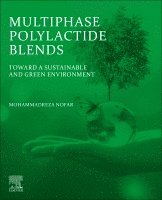
    Multiphase Polylactide Blends

    Toward a Sustainable and Green Environment

    AvMohammadreza Nofar

    Häftad, Engelska, 2021

    2 250 kr

    Beställningsvara. Skickas inom 10-15 vardagar. Fri frakt över 249 kr.

    Fler format och utgåvor

    E-bok

    3 195 kr

    Beskrivning

    Multiphase Polylactide Blends: Toward a Sustainable and Green Environment guides the reader through fundamentals, science, preparation, and key areas of innovation in polylactide (PLA) blends. Bio-based polymers, and notably PLA, have not only gained increasing interest as a more sustainable alternative but also bring challenges in terms of mechanical, rheological, thermal and physical properties, processability, shapability, and foamability. The use of blends looks to address these, with the development of new types of economically viable and environmentally friendly systems. This is a valuable book for academic researchers, scientists, and graduate students across bio-based polymers, polymer science, chemistry, and materials science, as well as engineers, R&D professionals, and all those in industry with interest in PLA-based blends, biopolymers, and sustainable materials and products.

    More specifically, the first three chapters of this book overview the fundamentals of thermoplastic polymers, polymer blends, and structure and properties of PLA. These chapters could technically be used as a valuable textbook on the noted topics. The rest of the chapters inclusively study the fundamentals, investigations, and achievements in PLA-based blends with various types of polymers. These include miscible blends of poly L-lactide and poly D-lactide, binary immiscible/miscible blends of PLA with other thermoplastics and elastomers, PLA-based ternary blends and blend nanocomposites, as well as PLA-based blend foams.

    Overall, this book provides a thorough and critical overview of the state of the art in PLA-based blends, including significant past and recent advances, with the aim of supporting and shaping further research and industrial application of these materials for the development of a green and sustainable future.


    • Overviews the fundamentals of thermoplastic polymers, polymer blends, and the structure and properties of PLA.
    • Provides detailed coverage of the fundamentals and science of PLA blends, including phase miscibility, thermal and mechanical properties, interface and rheological properties, the use of compatibilizers, and phase morphological analysis.
    • Offers a thorough critical overview of the state of the art in processing and development of PLA-based blends, addressing key challenges and future perspectives.
    • Covers the latest advances, including PLA-based ternary blends, blend nanocomposites, and PLA-based blend microcellular foams.

    Produktinformation

    • Utgivningsdatum:2021-07-22
    • Mått:191 x 235 x 21 mm
    • Vikt:840 g
    • Format:Häftad
    • Språk:Engelska
    • Antal sidor:404
    • Förlag:Elsevier Science
    • ISBN:9780128241509

    Utforska kategorier

    • Fysikalisk kemi inom Naturvetenskap och teknik
    • Maskinteknik och material inom Naturvetenskap och teknik
    • Tillverkningsteknik inom Naturvetenskap och teknik

    Mer om författaren

    Mohammadreza Nofar, PhD is an Associate Professor in the Metallurgical and Materials Engineering Department at Istanbul Technical University, Turkey. His research focuses are polymer processing and rheology, biopolymers and PLA, polymer nanocomposites, polymer blends, microfibrillated composites, and microcellular polymer foams. He co-authored the Elsevier book 'Polylactide Foams: Fundamentals, Manufacturing, and Applications', published in September 2017.

    Innehållsförteckning

    • Chapter 1. Fundamentals of thermoplastic polymers: molecular structure1.1 Introduction to natural and synthetic polymers1.2 Thermoplastic polymers and crystal structures1.3 Thermal and mechanical characteristics of thermoplastics1.4 Transition temperatures and crystallizationReferencesChapter 2. Introduction to polymer blends2.1 Introduction2.2 Thermodynamics and phase miscibility2.3 Immiscible blends: morphologies and properties2.4 Compatibilization and interfacial properties2.5 Mixing theories and processing2.6 Ternary and hybrid polymer blendsReferencesChapter 3. Polylactide (PLA): molecular structure and properties3.1 Introduction to biopolymers and PLA3.2 Synthesis and molecular structure3.3 Molecular stereochemistry configurations3.4 Glass transition temperature3.5 Crystallization and melting behaviors3.6 Rheological properties 3.7 Mechanical and physical properties3.8 Degradation behaviorReferencesChapter 4. PLLA/PDLA blends: stereocomplex crystals4.1 Crystallization behavior4.2 Mechanical properties4.3 Rheological properties4.4 Barrier and degradation propertiesReferencesChapter 5. PLA binary bioblends with other biopolymers5.1 Blends of PLA with biobased and biodegradable polymers5.2 Blends of PLA with biodegradable polymers5.3 Blends of PLA with biobased polymersReferencesChapter 6. PLA binary blends with petroleum-based nondegradable thermoplastics6.1 PLA-PE6.2 PLA-PP6.3 PLA-PS6.4 PLA-ABS6.5 PLA-PMMA6.6 PLA-PET6.7 PLA-PBT6.8 PLA-PTT6.9 PLA-PC6.10 PLA-PA6.11 PLA-PEG, PEO, or POE6.12 PLA-POM6.13 PLA-PVPhReferencesChapter 7. PLA binary blends with elastomeric polymers7.1 PLA-rubber7.2 PLA-PU7.3 PLA-EVA and EVMReferencesChapter 8. Ternary blends of PLA8.1 Introduction8.2 PLA-TPS-X ternary blends8.3 PLA-PBAT-X ternary blends8.4 PLA-PBS-X ternary blends8.5 PLA-PMMA-X ternary blends8.6 PLA-Y-X ternary blendsReferencesChapter 9. PLA blend nanocomposites9.1 Introduction9.2 Nanoparticles localization: thermodynamics vs kinetics mechanisms9.3 Morphological stabilization9.4 Morphological and rheological correlations9.5 Induced functionalities9.6 Mechanical properties9.7 Structure-dependent applications9.8 SummaryAcknowledgementReferencesChapter 10. Foaming of PLA blends10.1 Introduction10.1 Miscible PLA-PLA blend foams10.2 PLA bioblend foams10.3 PLA blend foams with synthetic/nondegradable polymers10.4 PLA blend foams with elastomeric polymersReferencesSummary and Perspectives