- Signerad!
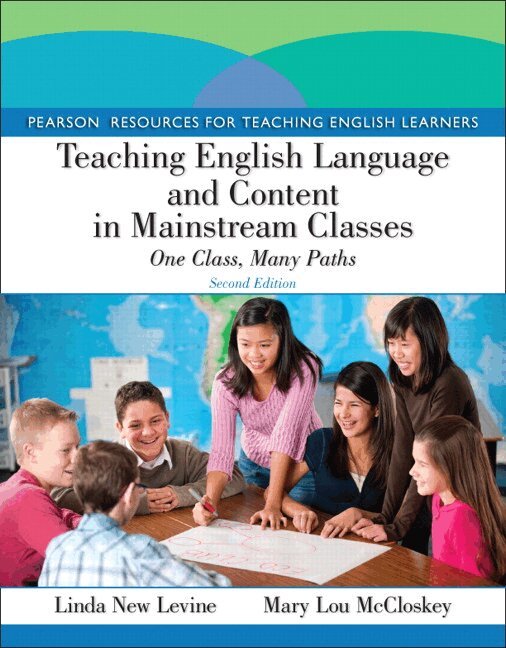
Teaching English Language and Content in Mainstream Classes
One Class, Many Paths
AvLinda New Levine,Mary Lou McCloskey
1 459 kr
Beställningsvara. Skickas inom 7-10 vardagar. Fri frakt över 249 kr.
Beskrivning
The ideal resource for helping K-12 classroom teachers integrate content learning and English language learning into their classroom lessons, Teaching English Language and Content in Mainstream Classes presents practical, ready-to-use, research-based principles and strategies in a friendly writing style that clarifies concepts, defines key terms, and offers classroom teachers what they need to accelerate their students’ academic achievement. With it’s emphasis on techniques for developing reading, writing, and speaking skills in the content areas and it’s presentation of illustrative teaching vignettes to make the ideas clear, the new edition of this widely popular guide stands out from others on the market as a “must have” resource for teachers in today’s diverse classrooms.
Produktinformation
- Utgivningsdatum:2012-05-22
- Mått:100 x 100 x 100 mm
- Vikt:100 g
- Format:Häftad
- Språk:Engelska
- Antal sidor:360
- Upplaga:2
- Förlag:Pearson Education
- ISBN:9780132685146
Utforska kategorier
Mer om författaren
Linda New Levine is a consultant for ESL and EFL programs for school-age children. She has assisted in the development of English language programs for successful academic content learning in countries in the Middle East, Africa, and Asia, and for school districts and professional organizations within the U.S. In addition, she works with mainstream classroom teachers for differentiation of teaching and learning in the content areas and for the development of literacy for ELLs in English language classrooms K through 12.Dr. Levine has worked as an ESL teacher and a staff development facilitator in the Bedford, New York school district, and as an assistant professor at Teachers College, Columbia University.She has taught EFL in the Philippines with the Peace Corps and in the People’s Republic of China as a Fulbright professor. In addition, she has worked with faculties and ministries of education in Egypt to implement English as a Foreign Language programs in elementary schools throughout the country and to improve the supervisory skills of school supervisors. As part of a design team for USAID, Dr. Levine evaluated language programs in Egypt and designed a format for future funding in that region. She currently consults for the Center for Applied Linguistics.Dr. Levine was the Homeroom columnist for TESOL’s Essential Teacher and the author of the Teacher’s Edition to the Oxford Picture Dictionary for the Content Areas (2nd Ed.). Her publications include Helping English Language Learners Succeed in Pre-K-Elementary schools (2006) with Jan Lacina and Patience Sowa (TESOL International). Dr. Levine holds a Masters in TESOL and a PhD in Applied Linguistics from New York University.Mary Lou McCloskey, former President of Teachers of English to Speakers of Other Languages, is Director of Teacher Education and Curriculum Development for Educo in Atlanta. As a consultant and author in the field of English language education, she has worked with teachers, teacher educators, and departments and ministries of education on 5 continents and in 35 of the 50 United States.Dr. McCloskey has taught in undergraduate and graduate programs at Emory University, Georgia State University, and the University of Memphis. Author and co-author of many journal articles, chapters, and professional texts for educators (including American Themes (2012). Integrating English (1988), Teaching English as a Foreign Language in the Primary School (2006), and Leadership Skills for English Language Educators (2007), she has also developed six programs for English learners, including On Our Way to English (2010); Visions: Language, Literature, Content; Voices in Literature (2008); Teaching Language, Literature and Culture (1995); and was consulting author and ESOL specialist for the 2008 McDougal Littell Language Arts, Grades 5-12 (2008). During the summer, Dr. McCloskey works as a teacher educator in the Teaching Tolerance Through English program conducted for middle school teachers and learners from countries throughout Central Europe by the US Embassies in the region.Dr. McCloskey, who holds an MS degree from Syracuse University and a PhD from Georgia State University, considers her most important qualification her years of experience with English learners from many cultures, at levels from preschool through graduate education.
Innehållsförteckning
- Chapter 1 Principles of Integrated Language Teaching and Learning Activity-Based Language Teaching and Learning Communicative Teaching and LearningChapter 2 Language Acquisition and Language Learning in the Classroom What Do We Know about First Language Acquisition?What Is the Nature of the First Language Environment?How Do Acquisition and Learning Differ?What Are Factors Affecting Language Acquisition in the Classroom?What Strategies Do ELLs Use to Acquire Languages?What Are the Characteristics of a Culturally and LinguisticallyAppropriate Response to Intervention (RTI) Model?What Are the Characteristics of an Effective Classroom Environment for ELLs?What Are the Characteristics of Culturally and Linguistically Appropriate Tier 1 Instruction for ELLs?What Are the Characteristics of Culturally and Linguistically Appropriate Tier 2 Instruction for ELLs?Chapter 3 Culturally Responsive Instruction: Connecting with Home Culture Culturally Responsive InstructionWhat Are the Features of Culturally Responsive Instruction?How Do Teachers Connect to The Homes and Families of Their Students?How Can the School Community Support the Education of English Language Learners?How Can the Community Outside the School Support the Education of ELLs?How Does a Culturally Responsive Classroom Connect to Students’ Cultures, Languages, and Family in an RTI Model?Chapter 4 Organizing the Classroom for Language Learning First Things First: Feeling Ready to LearnOrganizing the Physical Environment to Promote Language LearningOrganizing the Classroom Social Environment to Promote Language LearningEnglish Language Instructional ProgramsOrganizing Instruction to Promote Language LearningChapter 5 Strategies for Oral Language Development Conditions for Oral Language LearningAcademic Language LearningOral Language DevelopmentStages of Oral Language DevelopmentTeacher Tools for Oral Language DevelopmentAssessing Oral Language DevelopmentResponse to InterventionChapter 6 Oral Language Development in the Content Classroom Content Learning and Oral Language DevelopmentOral Language Development Every Which WayListening In While Not Tuning OutAssessing Listening and Speaking Skills in the ContentChapter 7 Teaching Vocabulary to English LearnersWhy Is learning vocabulary important for English learners?What Do We Mean When We Speak of Vocabulary? How Many Words Do Students Need to Learn?What Words Should We Teach?What Are the characteristics of effective vocabulary instruction?How Should we provide direct vocabulary instruction?How Can we help learners develop Their own tools to deal with unknown words independently?What Are Active Interactive Strategies to Support Vocabulary Development?How Can we assess vocabulary development of English learners?Chapter 8 Developing Literacy with English Learners: Focus on Reading What Is Literacy?What Is Unique About English Language LearnersWho Are Developing Literacy?The Language/Literacy MatrixWhat Tools and Strategies Can We Provide to Help ELLsDevelop Literacy?Issues in Literacy Development with Older English Learners 194Assessing ELL Literacy Development 199Chapter 9 Developing Literacy with English Learners: Focus on Writing Why Teach Writing with English Learners?How Does Writing Develop to ELLs?Connecting Writing to Active, Communicative Language Teaching and LearningChallenges of Teaching Writing to English LearnersDeveloping a Writing EnvironmentGetting Started: Interactive WritingScaffolding Learners Through the Writing ProcessIssues in Teaching Writing to Students with Interrupted Formal Education (SIFE)Assessing WritingChapter 10 Structuring and Planning Content-Language Integrated Lessons Lesson Characteristics That Support LearningA Lesson Format for Integrated LearningInto the Lesson: Defining Objectives, Activating, and Preparing for LearningThrough the Lesson: Input for Active Understanding, Vocabulary Development, and Practical PurposeBeyond the Lesson: Providing Reasons for Further CommunicationResponse to InterventionChapter 11 Assessment Tools for the Integrated Classroom What Is Assessment?What Are the Fundamental Principles of Classroom-BasedAssessment for ELLs?What Are the Critical Factors Affecting the Assessment of ELLsWhat Are Examples of Authentic, Performance-Based Classroom Assessment?How Do Standards Affect Classroom Assessment?Assessment for ELLs in an RTI Organizational ModelChapter 12 Putting It All Together Thematically: Developing Content-Based Thematic Units What Is Thematic Instruction?Why Teach Thematically?How Are Thematic Units Structured?What About Standards in a Thematic Unit?Organizing Content Curriculum in a Thematic UnitOrganizing Language Curriculum in a Thematic UnitHow Can Learning Strategies Be Incorporated into Thematic Instruction?A Last Word
Du kanske också är intresserad av
- Nyhet
- 4 för 3
Brevbäraren i Lizzanello
Francesca Giannone
Pocket, 2026
99 kr
- Nyhet
- -22%
- -30%
- 4 för 3
En flicka som kallas Alice
Kristin Hannah
Pocket, 2025
99 kr
- -22%
- 4 för 3
- -30%