• Fri frakt över 249 kr
  • •
  • Snabba leveranser
  • •
  • Billiga böcker
Kundservice

Du är på sajten för privatpersoner.

Företag, bibliotek eller offentlig verksamhet?

Du handlar på classic.bokus.com, där alla dina funktioner finns intakta.
Till classic.bokus.com
Bokus logotyp. Gå till startsidan.
  • Erbjudanden
  • Nyheter
  • Student
  • Topplistor
  • Barn & ungdom
  • Bokus Play
  • E-böcker
  • Pocketböcker
  • Spel & pussel

10% rabatt på allt med kod NYSTART10 →

Sidfot

Mina sidor

    Hjälp

    • Kundservice
    • Vanliga frågor och svar
    • Frakt och leverans
    • Retur vid ångerrätt
    • Reklamera vara
    • Betalning
    • Köpvillkor
    • Allmänna villkor
    • Information om webbplatsens tillgänglighet

    Om Bokus

    • Om oss
    • Pressrum
    • För studenter
    • För företag
    • För bibliotek och offentlig verksamhet
    • För leverantörer
    • Hållbarhet

    Populärt

    • Aktuella erbjudanden
    • Presentkort
    • Studentlitteratur
    • Nya böcker
    • Topplistor
    • Signerade böcker
    • Engelska böcker

    Inspiration

    • Boktips
    • BookTok
    • Populära bokserier
    • Barnbokskaraktärer
    • Populära författare
    Logotyp för Bokus
    Följ oss på Facebook (extern länk)Följ oss på Instagram (extern länk)Följ oss på YouTube (extern länk)Följ oss på TikTok (extern länk)
    bokus @ CookiesAnpassa cookiesIntegritetspolicyKöpvillkor
    Till Citymail hemsida (extern länk)Till Budbee hemsida (extern länk)Till Postnord hemsida (extern länk)Till Schenker hemsida (extern länk)Till Early Bird hemsida (extern länk)Till Walleys hemsida (extern länk)
    1. Skönlitteratur
    2. Essäer

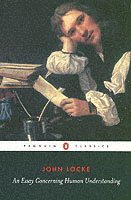
    Essay Concerning Human Understanding

    AvJohn Locke,Roger Woolhouse

    Häftad, Engelska, 1997

    208 kr

    Skickas . Fri frakt över 249 kr.

    Fler format och utgåvor

    Häftad

    67 kr

    Häftad

    199 kr

    E-bok

    132 kr

    Inbunden

    387 kr

    Häftad

    276 kr

    Inbunden

    441 kr

    Häftad

    313 kr

    Inbunden

    566 kr

    Häftad

    470 kr

    Inbunden

    413 kr

    Beskrivning

    In An Essay Concerning Human Understanding, first published in 1690, John Locke (1632-1704) provides a complete account of how we acquire everyday, mathematical, natural scientific, religious and ethical knowledge. Rejecting the theory that some knowledge is innate in us, Locke argues that it derives from sense perceptions and experience, as analysed and developed by reason. While defending these central claims with vigorous common sense, Locke offers many incidental - and highly influential - reflections on space and time, meaning, free will and personal identity. The result is a powerful, pioneering work, which, together with Descartes's works, largely set the agenda for modern philosophy.

    Produktinformation

    • Utgivningsdatum:1997-06-26
    • Mått:130 x 200 x 40 mm
    • Vikt:580 g
    • Format:Häftad
    • Språk:Engelska
    • Antal sidor:816
    • Förlag:Penguin Books Ltd
    • ISBN:9780140434828

    Utforska kategorier

    • Essäer inom Skönlitteratur
    • Filosofiska discipliner inom Filosofi och religion

    Mer om författaren

    John Locke (1632-1704) was educated at Christ Church, Oxford and held various academic posts at that university, lecturing on Greek and rhetoric. However, his interests lay in medicine and the new experimental sciences and in 1667 he became personal physician to the Earl of Shaftesbury. Under the influence of Shaftesbury, Locke developed his ideas on politics, property, trade, monarchy and the mind. Shaftesbury became a bitter opponent of Charles II and was involved in the plot of 1683. This forced Locke to flee in exile to Holland, but he returned after 1688 and began to publish his most famous works. He wrote also on tehology, education, and in defence of religous tolerance, while founding the analytic philosophy of the mind.Roger Woolhouse is Professor of Philosophy at the University of York. He has also edited George Berkeley's Principles of Human Knowledge and Three Dialogues Between Hylas and Philonous for Penguin Classics.

    Innehållsförteckning

    • IntroductionFurther ReadingBibliographical AbbreviationsA Note on the TextTitle-page of the Fifth EditionAN ESSAY CONCERNING HUMAN UNDERSTANDINGThe Epistle DedicatoryThe Epistle to the ReaderThe ContentsBook I: Of Innate NotionsI IntroductionII No Innate Principles in the MindIII No Innate Practical PrinciplesIV Other Considerations concerning Innate Principles, both Speculative and PracticalBook II: Of Innate NotionsI Of Ideas in General, and their OriginalII Of Simple IdeasIII Of Ideas of One SenseIV Of SolidityV Of Simple Ideas of Divers SensesVI Of Simple Ideas of ReflectionVII Of Simple Ideas of both Sensation and ReflectionVIII Some further Considerations concerning our Simple IdeasIX Of PerceptionX Of RetentionXI Of Discerning, and other Operations of the MindXII Of Complex IdeasXIII Of Simple Modes; and first, of the Simple Modes of SpaceXIV Of Duration, and its Simple ModesXV Of Duration and Expansion, considered togetherXVI Of NumberXVII Of InfinityXVIII Of other Simple ModesXIX Of the Modes of ThinkingXX Of Modes of Pleasure and PainXXI Of PowerXXII Of Mixed ModesXXIII Of our Complex Ideas of SubstancesXXIV Of Collective Ideas of SubstancesXXV Of RelationXXVI Of Cause and Effect, and other RelationsXXVII Of Identity and DiversityXXVIII Of other RelationsXXIX Of Clear and Obscure, Distinct and Confused IdeasXXX Of Real and Fantastical IdeasXXXI Of Adequate and Inadequate IdeasXXXII Of True and False IdeasXXXIII Of the Association of IdeasBook III: Of WordsI Of Words or Language in GeneralII Of the Signification of WordsIII Of General TermsIV Of the Names of Simple IdeasV Of the Names of Mixed Modes and RelationsVI Of the Names of SubstancesVII Of ParticlesVIII Of Abstract and Concrete TermsIX Of the Imperfection of WordsX Of the Abuse of WordsXI Of the Remedies of the Foregoing Imperfections and AbusesBook IV: Of Knowledge and OpinionI Of Knowledge in GeneralII Of the Degrees of Our KnowledgeIII Of the Extent of Human KnowledgeIV Of the Reality of KnowledgeV Of Truth in GeneralVI Of Universal Propositions, their Truth and CertaintyVII Of MaximsVIII Of Trifling PropositionsIX Of our Knowledge of ExistenceX Of our Knowledge of the Existence of a GodXI Of our Knowledge of the Existence of ThingsXII Of the Improvement of our KnowledgeXIII Some further Considerations concerning our KnowledgeXIV Of JudgmentXv Of ProbabilityXVI Of the Degrees of AssentXVII Of ReasonXVIII Of Faith and Reason, and their Distinct ProvincesXIX Of EnthusiasmXX Of Wrong Assent, or ErrorXXI Of the Division of the SciencesAppendix: John Locke's Debate with Edward Stillingfleet, Bishop of Worcester, as it figures in footnotes in the Fifth Edition of the EssayIndex to the Fifth EditionNotes

    Betyg & recensioner

    5/5