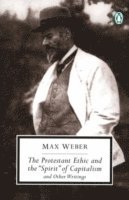
In The Protestant Ethic, Max Weber opposes the Marxist concept of dialectical materialism and relates the rise of the capitalist economy to the Calvinist belief in the moral value of hard work and the fulfillment of one's worldly duties.
Max Weber (1864-1920), German sociologist, one of the founders of modern sociology. He emphasised cultural and political factors as key influences on economic development and individual behaviour. Weber argued for a scientific and value-free approach to research, yet highlighted the importance of meaning and consciousness in understanding social action. His ideas continue to stimulate thought on social stratification, power, organisations, law, and religion.Peter Baehr teaches in the department of politics and sociology at Lingnan University in Hong Kong.
Innehållsförteckning
Edited, Translated, and with an Introduction and Notes by Peter Baehr and Gordon C. WellsIntroductionSuggestions for Further ReadingNote on the TranslationThe Protestant Ethic and the "Spirit" of Capitalism (1905)"Churches" and "Sects" in North America (1906)Critical Remarks in Response to the Foregoing "Critical Contributions" (1907) (Weber's first rejoinder to H. Karl Fischer)Remarks on the Foregoing "Reply" (1908) (Weber's second rejoinder to H. Karl Fischer)Rebuttal of the Critique of the "Spirit" of Capitalism (1910) (Weber's first rejoinder to Felix Rachfahl)A Final Rebuttal of Rachfahl's Critique of the "Spirit of Capitalism" (1910)Appendixes:I. Rejoinders to Wener Sombart and Lujo Brentano (1920)II. Prefatory Remarks to Collected Essays in the Sociology of Religion (1920)