Peter Baehr – författare
Visar alla böcker från författaren Peter Baehr. Handla med fri frakt och snabb leverans.
13 produkter
13 produkter
Häftad, Engelska, 2005
156 kr
Skickas
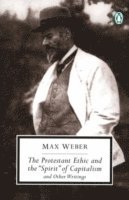
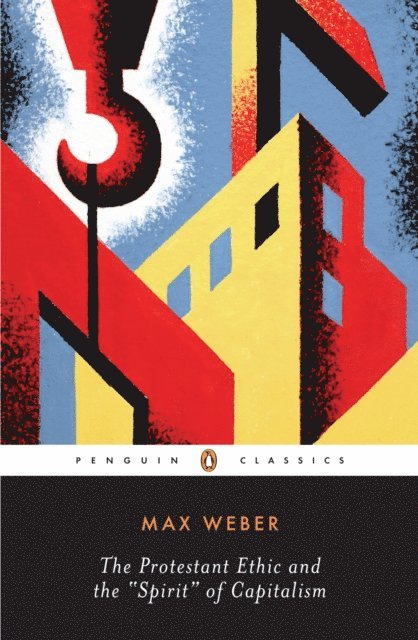
In The Protestant Ethic, Max Weber opposes the Marxist concept of dialectical materialism and relates the rise of the capitalist economy to the Calvinist belief in the moral value of hard work and the fulfillment of one's worldly duties.
Häftad, Engelska, 2004
569 kr
Skickas inom 7-10 vardagar
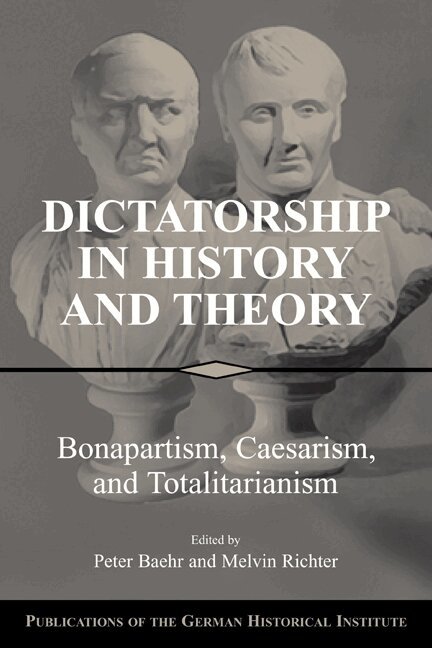
A distinguished group of historians and political theorists examine the complex relationship between nineteenth-century democracy, nationalism, and authoritarianism, paying especial attention to the careers of Napoleon I and III, and of Bismarck. An important contribution of the book is to consider not only the momentous episodes of coup d'etat, revolution, and imperial foundation which the Napoleonic era heralded, but also the contested political language with which these events were described and assessed. Political thinkers were faced with a battery of new terms - 'Bonapartism', 'Caesarism', and 'Imperialism' among them - with which to make sense of their era. As well as documenting the political history of a revolutionary age, the book examines a series of thinkers - Tocqueville, Marx, Max Weber, Antonio Gramsci, Carl Schmitt, and Hannah Arendt - who articulated and helped to reshare our sense of the political.
Inbunden, Engelska, 2004
1 330 kr
Skickas inom 7-10 vardagar
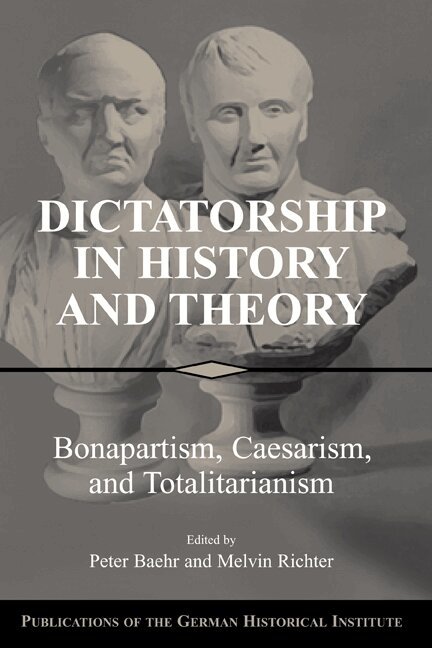
A distinguished group of historians and political theorists examine the complex relationship between nineteenth-century democracy, nationalism, and authoritarianism, paying especial attention to the careers of Napoleon I and III, and of Bismarck. An important contribution of the book is to consider not only the momentous episodes of coup d'etat, revolution, and imperial foundation which the Napoleonic era heralded, but also the contested political language with which these events were described and assessed. Political thinkers were faced with a battery of new terms - 'Bonapartism', 'Caesarism', and 'Imperialism' among them - with which to make sense of their era. As well as documenting the political history of a revolutionary age, the book examines a series of thinkers - Tocqueville, Marx, Max Weber, Antonio Gramsci, Carl Schmitt, and Hannah Arendt - who articulated and helped to reshare our sense of the political.
Inbunden, Engelska, 2002
2 160 kr
Skickas inom 10-15 vardagar
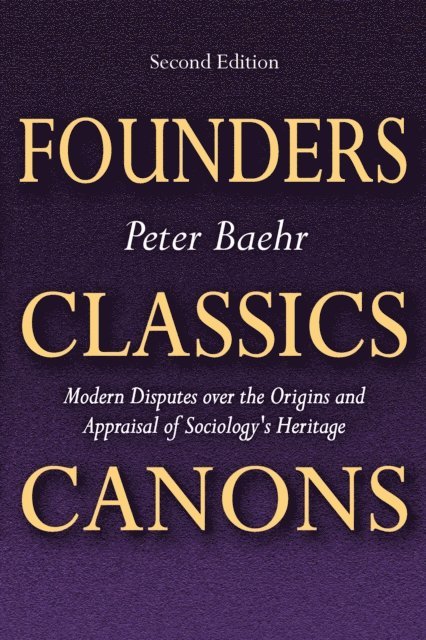
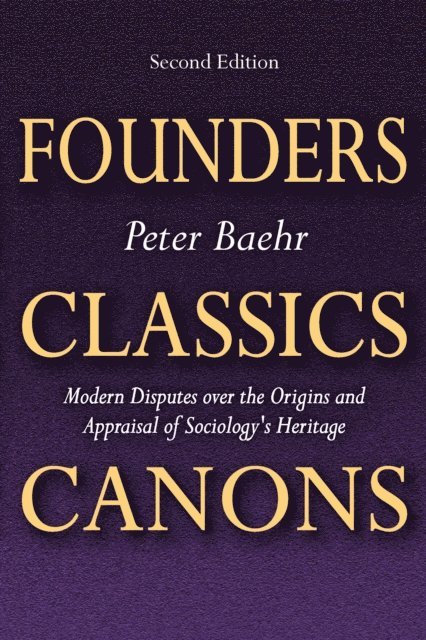
Three categories-founders, classics, canons-have been vitally important in helping to frame sociology's precarious identity, defining the discipline's sense of its past and the implications for its current activity. Today that identity is being challenged as never before. Within the academy, a number of positions-feminist, postmodernist, poststructuralist, postcolonial-converge in questioning the status of "the tradition." These currents, in turn, reflect wider social questioning about the meaning and uses of knowledge in technologically advanced societies.In Founders, Classics, Canons, Peter Baehr scrutinizes the nature of this challenge. He provides a model of the processes through which texts are elevated to classic status, and defends the continuing importance of sociology's traditions for a university education in the social sciences. The concept of "classic" is, as Baehr notes, a complex one. Essentially it assumes a scale of judgment that deems certain texts as exemplary in eminence. But what is the nature of this eminence? Baehr analyzes various responses to this question. Most notable are those that focus on the functions classics perform for the scholarly community that employs them; the rhetorical force classics are said to possess; and the processes of reception that result in classic status. The concept of classic is often equated with two other notions: "founders" and "canon." The former has a well-established pedigree within the discipline, but widespread usage of the latter in sociology is much more recent and polemical in tone. Baehr offers arguments against these two ways of interpreting, defending and attacking sociology's great texts and authors. He demonstrates why, in logical and historical terms, discourses and traditions cannot actually be "founded" and why the term "founder" has little explanatory content. Equally, he takes issue with the notion of "canon" and argues that the analogy between the theological canon and sociological classic texts, though seductive, is mistaken.While questioning the uses to which the concepts of founder, classic, and canon have been put, Baehr's purpose is not dismissive. On the contrary, he seeks to understand the value and meaning they have for the people who employ them in the cultural battle to affirm or excoriate the liberal university tradition. In examining the tactics of this battle, this volume offers a model of how social theory can be critical rather than radical.
Inbunden, Engelska, 2010
762 kr
Skickas inom 5-8 vardagar
This book examines the nature of totalitarianism as interpreted by some of the finest minds of the twentieth century. It focuses on Hannah Arendt's claim that totalitarianism was an entirely unprecedented regime and that the social sciences had integrally misconstrued it. A sociologist who is a critical admirer of Arendt, Baehr looks sympathetically at Arendt's objections to social science and shows that her complaints were in many respects justified. Avoiding broad disciplinary endorsements or dismissals, Baehr reconstructs the theoretical and political stakes of Arendt's encounters with prominent social scientists such as David Riesman, Raymond Aron, and Jules Monnerot. In presenting the first systematic appraisal of Arendt's critique of the social sciences, Baehr examines what it means to see an event as unprecedented. Furthermore, he adapts Arendt and Aron's philosophies to shed light on modern Islamist terrorism and to ask whether it should be categorized alongside Stalinism and National Socialism as totalitarian.
Inbunden, Engelska, 2019
2 369 kr
Skickas inom 10-15 vardagar
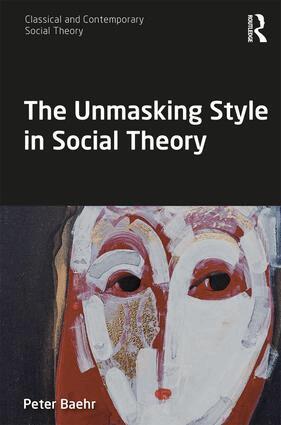
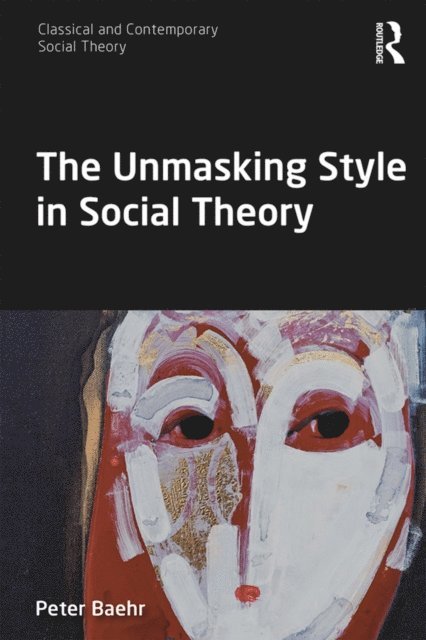
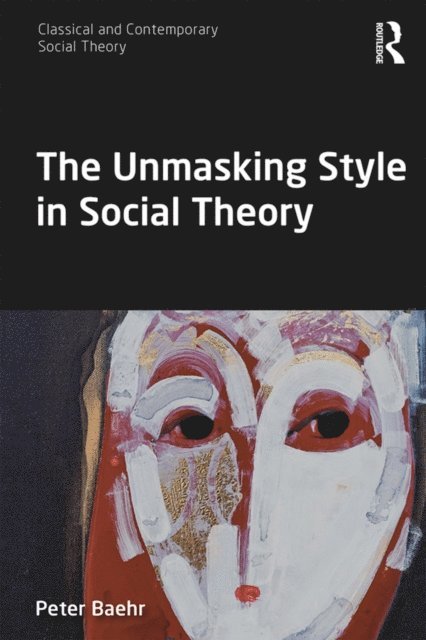
This book examines the nature of unmasking in social theory, in revolutionary movements and in popular culture. Unmasking is not the same as scientific refutation or principled disagreement. When people unmask, they claim to rip off a disguise, revealing the true beneath the feigned. The author distinguishes two basic types of unmasking. The first, aimed at persons or groups, exposes hypocrisy and enmity, and is a staple of revolutionary movements. The second, aimed at ideas, exposes illusions and ideologies, and is characteristic of radical social theory since the eighteenth-century Enlightenment. The Unmasking Style in Social Theory charts the intellectual origins of unmasking, its shifting priorities, and its specific techniques in social theory. It also explores sociology’s relationship to the concept of unmasking through an analysis of writers who embrace, adapt or reshape its meaning. Such sociologists include Vilfredo Pareto, Karl Mannheim, Raymond Aron, Peter Berger, Pierre Bourdieu, Luc Boltanski and Christian Smith. Finally, taking conspiracy theories, accusations of social phobia and new concepts such as micro-aggression as examples of unmasking techniques, the author shows how unmasking contributes to the polarization and bitterness of much public discussion. Demonstrating how unmasking is baked into modern culture, yet arguing that alternatives to it are still possible, this book is, in sum, a compelling study of unmasking and its impact upon modern political life and social theory.
Häftad, Engelska, 2019
674 kr
Skickas inom 10-15 vardagar
This book examines the nature of unmasking in social theory, in revolutionary movements and in popular culture. Unmasking is not the same as scientific refutation or principled disagreement. When people unmask, they claim to rip off a disguise, revealing the true beneath the feigned. The author distinguishes two basic types of unmasking. The first, aimed at persons or groups, exposes hypocrisy and enmity, and is a staple of revolutionary movements. The second, aimed at ideas, exposes illusions and ideologies, and is characteristic of radical social theory since the eighteenth-century Enlightenment. The Unmasking Style in Social Theory charts the intellectual origins of unmasking, its shifting priorities, and its specific techniques in social theory. It also explores sociology’s relationship to the concept of unmasking through an analysis of writers who embrace, adapt or reshape its meaning. Such sociologists include Vilfredo Pareto, Karl Mannheim, Raymond Aron, Peter Berger, Pierre Bourdieu, Luc Boltanski and Christian Smith. Finally, taking conspiracy theories, accusations of social phobia and new concepts such as micro-aggression as examples of unmasking techniques, the author shows how unmasking contributes to the polarization and bitterness of much public discussion. Demonstrating how unmasking is baked into modern culture, yet arguing that alternatives to it are still possible, this book is, in sum, a compelling study of unmasking and its impact upon modern political life and social theory.
Häftad, Engelska, 2018
861 kr
Skickas inom 10-15 vardagar
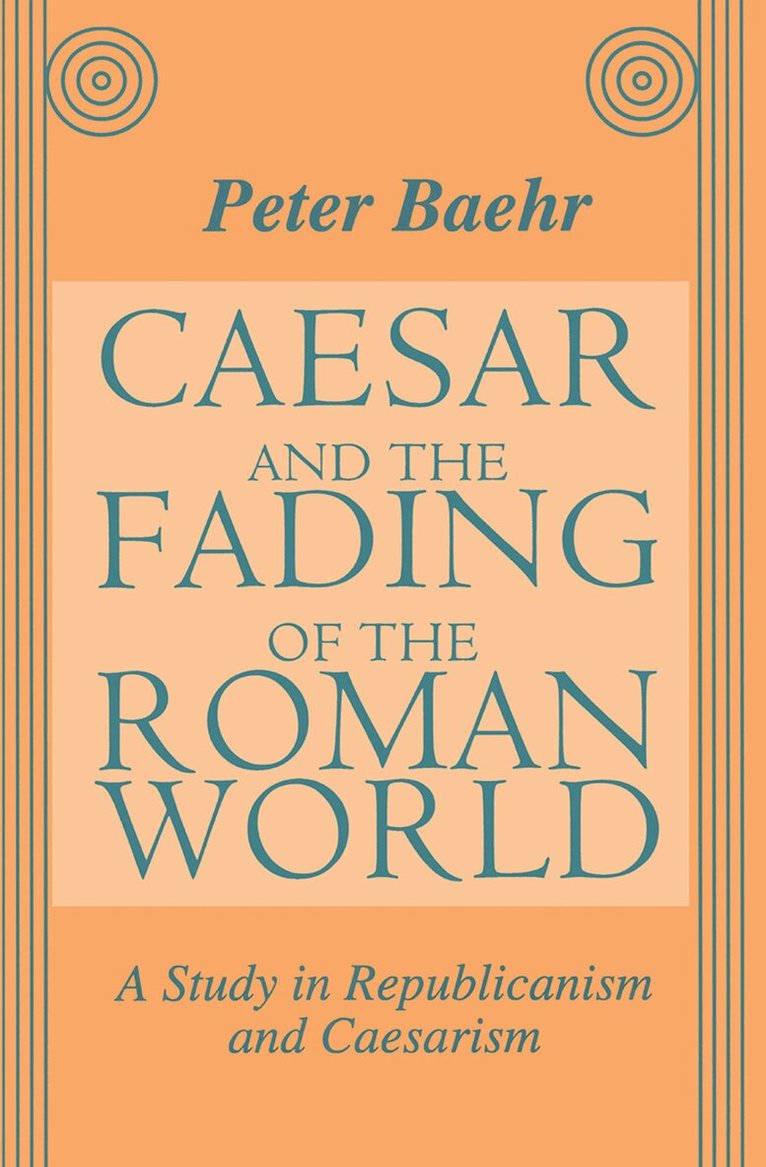
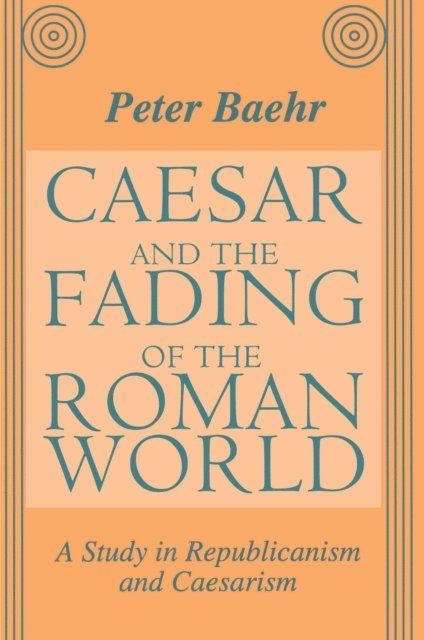
For many centuries, Julius Caesar was a name that evoked strong feelings among educated people. Some of these responses were complimentary, but others came from the point of view of "political republicanism" which envisaged Caesar as a historical symbol for some of the most dangerous tendencies a polity could experience. Caesar represented everything that republicans detested corruption, demagogy, usurpation and as such, provided an antimodel against which genuine political virtue could be measured. Caesar and the Fading of the Roman World examines the reception of Caesar in republican thought until the late eighteenth century and his transformation in the nineteenth, when he enjoyed a major rehabilitation in the literary culture and historiography of the day.Critical of hereditary monarchy and emphasizing the collective political obligations citizens owed to their city or commonwealth, republican thinkers sought to cultivate institutions and mores best adapted to self-governing liberty. The republican idiom became an integral element in the discourse of the American revolutionaries and constitution builders during the eighteenth century, and of their counterparts in France.In the nineteenth century, Caesar enjoyed a major rehabilitation; from being a pariah, he was elevated in the writings of people like Byron, De Quincey, Mommsen, Froude, and Nietzsche to the greatest statesman of his age. Simultaneously, Caesar's name continued to function as a term of polemic in the emergence of a new debate on what came to be called "Caesarism." While the metamorphosis of Caesar's reputation is studied here as a process in its own right, it is also meant to highlight the increasing enfeeblement of the republican tradition. The transformation of Caesar's image is a sure sign of changes within the wider present-day political culture and evidence of the emergence of new problems and challenges.Drawing on history, political theory, and sociology, Caesar and the Fading of the Roman World uses the image of Caesar as a way of interpreting broader political and cultural tendencies. Peter Baehr discusses the significance of living not in a postmodern society, but in a postclassical one in which ideas of political obligation have become increasingly emaciated and in which the theoretical resources for the care of our public world have become correspondingly scarce. This volume is an important study that will be of value to sociologists, political theorists, and historians.
Häftad, Engelska, 2017
684 kr
Skickas inom 10-15 vardagar
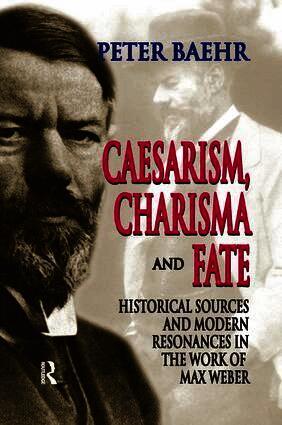
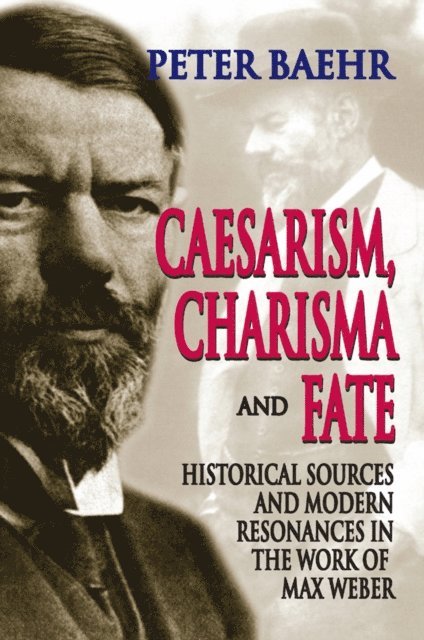
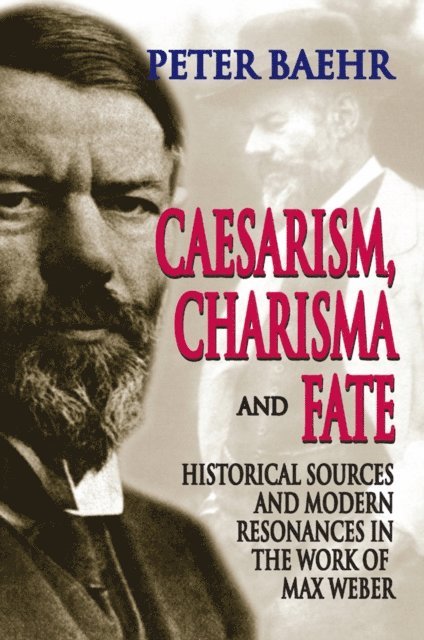
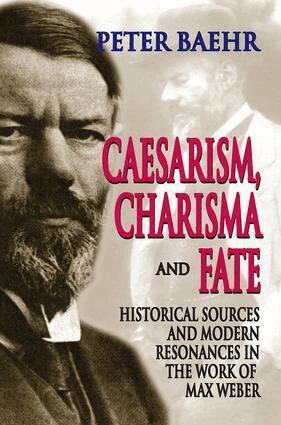
How do writers, marginalized by the authoritarian state in which they live, intervene in the political process? They cannot do so directly because they are not politicians. Other modes of engagement are possible, however. A writer may take up arms and become a revolutionary. Or, as Max Weber did, he may try to influence politics by playing the role of constitutional advisor, or by seeking to shape the dominant language in which his contemporaries think. Weber sought to reconstitute the political and social vocabulary of his day.Part I of Caesarism, Charisma and Fate examines a great writer's political passions and the linguistic creativity they generated. Specially, it is an analysis of the manner in which Weber reshaped the nineteenth century idea of "Caesarism," a term traditionally associated with the authoritarian populism of Napoleon III and Bismarck, and transmuted it into a concept that was either neutral or positive. The coup de grace of this alchemy was to make Caesarism reappear as charisma. In that transformation, a highly contentious political concept, suffused with disapproval and anxiety, was naturalized into an ideal type of universal value-free sociology.Part II augments Weber's ideas for the modem age. A recurrent preoccupation of Weber's writings was human "fate," a condition that evokes the pathos of choice, the political meaning of death, and the formation of national solidarity. Peter Baehr, marrying Weber and Durkheim, fashions a new concept, "community of fate," for sociological theory. Communities of fate--such as the Warsaw Ghetto or Hong Kong dealing with the Severe Acute Respiratory Syndrome (SARS) crisis--are embattled social sites in which people face the prospect of collective death. They cohere because of an intense and broadly shared focus of attention on a common plight. Weber's work helps us grasp the nature of such communities, the mechanisms that produce them, and, not least, their dramatic consequences.
Inbunden, Engelska, 2008
2 148 kr
Skickas inom 10-15 vardagar
How do writers, marginalized by the authoritarian state in which they live, intervene in the political process? They cannot do so directly because they are not politicians. Other modes of engagement are possible, however. A writer may take up arms and become a revolutionary. Or, as Max Weber did, he may try to influence politics by playing the role of constitutional advisor, or by seeking to shape the dominant language in which his contemporaries think. Weber sought to reconstitute the political and social vocabulary of his day.Part I of Caesarism, Charisma and Fate examines a great writer's political passions and the linguistic creativity they generated. Specially, it is an analysis of the manner in which Weber reshaped the nineteenth century idea of "Caesarism," a term traditionally associated with the authoritarian populism of Napoleon III and Bismarck, and transmuted it into a concept that was either neutral or positive. The coup de grace of this alchemy was to make Caesarism reappear as charisma. In that transformation, a highly contentious political concept, suffused with disapproval and anxiety, was naturalized into an ideal type of universal value-free sociology.Part II augments Weber's ideas for the modem age. A recurrent preoccupation of Weber's writings was human "fate," a condition that evokes the pathos of choice, the political meaning of death, and the formation of national solidarity. Peter Baehr, marrying Weber and Durkheim, fashions a new concept, "community of fate," for sociological theory. Communities of fate--such as the Warsaw Ghetto or Hong Kong dealing with the Severe Acute Respiratory Syndrome (SARS) crisis--are embattled social sites in which people face the prospect of collective death. They cohere because of an intense and broadly shared focus of attention on a common plight. Weber's work helps us grasp the nature of such communities, the mechanisms that produce them, and, not least, their dramatic consequences.
Häftad, Engelska, 2015
718 kr
Skickas inom 10-15 vardagar
Founders, classics, and canons have been vitally important in helping to frame sociology's identity. Within the academy today, a number of positions—feminist, postmodernist, postcolonial—question the status of "tradition."In Founders, Classics, Canons, Peter Baehr defends the continuing importance of sociology's classics and traditions in a university education. Baehr offers arguments against interpreting, defending, and attacking sociology's great texts and authors in terms of founders and canons. He demonstrates why, in logical and historical terms, discourses and traditions cannot actually be "founded" and why the term "founder" has little explanatory content. Equally, he takes issue with the notion of "canon" and argues that the analogy between the theological canon and sociological classic texts, though seductive, is mistaken.Although he questions the uses to which the concepts of founder, classic, and canon have been put, Baehr is not dismissive. On the contrary, he seeks to understand the value and meaning these concepts have for the people who employ them in the cultural battle to affirm or attack the liberal university tradition.
Inbunden, Engelska, 1997
2 225 kr
Skickas inom 10-15 vardagar
For many centuries, Julius Caesar was a name that evoked strong feelings among educated people. Some of these responses were complimentary, but others came from the point of view of "political republicanism"—which envisaged Caesar as a historical symbol for some of the most dangerous tendencies a polity could experience. Caesar represented everything that republicans detested—corruption, demagogy, usurpation—and as such, provided an antimodel against which genuine political virtue could be measured. Caesar and the Fading of the Roman World examines the reception of Caesar in republican thought until the late eighteenth century and his transformation in the nineteenth, when he enjoyed a major rehabilitation in the literary culture and historiography of the day.Critical of hereditary monarchy and emphasizing the collective political obligations citizens owed to their city or commonwealth, republican thinkers sought to cultivate institutions and mores best adapted to self-governing liberty. The republican idiom became an integral element in the discourse of the American revolutionaries and constitution builders during the eighteenth century, and of their counterparts in France.In the nineteenth century, Caesar enjoyed a major rehabilitation; from being a pariah, he was elevated in the writings of people like Byron, De Quincey, Mommsen, Froude, and Nietzsche to the greatest statesman of his age. Simultaneously, Caesar's name continued to function as a term of polemic in the emergence of a new debate on what came to be called "Caesarism." While the metamorphosis of Caesar's reputation is studied here as a process in its own right, it is also meant to highlight the increasing enfeeblement of the republican tradition. The transformation of Caesar's image is a sure sign of changes within the wider present-day political culture and evidence of the emergence of new problems and challenges.Drawing on history, political theory, and sociology, Caesar and the Fading of the Roman World uses the image of Caesar as a way of interpreting broader political and cultural tendencies. Peter Baehr discusses the significance of living not in a postmodern society, but in a postclassical one in which ideas of political obligation have become increasingly emaciated and in which the theoretical resources for the care of our public world have become correspondingly scarce. This volume is an important study that will be of value to sociologists, political theorists, and historians.
Del 1 - Anthem Companions to Sociology
Anthem Companion to Hannah Arendt
Inbunden, Engelska, 2017
1 083 kr
Skickas inom 5-8 vardagar
The Anthem Companion to Hannah Arendt offers a unique collection of essays on one of the twentieth century’s greatest thinkers. The companion encompasses Arendt’s most salient arguments and major works – The Origins of Totalitarianism, The Human Condition, Eichmann in Jerusalem, On Revolution and The Life of the Mind. The volume also examines Arendt’s intellectual relationships with Max Weber, Karl Mannheim and other key social scientists. Although written principally for students new to Arendt’s work, The Anthem Companion to Hannah Arendt also engages the most avid Arendt scholar.