• Fri frakt över 249 kr
  • •
  • Snabba leveranser
  • •
  • Billiga böcker
Kundservice

Du är på sajten för privatpersoner.

Företag, bibliotek eller offentlig verksamhet?

Du handlar på classic.bokus.com, där alla dina funktioner finns intakta.
Till classic.bokus.com
Bokus logotyp. Gå till startsidan.
  • Erbjudanden
  • Nyheter
  • Student
  • Topplistor
  • Barn & ungdom
  • Bokus Play
  • E-böcker
  • Pocketböcker
  • Spel & pussel

10% rabatt på allt med kod: NYSTART10 →

Sidfot

Mina sidor

    Hjälp

    • Kundservice
    • Vanliga frågor och svar
    • Frakt och leverans
    • Retur vid ångerrätt
    • Reklamera vara
    • Betalning
    • Köpvillkor
    • Allmänna villkor
    • Information om webbplatsens tillgänglighet

    Om Bokus

    • Om oss
    • Pressrum
    • För studenter
    • För företag
    • För bibliotek och offentlig verksamhet
    • För leverantörer
    • Hållbarhet

    Populärt

    • Aktuella erbjudanden
    • Presentkort
    • Studentlitteratur
    • Nya böcker
    • Topplistor
    • Signerade böcker
    • Engelska böcker

    Inspiration

    • Boktips
    • BookTok
    • Populära bokserier
    • Barnbokskaraktärer
    • Populära författare
    Logotyp för Bokus
    Följ oss på Facebook (extern länk)Följ oss på Instagram (extern länk)Följ oss på YouTube (extern länk)Följ oss på TikTok (extern länk)
    bokus @ CookiesAnpassa cookiesIntegritetspolicyKöpvillkor
    Till Citymail hemsida (extern länk)Till Budbee hemsida (extern länk)Till Postnord hemsida (extern länk)Till Schenker hemsida (extern länk)Till Early Bird hemsida (extern länk)Till Walleys hemsida (extern länk)
    1. Juridik
    2. Internationell rätt
    3. Folkrätt

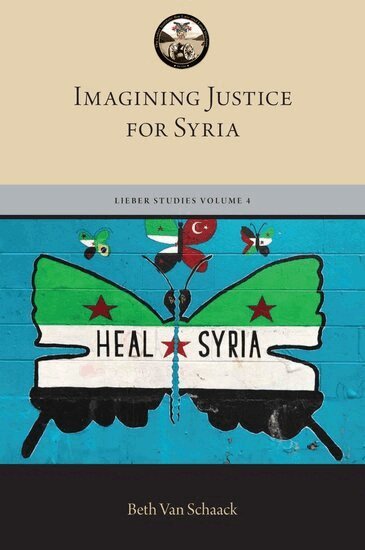
    Imagining Justice for Syria

    AvBeth Van Schaack

    Inbunden, Engelska, 2021

    Del i serien The Lieber Studies Series

    1 372 kr

    Beställningsvara. Skickas inom 5-8 vardagar. Fri frakt över 249 kr.

    Fler format och utgåvor

    E-bok

    1 080 kr

    E-bok

    1 143 kr

    Beskrivning

    This book situates the war in Syria within the actual and imagined system of international criminal justice. It explores the legal impediments and diplomatic challenges that have led to the fatal trinity affecting Syria: the massive commission of international crimes that are subject to detailed investigations and documentation but whose perpetrators have enjoyed virtually complete impunity. Given this tragic state of affairs, the book tracks a number of accountability solutions being explored within multilateral initiatives and by civil society actors, including innovations of institutional design; the renewed utility of a range of domestic jurisdictional principles (including the revival of universal jurisdiction in Europe); the emergence of creative investigative and documentation techniques, technologies, and organizations; and the rejection of state consent as a precondition for the exercise of jurisdiction. Engaging both law and policy around international justice, the text offers a set of justice blueprints, within and without the International Criminal Court. It also considers the utility, propriety, and practicality of pursuing a transitional justice program without a genuine political transition. All told, the book attempts to capture results of the creative energy radiating from members of the international community intent on advancing the accountability norm in Syria even in the face of geopolitical blockages within the U.N. Security Council. In so doing, it presents the range of juridical measures-both criminal and civil - that would be available to the international community to respond to the crisis, if only the political will existed.

    Produktinformation

    • Utgivningsdatum:2021-01-19
    • Mått:239 x 163 x 30 mm
    • Vikt:975 g
    • Format:Inbunden
    • Språk:Engelska
    • Serie:The Lieber Studies Series
    • Antal sidor:496
    • Förlag:OUP USA
    • ISBN:9780190055967

    Utforska kategorier

    • Folkrätt inom Juridik
    • Internationella relationer inom Samhälle och politik

    Mer om författaren

    Beth Van Schaack is the Leah Kaplan Visiting Professor in Human Rights at Stanford Law School where she teaches in the areas of international human rights, international criminal law, and human trafficking, and directs the Human Rights & Conflict Resolution Clinic. Prior to returning to academia, she served as Deputy to the Ambassador-at-Large for War Crimes Issues in the Office of Global Criminal Justice of the U.S. Department of State under Secretaries Clinton and Kerry. In that capacity, she helped formulate U.S. policy regarding the prevention of and accountability for mass atrocities, such as war crimes, crimes against humanity, and genocide, and worked extensively on the Syrian crisis. Prior to entering the academy, she was with the Office of the Prosecutor of the International Criminal Tribunal for the former Yugoslavia in The Hague. A graduate of Stanford University and Yale Law School,

    Recensioner i media

    Ultimately, the book provides a balanced assessment of international justice efforts in relation to Syria that is both deeply researched and clear-eyed while allowing a glimmer of hope for the future of accountability.

    Innehållsförteckning

    • DedicationAbbreviationsForward & Acknowledgements Chapter 1. IntroductionChapter 2. A Short History of a Long Conflict: From Revolution to AtrocityChapter 3. The Security Council and International Crimes in Syria: A Study in DysfunctionChapter 4. Deconstructing the Would-Be ICC Referral: The Politics of International Justice in the Security Council Chapter 5. Prospects for Justice before the International Criminal CourtChapter 6. A Menu of Models for Accountability: Options for an Ad Hoc Tribunal for SyriaChapter 7. National Courts Step Up: Syrian Cases Proceeding in Domestic CourtsChapter 8. Civil Suits: The Utility of State Responsibility and the Law of TortChapter 9. Innovations in International Criminal Law Documentation Methodologies and InstitutionsChapter 10. Transitional Justice Without Transition: The International Community's Efforts in SyriaChapter 11. Conclusion