• Fri frakt över 249 kr
  • •
  • Snabba leveranser
  • •
  • Billiga böcker
Kundservice

Du är på sajten för privatpersoner.

Företag, bibliotek eller offentlig verksamhet?

Du handlar på classic.bokus.com, där alla dina funktioner finns intakta.
Till classic.bokus.com
Bokus logotyp. Gå till startsidan.
  • Erbjudanden
  • Nyheter
  • Student
  • Topplistor
  • Barn & ungdom
  • Bokus Play
  • E-böcker
  • Pocketböcker
  • Spel & pussel

Må bättre, för mindre! Upp till 50% rabatt på hälsoböcker

Sidfot

Mina sidor

    Hjälp

    • Kundservice
    • Vanliga frågor och svar
    • Frakt och leverans
    • Retur vid ångerrätt
    • Reklamera vara
    • Betalning
    • Köpvillkor
    • Allmänna villkor
    • Information om webbplatsens tillgänglighet

    Om Bokus

    • Om oss
    • Pressrum
    • För studenter
    • För företag
    • För bibliotek och offentlig verksamhet
    • För leverantörer
    • Hållbarhet

    Populärt

    • Aktuella erbjudanden
    • Presentkort
    • Studentlitteratur
    • Nya böcker
    • Topplistor
    • Signerade böcker
    • Engelska böcker

    Inspiration

    • Boktips
    • BookTok
    • Populära bokserier
    • Barnbokskaraktärer
    • Populära författare
    Logotyp för Bokus
    Följ oss på Facebook (extern länk)Följ oss på Instagram (extern länk)Följ oss på YouTube (extern länk)Följ oss på TikTok (extern länk)
    bokus @ CookiesAnpassa cookiesIntegritetspolicyKöpvillkor
    Till Citymail hemsida (extern länk)Till Budbee hemsida (extern länk)Till Postnord hemsida (extern länk)Till Schenker hemsida (extern länk)Till Early Bird hemsida (extern länk)Till Walleys hemsida (extern länk)
    1. Medicin
    2. Medicin: allmänt
    3. Hälso- och sjukvård

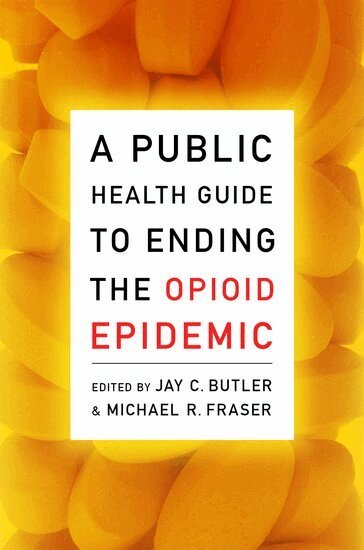
    A Public Health Guide to Ending the Opioid Epidemic

    AvJay C. Butler,Michael R. Fraser

    Häftad, Engelska, 2019

    755 kr

    Beställningsvara. Skickas inom 5-8 vardagar. Fri frakt över 249 kr.

    Beskrivning

    THE DEFINITIVE GUIDE FOR PUBLIC HEALTH PROFESSIONALS FIGHTING THE OPIOID EPIDEMICThe opioid crisis has devastated families and communities across the United States. Changes in policing and medical practices have been swift, but they've achieved only a modest impact on the fundamental causes of substance misuse and addiction. The necessity for upstream intervention is clear. But what does that look like? A Public Health Guide to Ending the Opioid Epidemic does what only a public health approach can: offer credible, scalable, and empirically supported approaches to uprooting one of society's most pernicious challenges. It systemizes the core tenets of the public health approach to substance misuse and addiction, which alongside clinical approaches (prescription guidelines and monitoring, increased access to overdose-reversal medication, and medication-assisted treatment availability) offers a roadmap for end-to-end response to this diverse problem. Core elements of the public health approach, all covered here in practical terms, include:· How to support community-based, primary prevention of substance misuse and addiction in different settings and populations · How to effectively address the cultural, social, and environmental aspects of health that are driving the current epidemic· How governmental public health agencies play a significant role in responding to the epidemic, both in the field's traditional model of disease surveillance and control and in more directed approaches to health promotion (building community resilience; addressing the impact of adverse childhood events; mitigating the root causes of addiction)These frameworks offer a foundation for understanding, analyzing, and meaningfully impacting the burden of opioid misuse and addiction in any population or setting. A Public Health Guide to Ending the Opioid Epidemic is a roadmap for meaningful change.

    Produktinformation

    • Utgivningsdatum:2019-11-05
    • Mått:155 x 231 x 27 mm
    • Vikt:567 g
    • Format:Häftad
    • Språk:Engelska
    • Antal sidor:400
    • Förlag:OUP USA
    • ISBN:9780190056810

    Utforska kategorier

    • Hälso- och sjukvård inom Medicin
    • Samhällsmedicin och preventiv medicin inom Medicin
    • Missbruk inom Medicin

    Mer om författaren

    JAY C. BUTLER, MD, is former Commissioner and Chief Medical Officer of the Alaska Department of Health and Social Services. During his tenure, he served as incident commander of Governor Bill Walker's Opioid Crisis Response Cabinet. He is a graduate of the University of North Carolina Medical School, has completed post-doctoral clinical trainings at Vanderbilt and Emory Universities, and maintains board certifications in infectious diseases, internal medical, and pediatrics. He was the 2017 President of the Association of State and Territorial Health Officials and is the recipient of the 2018 National American Society of Addiction Medicine's Public Policy Award. In 2019, he became Deputy Director for Infectious Diseases at the Centers for Disease Control and Prevention.MICHAEL R. FRASER, PhD, MS, CAE, FCPP, is Chief Executive Officer of the Association of State and Territorial Health Officials (ASTHO), the national nonprofit organization representing state and territorial leaders of public health agencies of the United States well as the more than 100,000 public health professionals these agencies employ. He has featured in interviews with the Washington Post, New York Times, Politico, and other national and regional media outlets. He is an affiliated faculty at the George Mason University College of Health and Human Services and a Professorial Lecturer in Health Policy and Management at the Milken Institute School of Public Health at George Washington University. His collaborative research and scholarship have published in several academic journals including the American Journal of Public Health and the Journal of Public Health Management and Practice.

    Innehållsförteckning

    • Acknowledgements Forewordsi. Foreword: A Recovery JourneyGreg Williams ii. Foreword: Countering the Opioid EpidemicMeena Vythilingam, Kumiko Lippold, and Brett GiroirText Box ii.1: Ten Evidence Based Strategies for Preventing Opioid Overdose Part I: Fundamentals and Frameworks Chapter 1Introduction: Why a Public Health Guide to Ending the Opioid Crisis?Michael Fraser and Jay Butler Chapter 2The Emergence of an EpidemicElizabeth M. Finkelman and J. Michael McGinnis Chapter 3Public Health Approaches to Preventing Substance Misuse and AddictionJay Butler Chapter 4Public Health Approaches to Overdose Prevention and Harm ReductionMark Lysyshyn and Mark Tyndall Chapter 5Stigma and the Language of AddictionMichael Botticelli and Colleen L. Barry Chapter 6The Neuroscience of Addiction: A Primer for Public Health ProfessionalsJay C. Butler Part II: Connecting Clinical Perspectives and Public Health Practice Chapter 7Non-Opioid Alternatives to Managing Chronic Pain: An Overview for Public Health PractitionersVanila Singh and Rachel Katonak Chapter 8The Role of Community Pharmacy in Addressing and Preventing Opioid Use DisorderNicholas E HagemeierText Box 8.1: Washington State's Medication Take-Back Program Chapter 9SBIRT as a Public Health and Prevention Strategy to Address Substance Misuse and Addiction Alexandra Nowalk and Janice PringleText Box 9.1. Case Study 1. Universal Screening at EMPOWER Center for HealthText Box 9.2. Case Study 2. Integrating SBIRT within Clinical Workflows Chapter 10Expanding Access to Treatment and Recovery Services Using a Hub and Spoke Model of Care Anne Van Donsel, Anthony Folland, and Mark Levine Chapter 11Engaging Payers to Transform Treatment of Substance Use DisordersSamantha ArsenaultText Box 11.1. Shatterproof Substance Use Disorder Treatment Task Force: Payer RepresentativesText Box 11.2. Shatterproof's National Principles of Care Chapter 12Collaborating to Address Substance Use Disorder in Correctional Settings: The Rhode Island Experience Rosemarie A. Martin, Nicole Alexander-Scott, Joseph Wendelken, and Jennifer ClarkeText Box 12.1. Definitions of Criminal Justice Terms Part III: Moving Upstream - Prevention, Partnership & Public Health Chapter 13The Role of Public Health Agencies in Convening Partnerships and Collaborations to Respond to the Opioid CrisisPhilicia Tucker and Michael Fraser Chapter 14Systems Thinking and the Opioid Epidemic in GeorgiaBrigitte Manteuffel, Leigh Alderman, Jane Branscomb, Karen Minyard Chapter 15A Comprehensive Approach to Addressing the Opioid CrisisMichael Fraser and Mark Levine Chapter 16Five Key Strategies for an "Upstream" Approach to Preventing Opioid Misuse and AddictionJohn Auerbach and Benjamin F. Miller Chapter 17Addressing Community Trauma and Building Community Resilience to Prevent Opioid Misuse and Addiction Sheila Savannah and Dana Fields-Johnson, with Ruben Cantu, Sana Chehimi, Alexis Captanian, and Karmen KurtzText Box 17.1. Promoting Community Level Solutions in OhioText Box 17.2. Building Resilience in Huntington, West Virginia Chapter 18Early Childhood Trauma and Substance Misuse and Addiction: An Opportunity for PreventionMelissa Merrick, Derek C. Ford, and Deborah HouryText Box 18.1. Excerpt from Essentials for Childhood: Steps to Create Safe, Stable, Nurturing Relationships and Environments Chapter 19Public Health and the Criminal Justice System: Partnerships to Promote Health and Prevent AddictionGary Tennis, Kenneth Martz, and Jac Charlier Chapter 20Building Effective Public Health and Public Safety Collaborations to Prevent Opioid Overdose at the Local, State, and Federal LevelsJennifer Carroll, Rita K. Noonan, and Jessica Wolff Chapter 21Public Health Surveillance and the Opioid CrisisJeffrey P. Engel, Valerie N. Goodson, Megan Toe, and Michael LandenText Box 21.1: Council of State and Territorial Epidemiologists' Nonfatal Opioid Overdose Standardized Surveillance Case Definition Chapter 22The Role of Prescription Drug Monitoring Programs (PDMPs) in Addressing the Opioid Overdose EpidemicGrant Baldwin, Jan Losby, Wes Sargent, Jamie Mells, and Sarah Bacon.Text Box 22.1. Excerpt from Tracking PDMP Enhancement: The Best Practice Checklist Chapter 23Prescribing Guidelines and Opioid StewardshipMark Bicket and Caleb AlexanderText Box 23.1. Recommendations from the CDC Guideline for Prescribing Opioids for Chronic PainText Box 23.2. Examples of Prescribing Guidelines from Selected National OrganizationsText Box 23.3. Selected Examples of State Opioid and/or Controlled Substance Prescribing Guidelines Chapter 24Developing a Culture of Opioid Stewardship: The Pennsylvania ExampleAllison Michalowski, Sarah Boateng, Michael Fraser, Rachel L. LevineText Box 24.1: Pennsylvania's Opioid Stewardship On-Line Resources Afterword: Our Collaborative Journey About the Authors Index