• Fri frakt över 249 kr
  • •
  • Snabba leveranser
  • •
  • Billiga böcker
Kundservice

Du är på sajten för privatpersoner.

Företag, bibliotek eller offentlig verksamhet?

Du handlar på classic.bokus.com, där alla dina funktioner finns intakta.
Till classic.bokus.com
Bokus logotyp. Gå till startsidan.
  • Erbjudanden
  • Student
  • Topplistor
  • Barn & ungdom
  • Bokus Play
  • E-böcker
  • Ljudböcker
  • Pocketböcker
  • Spel & pussel

10% rabatt på allt med kod NYSTART10 →

Sidfot

Mina sidor

    Hjälp

    • Kundservice
    • Vanliga frågor och svar
    • Frakt och leverans
    • Retur vid ångerrätt
    • Reklamera vara
    • Betalning
    • Köpvillkor
    • Allmänna villkor
    • Information om webbplatsens tillgänglighet

    Om Bokus

    • Om oss
    • Pressrum
    • För studenter
    • För företag
    • För bibliotek och offentlig verksamhet
    • För leverantörer
    • Hållbarhet

    Populärt

    • Aktuella erbjudanden
    • Presentkort
    • Studentlitteratur
    • Nya böcker
    • Topplistor
    • Signerade böcker
    • Engelska böcker

    Inspiration

    • Boktips
    • BookTok
    • Populära bokserier
    • Barnbokskaraktärer
    • Populära författare
    Logotyp för Bokus
    Följ oss på Facebook (extern länk)Följ oss på Instagram (extern länk)Följ oss på YouTube (extern länk)Följ oss på TikTok (extern länk)
    bokus @ CookiesAnpassa cookiesIntegritetspolicyKöpvillkor
    Till Citymail hemsida (extern länk)Till Budbee hemsida (extern länk)Till Postnord hemsida (extern länk)Till Schenker hemsida (extern länk)Till Early Bird hemsida (extern länk)Till Walleys hemsida (extern länk)
    1. Ekonomi och Ledarskap
    2. Industrier och branscher
    3. Servicesektorn

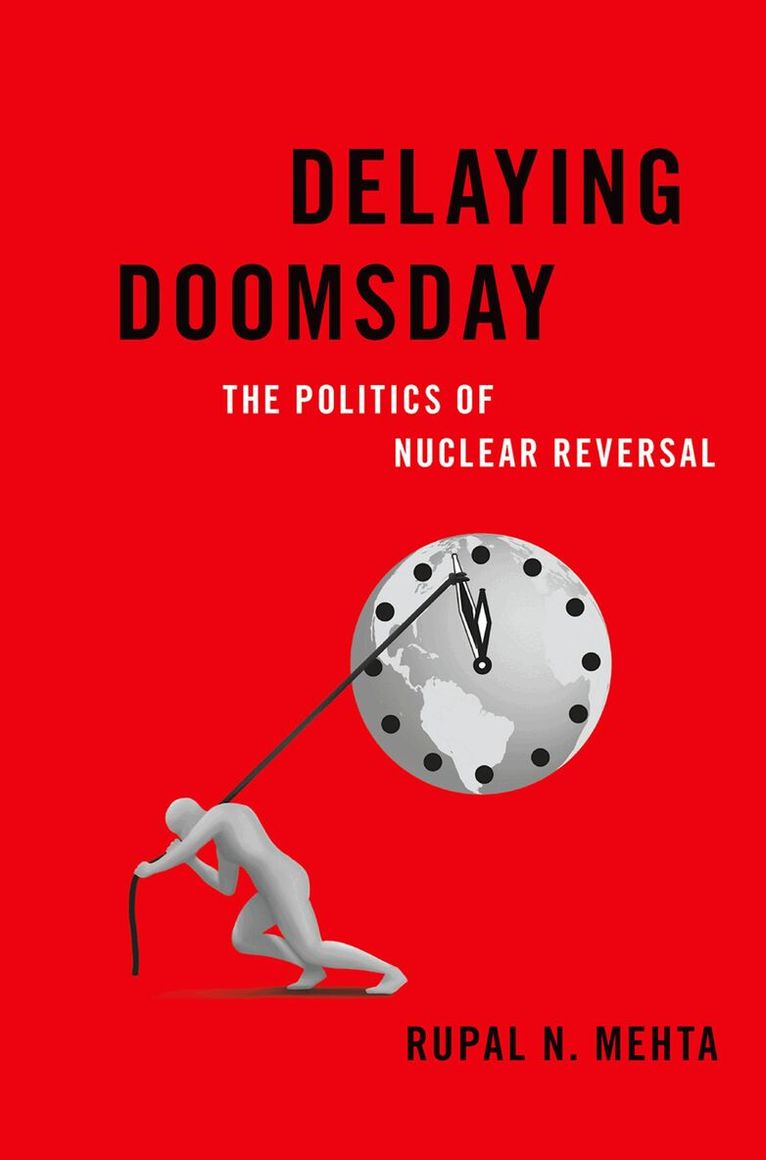
    Delaying Doomsday

    The Politics of Nuclear Reversal

    AvRupal N. Mehta

    Inbunden, Engelska, 2020

    Del i serien Bridging the Gap

    513 kr

    Beställningsvara. Skickas inom 5-8 vardagar. Fri frakt över 249 kr.

    Fler format och utgåvor

    E-bok

    379 kr

    E-bok

    380 kr

    Beskrivning

    In 1960, President Kennedy warned of a dangerous future, rife with nuclear-armed states and a widespread penchant for conflict by the end of the century. Thankfully, his prediction failed to pass; in fact, roughly three times as many countries have since opted to give up their nuclear pursuit or relinquish existing weapons than have maintained their arsenals. Nevertheless, clandestine acquisition of nuclear materials and technology by states such as Iraq, Syria, and Iran, and a nuclear North Korea, has reaffirmed the need for United States' commitment to pursuing aggressive counterproliferation strategies, particularly with rogue states. This book looks at the experiences of countries that ventured down the path of nuclear proliferation but were stopped short, and examines how the international community bargains with proliferators to encourage nuclear reversal. It asks why so many states have relented to pressure to abandon their nuclear weapons programs, and which counterproliferation policies have been successful. Rupal N. Mehta argues that the international community can persuade countries to reverse their weapons programs with rewards and sanctions especially when the threat to use military force remains "on the table". Specifically, nuclear reversal is most likely when states are threatened with sanctions and offered face-saving rewards that help them withstand domestic political opposition. Historically, the United States has relied on a variety of policy levers--including economic and civilian nuclear assistance and, sometimes, security guarantees, as well as economic sanctions--to achieve nuclear reversal. Underlying these negotiations is the possibility of military intervention, which incentivizes states to accept the agreement (often spearheaded by the United States) and end their nuclear pursuit. The book draws on interviews with current and former policymakers, as well as in-depth case studies of India, Iran, and North Korea, to provide policy recommendations on how best to manage nuclear proliferation challenges from rogue states. It also outlines the proliferation horizon, or the set of state and non-state actors that are likely to have interest in acquiring nuclear technology for civilian, military, or unknown purposes. The book concludes with implications and recommendations for U.S. and global nuclear counterproliferation policy.

    Produktinformation

    • Utgivningsdatum:2020-02-20
    • Mått:160 x 236 x 27 mm
    • Vikt:567 g
    • Format:Inbunden
    • Språk:Engelska
    • Serie:Bridging the Gap
    • Antal sidor:264
    • Förlag:OUP USA
    • ISBN:9780190077976

    Utforska kategorier

    • Servicesektorn inom Ekonomi och Ledarskap
    • Kärnvapen inom Samhälle och politik
    • Internationella relationer inom Samhälle och politik

    Mer om författaren

    Rupal N. Mehta is an Assistant Professor in the Department of Political Science at the University of Nebraska-Lincoln. Previously, she was a Stanton Nuclear Security Postdoctoral Fellow in the Belfer Center at Harvard University's Kennedy School of Government. She holds a Ph.D. in Political Science from the University of California, San Diego. Her research interests lie in international security, with a specialization in nuclear proliferation, extended deterrence, and nuclear latency. Her work has appeared in Journal of Conflict Resolution, International Studies Quarterly, Journal of Strategic Studies, The Washington Quarterly, and the Washington Post's Monkey Cage.

    Recensioner i media

    Delaying Doomsday sheds new light on an important and policy-relevant question: when and why do states end their pursuit of nuclear weapons? The book highlights the importance of US policy for effectively countering nuclear proliferation around the world.

    Innehållsförteckning

    • CHAPTER 1: THE PUZZLE OF COUNTERPROLIFERATIONCHAPTER 2: THEORY OF NUCLEAR REVERSALOVERVIEW: INTRODUCING THE EVIDENCECHAPTER 3: EVIDENCE FROM THE HISTORICAL RECORDCHAPTER 4: SUCCESS AND FAILURE IN NUCLEAR REVERSALCHAPTER 5: INDIA--ERSTWHILE ALLY AND NUCLEAR REVERSALCHAPTER 6: IRAN--ADVERSARIES AND NUCLEAR REVERSALCHAPTER 7: NORTH KOREA--THE REMAINING CHALLENGECHAPTER 8: LESSONS LEARNED--NUCLEAR REVERSAL, INTERNATIONAL RELATIONS, AND FUTURE CHALLENGESReferencesIndex