• Fri frakt över 249 kr
  • •
  • Snabba leveranser
  • •
  • Billiga böcker
Kundservice

Du är på sajten för privatpersoner.

Företag, bibliotek eller offentlig verksamhet?

Du handlar på classic.bokus.com, där alla dina funktioner finns intakta.
Till classic.bokus.com
Bokus logotyp. Gå till startsidan.
  • Erbjudanden
  • Student
  • Topplistor
  • Barn & ungdom
  • Bokus Play
  • E-böcker
  • Ljudböcker
  • Pocketböcker
  • Spel & pussel

Upp till 25% på utvalda nyheter →

Sidfot

Mina sidor

    Hjälp

    • Kundservice
    • Vanliga frågor och svar
    • Frakt och leverans
    • Retur vid ångerrätt
    • Reklamera vara
    • Betalning
    • Köpvillkor
    • Allmänna villkor
    • Information om webbplatsens tillgänglighet

    Om Bokus

    • Om oss
    • Pressrum
    • För studenter
    • För företag
    • För bibliotek och offentlig verksamhet
    • För leverantörer
    • Hållbarhet

    Populärt

    • Aktuella erbjudanden
    • Presentkort
    • Studentlitteratur
    • Nya böcker
    • Topplistor
    • Signerade böcker
    • Engelska böcker

    Inspiration

    • Boktips
    • BookTok
    • Populära bokserier
    • Barnbokskaraktärer
    • Populära författare
    Logotyp för Bokus
    Följ oss på Facebook (extern länk)Följ oss på Instagram (extern länk)Följ oss på YouTube (extern länk)Följ oss på TikTok (extern länk)
    bokus @ CookiesAnpassa cookiesIntegritetspolicyKöpvillkor
    Till Citymail hemsida (extern länk)Till Budbee hemsida (extern länk)Till Postnord hemsida (extern länk)Till Schenker hemsida (extern länk)Till Early Bird hemsida (extern länk)Till Walleys hemsida (extern länk)
    1. Filosofi och religion
    2. Filosofi
    3. Filosofiska discipliner

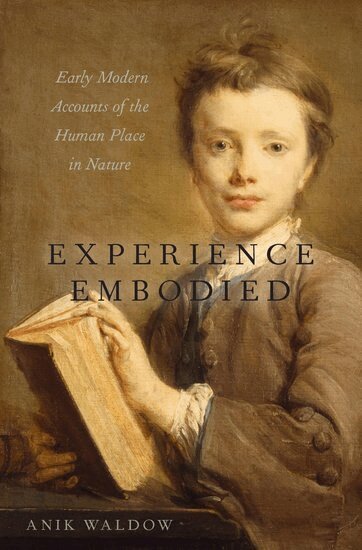
    Experience Embodied

    Early Modern Accounts of the Human Place in Nature

    AvAnik Waldow

    Inbunden, Engelska, 2020

    1 701 kr

    Beställningsvara. Skickas inom 5-8 vardagar. Fri frakt över 249 kr.

    Fler format och utgåvor

    E-bok

    1 101 kr

    E-bok

    1 101 kr

    Beskrivning

    Anik Waldow develops an account of embodied experience that extends from Descartes' conception of the human body as firmly integrated into the causal play of nature, to Kant's understanding of anthropology as a discipline that provides us with guidance in our lives as embodied creatures. Waldow defends the claim that during the early modern period, the debate on experience not only focused on questions arising from the subjectivity of our thinking and feeling, it also foregrounded the essentially embodied dimension of our lives as humans. By taking this approach, Waldow departs from the traditional epistemological route dominant in treatments of early-modern conceptions of experience. She makes the case that reflections on experience took center stage in a debate that was moral in nature, because it raised questions about the developmental potential of human beings and their capacity to instantiate the principles of self-determined agency in their lives. These questions emerged for many early modern authors since they understood that the fact that humans are embodied entailed that they are similarly responsive and causally-determined like other non-human animals. While this perspective made it possible to acknowledge that humans are part of the causal dynamics of nature, it called into question their ability to act in accordance with the principles of free, rational agency. Experience Embodied reveals how early modern authors responded to this challenge, offering a new perspective on the centrality of the concept of experience in comprehending the uniquely human place in nature.

    Produktinformation

    • Utgivningsdatum:2020-03-10
    • Mått:239 x 160 x 33 mm
    • Vikt:567 g
    • Format:Inbunden
    • Språk:Engelska
    • Antal sidor:312
    • Förlag:OUP USA
    • ISBN:9780190086114

    Utforska kategorier

    • Filosofiska discipliner inom Filosofi och religion

    Mer om författaren

    Anik Waldow is Associate Professor in the Philosophy Department at the University of Sydney. She mainly works in early modern philosophy and has published articles on the moral and cognitive function of sympathy, early modern theories of personal identity and the role of affect in the formation of the self, skepticism and associationist theories of thought and language. She is the author of Hume and the Problem of Other Minds (Continuum 2009), editor of Sensibility in the Early Modern Era: From Living Machines to Affective Morality (Routledge 2016), and co-edited Herder: Philosophy and Anthropology (OUP 2017).

    Recensioner i media

    Waldow's study is filled with careful, sustained, thought-provoking analyses that will be useful both in scholarly terms and in advanced teaching of texts [...]. It is a convincing story and one that obliges us to revisit some classics in an untraditional vein.

    Innehållsförteckning

    • AcknowledgementsAbbreviations Introduction Part I: The Moral Importance of Experience Chapter 1: Experience and Cartesian Agency 1.1 Experiencing and Knowing the Self 1.2 Confused Notions of Body and Mind 1.3 Agency in the Conduct of Life 1.4 Conclusion Chapter 2: Locke's Experiential Persons 2.1 On the Mental and Bodily Dimension of Reward and Punishment 2.2 Habit Training versus Conditioning 2.3 Persons as Agents 2.4 Reason, Reflection and Correction 2.5 Conclusion Part II: On the Continuity between Sensibility and Reason Chapter 3: Moral Reflection as Perception: A Humean Account 3.1 What is Natural about Human Nature? 3.2 Sympathy, Perception and Reflection 3.3 History and the Refinement of Moral Capacities 3.4 Conclusion Chapter 4: Manipulated Sensibilities: Rousseau on Human Nature 4.1 The Theatre, Moral Education and Affective Susceptibility 4.2 Rousseau's Attack 4.3 Natural Goodness and the Construction of Morality 4.4 Normativity and Nature 4.5 Conclusion Chapter 5: Affect and Imagination in Processes of Cognition: Herder 5.1 The Sensing Body and the Emergence of Language 5.2 Reason as an Organisational Principle 5.3 Discovering the World through Imagination and Affect 5.4 Conclusion Part III: How to Study the Human Being? Philosophy and the Empirical Method Chapter 6: Natural History and the Formation of the Human Being: Kant and Herder 6.1 The Human Place in Nature 6.2 The Organic Growth of History 6.3 Historical Explanations 6.4 Conclusion Chapter 7: Diversifying Method: Kant's Janus-Faced Conception of the Human Being 7.1 Environmental Determinism 7.2 Kant's Dual-Aspect Account of Character 7.3 Anthropology as a Pragmatic Endeavour 7.4 Philosophy and the Sciences 7.5 Conclusion Coda: Experience Embodied BibliographyIndex