E-bok, Engelska, 2014
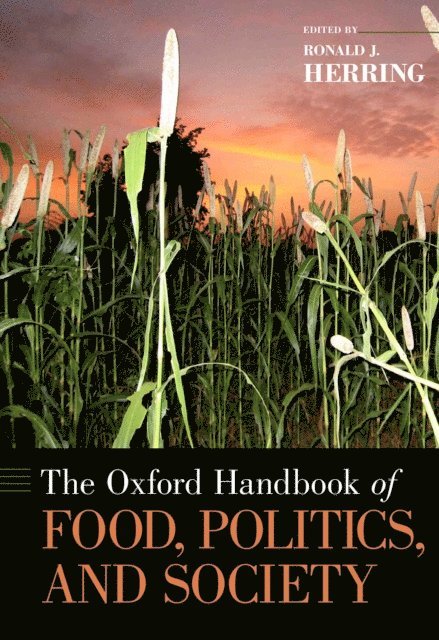
Oxford Handbook of Food, Politics, and Society
2182 kr
Läs direkt i Bokus Reader – eller ladda ned till din enhet (PDF kräver ofta zoom och scroll på små skärmar).
Beskrivning
Food has, for most of our species history, been intensely political: who gets to eat what, how often, and through what means? The scale of polity in question has shifted over time, from very local institutions dividing up grain piles to an international community imagined in the Millennium Development Goals of the United Nations. Simultaneously, the numbers and interests of people asserting political stakes in food and agriculture have likewise shifted up and out. Global networks advocate social justice in distal agrarian systems, promotion of some farming techniques and prohibition of others, food sovereignty or efficiencies of markets and trade. Political consumerism allows the well-endowed to "vote with their dollars" for changes in food systems far from home, but depends on certification and labeling from unseen institutions. As an object of governmentality, food has never been so prominent.
The thirty-five handbook chapters confront four major themes in the politics of food: property, technology, justice and knowledge. Ronald Herring''s editorial introduction asks how food is political, highlighting contention around the role of market, state and information in societal decisions. The first section of the handbook then examines technology, science and knowledge in food production. What is known - and disputed - about malnutrition, poverty and food security? The second section addresses ethics, rights and distributive justice: agrarian reform, gender inequality, entitlements and subsidies, and the social vision of the alternative food movement. The third section looks to intersections of agriculture and nature: wild foods, livestock, agro-ecological approaches to sustainability, and climate change and genetic engineering. The fourth section addresses food values and culture: political consumerism, labeling and certification, the science and cultural politics of food safety, values driving regulation of genetically modified foods and potential coexistence of GMOs, and organic and conventional crops. The fifth and final section looks at frontiers of global contentions: rival transnational advocacy networks, social movements for organic farming, the who and why of international land grabbing, junctures of cosmopolitan and local food narratives, the "supermarket revolution" and the international agrifood industry in low-income countries, and politics of knowledge in agricultural futures.
The thirty-five handbook chapters confront four major themes in the politics of food: property, technology, justice and knowledge. Ronald Herring''s editorial introduction asks how food is political, highlighting contention around the role of market, state and information in societal decisions. The first section of the handbook then examines technology, science and knowledge in food production. What is known - and disputed - about malnutrition, poverty and food security? The second section addresses ethics, rights and distributive justice: agrarian reform, gender inequality, entitlements and subsidies, and the social vision of the alternative food movement. The third section looks to intersections of agriculture and nature: wild foods, livestock, agro-ecological approaches to sustainability, and climate change and genetic engineering. The fourth section addresses food values and culture: political consumerism, labeling and certification, the science and cultural politics of food safety, values driving regulation of genetically modified foods and potential coexistence of GMOs, and organic and conventional crops. The fifth and final section looks at frontiers of global contentions: rival transnational advocacy networks, social movements for organic farming, the who and why of international land grabbing, junctures of cosmopolitan and local food narratives, the "supermarket revolution" and the international agrifood industry in low-income countries, and politics of knowledge in agricultural futures.
Produktinformation
- Utgivningsdatum: 2014-12-31
- Språk: Engelska
- Filformat: PDF
- Kopieringsskydd: LCP
- ISBN: 9780190226657
- Förlag: Oxford University Press
Utforska kategorier
Betyg & recensioner
0 recensioner
Inga recensioner tillgängliga.