Ronald J. Herring - Böcker
Visar alla böcker från författaren Ronald J. Herring. Handla med fri frakt och snabb leverans.
7 produkter
7 produkter
2 541 kr
Skickas inom 5-8 vardagar
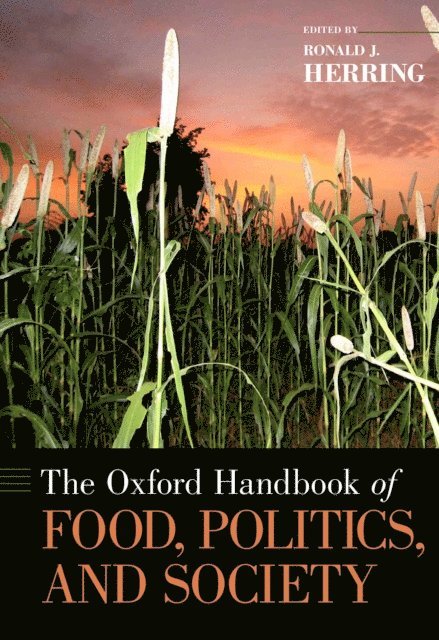
Politics decides who gets what and how. At the most elemental level, food has, for most of our history, been intensely political: who gets to eat what, how often, and through what means of acquisition or entitlement? The scale of the polity in question has shifted over time, from very local divisions to that of the international community imagined in the Millennium Development Goals of the United Nations. Simultaneously, the numbers and factional interests of people asserting political stakes in food and agriculture have likewise shifted up and out. For example, Europeans have used a variety of policy and social-movement tactics to influence what Africans eat; American diplomats have applied pressure to delegitimize European political choices about what not to eat; and conflicts over safety regulations have muddied the line between agricultural protectionism and justifiable precaution in confronting novel foods. As an object of governmentality, food has never been so prominent. The thirty-five chapters in this handbook confront three major themes in the political regulation of food: ecology, technology and property. Following Ronald J. Herring's editorial introduction, the first section examines power struggles over knowledge and authority in food technology and production: who gets to be the voice of authority in agricultural research and scientific knowledge; who decides the best ways to alleviate hunger in poor countries; and who decides issues of food safety and nutritional standards. The second section addresses the political economy of food production: land power and production; distribution and trade; land reform; food entitlements and welfare policy; agricultural subsidies; and agribusiness. The third section looks at agriculture and the environment: ecological approaches to agricultural development; sustainable farming; biotechnology; climate change; livestock; and wild foods. The fourth section addresses food politics and global civil society: global food systems; cultural debates over genetically modified foods; food safety; food labeling; the politics of grocery shopping; regulation of biotechnology; and coexistence of GM, organic and conventional crops. The fifth and final section looks at food movements and the frontiers of food politics: global food movements; organic farming as a transnational phenomenon; the intersection of local and global food narratives; the agrifood industry in developing countries; the agricultural land rush; and agricultural futures.
2 073 kr
Skickas inom 10-15 vardagar
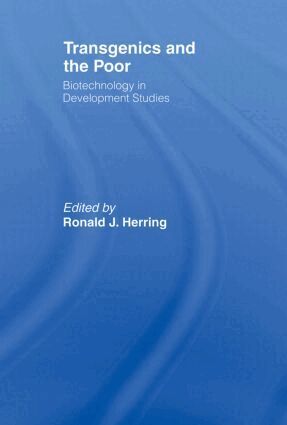
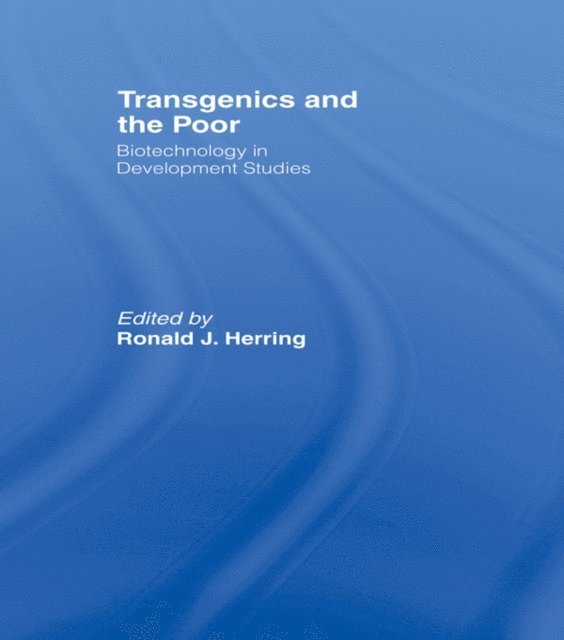
Genetic engineering is changing the terrain of development studies. Technologies with unprecedented potential - the capacity to move genes across species - have created widely politicized phenomena: ‘Frankenfoods’, ‘GMOs’, and ‘The Terminator’. En masse, the public has reacted with equanimity or appreciation to genetically engineered pharmaceuticals, beginning with insulin, but transgenics in food and agriculture have raised a globally contentious politics. This book begins with the needs of the poor - for income, nutrition, environmental integrity - and evaluates the theory and evidence for contributions from transgenic crops. Social scientists with expertise in regional studies, economics, sociology, agriculture and political science join biologists to bring specialized knowledge on genuinely new questions created by the genomics revolution; questions of: ecological integritybiodiversityinternational tradethe costs and effectiveness of biosafety protocols.The authors collectively conclude that predictions of disaster for the poor from transgenic technology are uninformed by empirical results, rest on misunderstandings of biotechnology or the poor or both, or get the science wrong. Yet the triumphalism of pro-transgenic forces, however, must be tempered by serious unanswered questions: much is unknown, but the transgenic genie is out of the bottle.In this much-needed book, an emergent empirical literature allows scholars in disciplines ranging from micro-biology to economics and political science to assess the potential effects of transgenic organisms on poverty through multiple dynamics of property, yields, prices, biodiversity, environmental integrity and nutrition.
2 140 kr
Skickas inom 10-15 vardagar
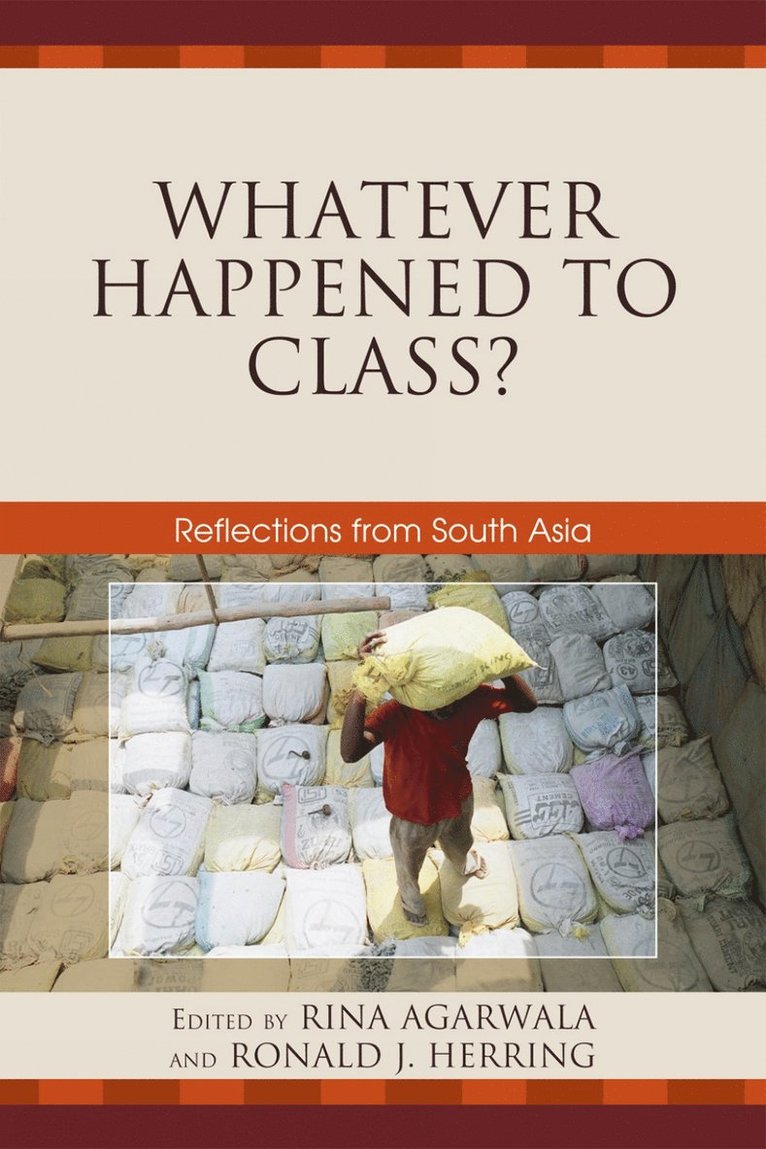
Class explains much in the differentiation of life chances and political dynamics in South Asia; scholarship from the region contributed much to class analysis. Yet class has lost its previous centrality as a way of understanding the world and how it changes. This outcome is puzzling; new configurations of global economic forces and policy have widened gaps between classes and across sectors and regions, altered people’s relations to production, and produced new state-citizen relations. Does market triumphalism or increased salience of identity politics render class irrelevant? Has rapid growth in aggregate wealth obviated long-standing questions of inequality and poverty? Explanations for what happened to class vary, from intellectual fads to global transformations of interests. The authors ask what is lost in the move away from class, and what South Asian experiences tell us about the limits of class analysis. Empirical chapters examine formal and informal-sector labor, social movements against genetic engineering, and politics of the "new middle class." A unifying analytical concern is specifying conditions under which interests of those disadvantaged by class systems are immobilized, diffused, coopted -- or autonomously recognized and acted upon politically: the problematic transition of classes in themselves to classes for themselves.
647 kr
Skickas inom 10-15 vardagar
Genetic engineering is changing the terrain of development studies. Technologies with unprecedented potential - the capacity to move genes across species - have created widely politicized phenomena: ‘Frankenfoods’, ‘GMOs’, and ‘The Terminator’. En masse, the public has reacted with equanimity or appreciation to genetically engineered pharmaceuticals, beginning with insulin, but transgenics in food and agriculture have raised a globally contentious politics. This book begins with the needs of the poor - for income, nutrition, environmental integrity - and evaluates the theory and evidence for contributions from transgenic crops. Social scientists with expertise in regional studies, economics, sociology, agriculture and political science join biologists to bring specialized knowledge on genuinely new questions created by the genomics revolution; questions of: ecological integritybiodiversityinternational tradethe costs and effectiveness of biosafety protocols.The authors collectively conclude that predictions of disaster for the poor from transgenic technology are uninformed by empirical results, rest on misunderstandings of biotechnology or the poor or both, or get the science wrong. Yet the triumphalism of pro-transgenic forces, however, must be tempered by serious unanswered questions: much is unknown, but the transgenic genie is out of the bottle.In this much-needed book, an emergent empirical literature allows scholars in disciplines ranging from micro-biology to economics and political science to assess the potential effects of transgenic organisms on poverty through multiple dynamics of property, yields, prices, biodiversity, environmental integrity and nutrition. The Journal of Development Studies awards an annual prize in memory of the late Dudley Seers, for the best article to appear in each volume of the Journal. Transgenics and the Poor:Biotechnology in Development Studies” has been adjudged to be the winner of the Dudley Seers Memorial Prize for Volume 43.
414 kr
Skickas inom 7-10 vardagar
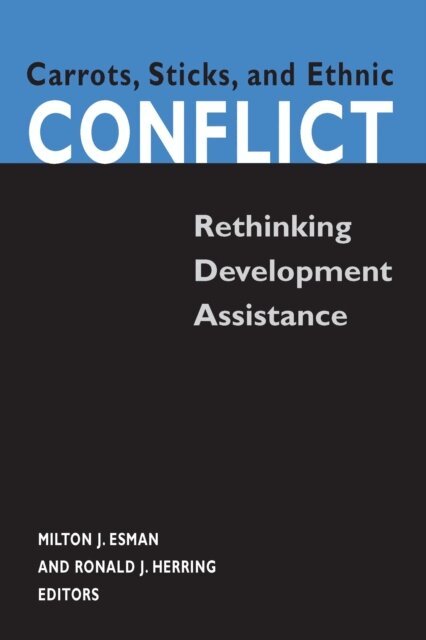
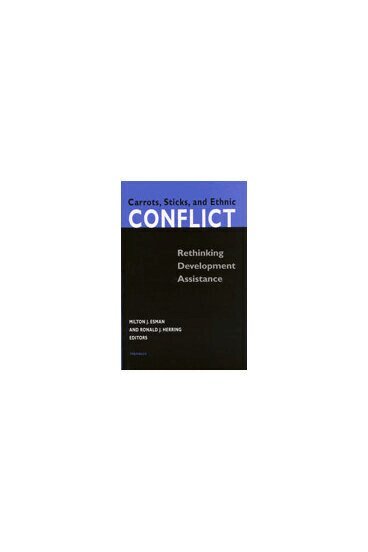
Development assistance employs carrots and sticks to influence regimes and obtain particular outcomes: altered economic policies, democratization, relief of suffering from catastrophes. Wealthy nations and international agencies such as the World Bank justify development assistance on grounds of improving the global human condition. Over the last forty years, however, ethnic conflict has increased dramatically. Where does ethnic conflict fit within this set of objectives? How do the resources, policy advice, and conditions attached to aid affect ethnic conflict in countries in which donors intervene? How can assistance be deployed in ways that might moderate rather than aggravate ethnic tensions?These issues are addressed comparatively by area specialists and participant-observers from development assistance organizations. This book is the first systematic effort to evaluate this dimension of international affairs--and to propose remedies. Case studies include Russia, Ecuador, Sri Lanka, and Kenya, with references to many other national experiences.Cross-cutting chapters consider evolution of USAID and the World Bank's policies on displacement of people by development projects, as well as how carrots and sticks may affect ethnic dynamics, but through different mechanisms and to varying degrees depending on political dynamics and regime behaviors. They show that projects may also exacerbate ethnic conflict by reinforcing territoriality and exposing seemingly unfair allocative principles that exclude or harm some while benefiting others.For students of international political economy, development studies, comparative politics, and ethnic conflict, this book illuminates a problem area that has long been overlooked in international affairs literature. It is essential reading for staff members and policymakers in development assistance agencies and international financial institutions.Milton J. Esman is the John S. Knight Professor of International Studies, Emeritus, and Professor of Government, Emeritus, at Cornell University.Ronald J. Herring is Director of the Mario Einaudi Center for International Studies at Cornell, the John S. Knight Professor of International Relations, and Professor of Government at Cornell University.
675 kr
Skickas inom 10-15 vardagar
Class explains much in the differentiation of life chances and political dynamics in South Asia; scholarship from the region contributed much to class analysis. Yet class has lost its previous centrality as a way of understanding the world and how it changes. This outcome is puzzling; new configurations of global economic forces and policy have widened gaps between classes and across sectors and regions, altered people's relations to production, and produced new state-citizen relations. Does market triumphalism or increased salience of identity politics render class irrelevant? Has rapid growth in aggregate wealth obviated long-standing questions of inequality and poverty? Explanations for what happened to class vary, from intellectual fads to global transformations of interests. The authors ask what is lost in the move away from class, and what South Asian experiences tell us about the limits of class analysis. Empirical chapters examine formal and informal-sector labor, social movements against genetic engineering, and politics of the "new middle class." A unifying analytical concern is specifying conditions under which interests of those disadvantaged by class systems are immobilized, diffused, co-opted—or autonomously recognized and acted upon politically: the problematic transition of classes in themselves to classes for themselves.
660 kr
Skickas inom 10-15 vardagar
Class explains much in the differentiation of life chances and political dynamics in South Asia; scholarship from the region contributed much to class analysis. Yet class has lost its previous centrality as a way of understanding the world and how it changes. This outcome is puzzling; new configurations of global economic forces and policy have widened gaps between classes and across sectors and regions, altered people’s relations to production, and produced new state-citizen relations. Does market triumphalism or increased salience of identity politics render class irrelevant? Has rapid growth in aggregate wealth obviated long-standing questions of inequality and poverty? Explanations for what happened to class vary, from intellectual fads to global transformations of interests. The authors ask what is lost in the move away from class, and what South Asian experiences tell us about the limits of class analysis. Empirical chapters examine formal and informal-sector labor, social movements against genetic engineering, and politics of the "new middle class." A unifying analytical concern is specifying conditions under which interests of those disadvantaged by class systems are immobilized, diffused, coopted -- or autonomously recognized and acted upon politically: the problematic transition of classes in themselves to classes for themselves.