Milton J. Esman - Böcker
Visar alla böcker från författaren Milton J. Esman. Handla med fri frakt och snabb leverans.
9 produkter
9 produkter
536 kr
Skickas inom 10-15 vardagar
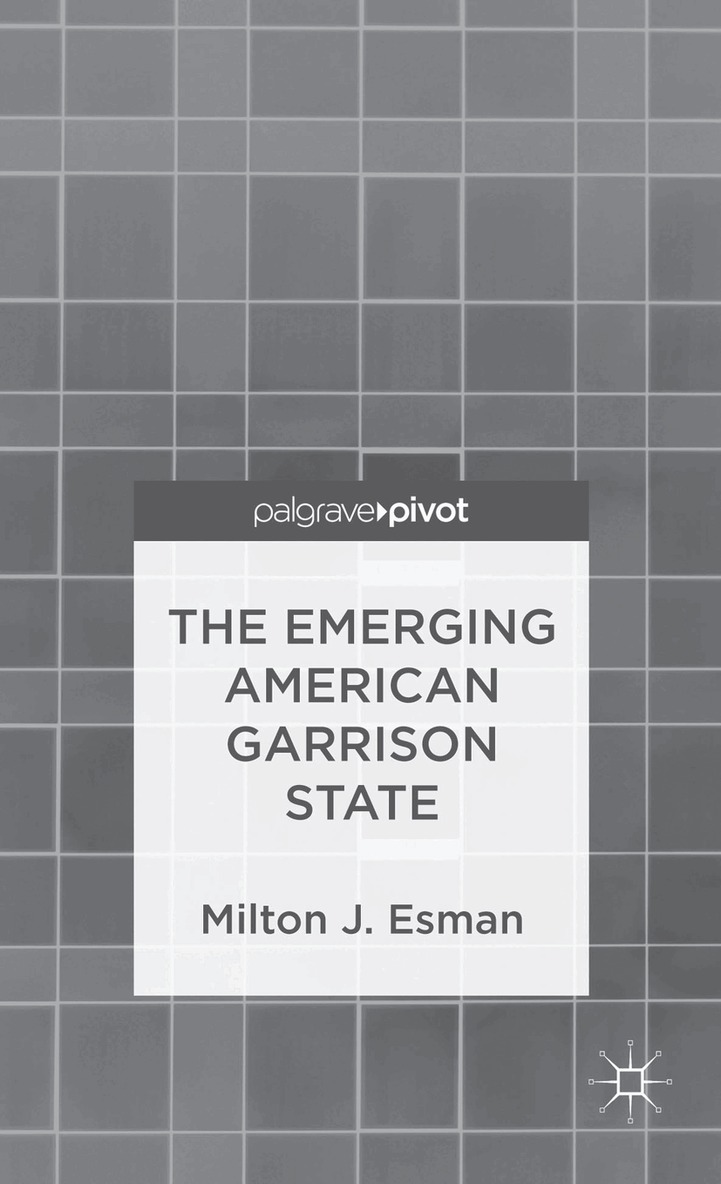
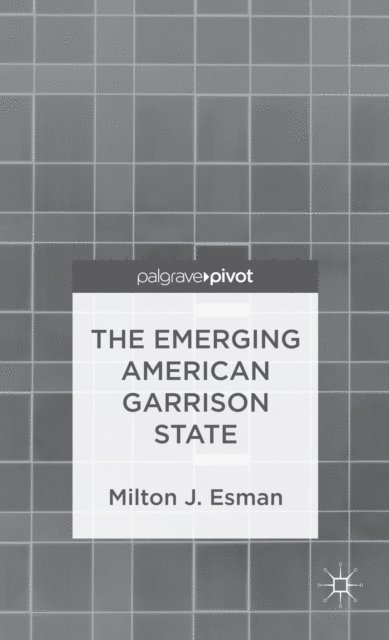
To overcome the current paralysis in government, to resume effective management of its crippled economy and of its global empire, a new pattern of government is emerging, one that adheres to the earlier outlines of the garrison state.
414 kr
Skickas inom 7-10 vardagar
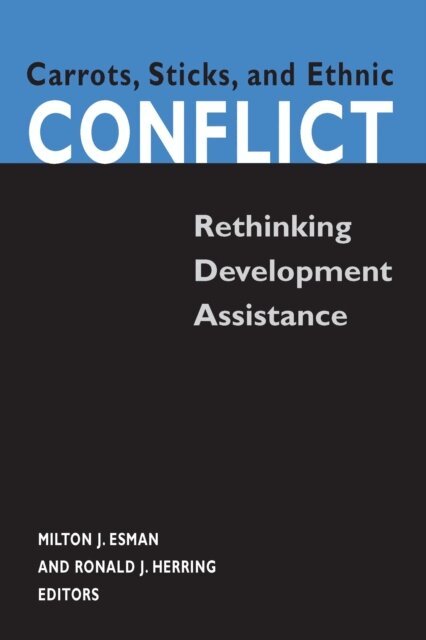
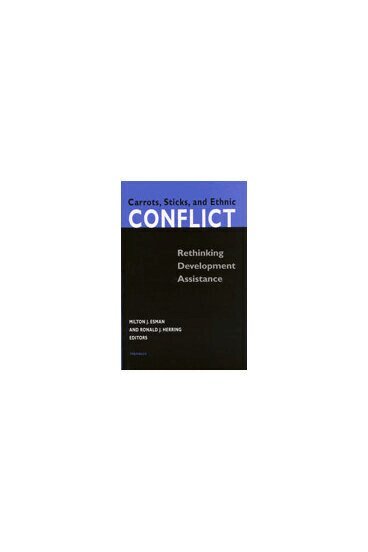
Development assistance employs carrots and sticks to influence regimes and obtain particular outcomes: altered economic policies, democratization, relief of suffering from catastrophes. Wealthy nations and international agencies such as the World Bank justify development assistance on grounds of improving the global human condition. Over the last forty years, however, ethnic conflict has increased dramatically. Where does ethnic conflict fit within this set of objectives? How do the resources, policy advice, and conditions attached to aid affect ethnic conflict in countries in which donors intervene? How can assistance be deployed in ways that might moderate rather than aggravate ethnic tensions?These issues are addressed comparatively by area specialists and participant-observers from development assistance organizations. This book is the first systematic effort to evaluate this dimension of international affairs--and to propose remedies. Case studies include Russia, Ecuador, Sri Lanka, and Kenya, with references to many other national experiences.Cross-cutting chapters consider evolution of USAID and the World Bank's policies on displacement of people by development projects, as well as how carrots and sticks may affect ethnic dynamics, but through different mechanisms and to varying degrees depending on political dynamics and regime behaviors. They show that projects may also exacerbate ethnic conflict by reinforcing territoriality and exposing seemingly unfair allocative principles that exclude or harm some while benefiting others.For students of international political economy, development studies, comparative politics, and ethnic conflict, this book illuminates a problem area that has long been overlooked in international affairs literature. It is essential reading for staff members and policymakers in development assistance agencies and international financial institutions.Milton J. Esman is the John S. Knight Professor of International Studies, Emeritus, and Professor of Government, Emeritus, at Cornell University.Ronald J. Herring is Director of the Mario Einaudi Center for International Studies at Cornell, the John S. Knight Professor of International Relations, and Professor of Government at Cornell University.
867 kr
Skickas inom 5-8 vardagar
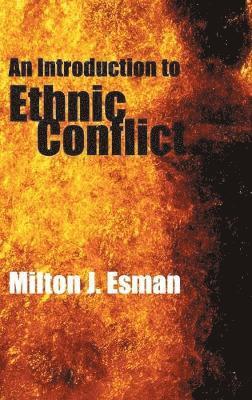
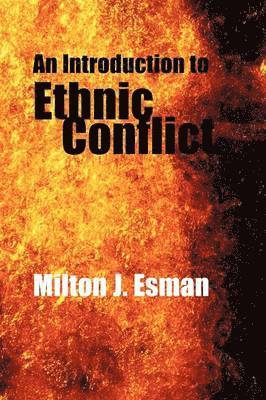
Written by one of the world’s leading scholars in the field, this book provides an excellent introduction to ethnic conflict in the contemporary world. In ten concise chapters, Milton Esman explores the origins of ethnic pluralism and analyses the causes and manifestations of conflicts, both peaceful and violent, involving ethnic communities across the globe. He discusses the role of outsider-governments, diasporas, international agencies, and non-government organizations in provoking and managing ethnic conflicts, and appraises methods which have proven effective for their peaceful resolution. The book concludes with a look at the future of ethnic conflict and argues for the need to regulate such conflicts in an increasingly interdependent world. Enriched by a plethora of apt examples drawn from all continents, with end of chapter summaries and a glossary of key terms, this textbook is essential reading for all students of politics, international relations and political sociology.
294 kr
Skickas inom 5-8 vardagar
Written by one of the world’s leading scholars in the field, this book provides an excellent introduction to ethnic conflict in the contemporary world. In ten concise chapters, Milton Esman explores the origins of ethnic pluralism and analyses the causes and manifestations of conflicts, both peaceful and violent, involving ethnic communities across the globe. He discusses the role of outsider-governments, diasporas, international agencies, and non-government organizations in provoking and managing ethnic conflicts, and appraises methods which have proven effective for their peaceful resolution. The book concludes with a look at the future of ethnic conflict and argues for the need to regulate such conflicts in an increasingly interdependent world. Enriched by a plethora of apt examples drawn from all continents, with end of chapter summaries and a glossary of key terms, this textbook is essential reading for all students of politics, international relations and political sociology.
715 kr
Skickas inom 7-10 vardagar
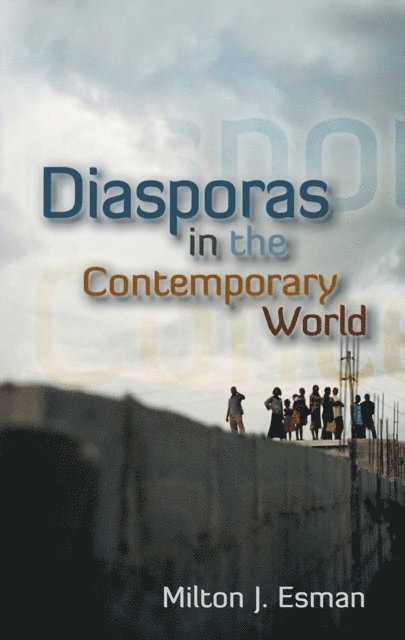
Throughout human history people have moved across national borders. With the advent of globalization, they are now moving in record numbers in search of greater security or better livelihoods. Diasporas have become an ever important and visible presence in the modern world. Their existence has sometimes resulted in violence and ethnic conflict, and on other occasions they have been peacefully assimilated into the culture and citizenship of their chosen country. This comprehensive new book seeks to explain why Diaspora communities are increasing as never before. In an accessible and engaging introduction to the field, Milton Esman looks closely at the difference in the reception of Diaspora communities throughout the world, and the responses of those communities to their new nations. By focusing on ten examples of contemporary Diasporas from Asia, the Middle East, Europe and the Americas, the book describes and illustrates the problems confronting immigrant communities as they attempt to protect their inherited culture, while coping with the demands and the opportunities they encounter in their adopted country. The book pays particular attention to the types of conflicts that arise from the development of Diaspora communities, and the consequences that these conflicts can have on the international community. This book will be essential reading for students and scholars taking courses in international relations, political sociology, ethnic politics and conflict studies.
243 kr
Skickas inom 7-10 vardagar
Throughout human history people have moved across national borders. With the advent of globalization, they are now moving in record numbers in search of greater security or better livelihoods. Diasporas have become an ever important and visible presence in the modern world. Their existence has sometimes resulted in violence and ethnic conflict, and on other occasions they have been peacefully assimilated into the culture and citizenship of their chosen country. This comprehensive new book seeks to explain why Diaspora communities are increasing as never before. In an accessible and engaging introduction to the field, Milton Esman looks closely at the difference in the reception of Diaspora communities throughout the world, and the responses of those communities to their new nations. By focusing on ten examples of contemporary Diasporas from Asia, the Middle East, Europe and the Americas, the book describes and illustrates the problems confronting immigrant communities as they attempt to protect their inherited culture, while coping with the demands and the opportunities they encounter in their adopted country. The book pays particular attention to the types of conflicts that arise from the development of Diaspora communities, and the consequences that these conflicts can have on the international community. This book will be essential reading for students and scholars taking courses in international relations, political sociology, ethnic politics and conflict studies.
1 551 kr
Skickas inom 10-15 vardagar
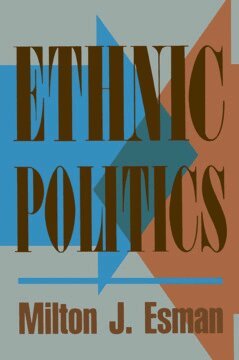
In this timely book Milton J. Esman surveys a recurrent and seemingly intractable factor in the politics of nations: ethnicity. As the author notes, virtually no contemporary nation-state is ethnically homogeneous. Most address the political effects of domestic ethnic difference, and many fail in the attempt—with devastatingly violent results.Esman focuses on ethnic mobilization and the management of conflict, on the ways ethnic groups prepare for political combat, and on measures that can moderate or control ethnic disputes, whether peaceful or violent.Opening with a broad synopsis of current understandings of ethnicity and its varying political salience, he illustrates his theories by analyzing experiences in South Africa, Israel-Palestine, Canada-Quebec, and Malaysia. He also outlines the political issues and dilemmas, transnational as well as domestic, caused by the vast labor migrations of Mexicans to the United States, North Africans to France, Turks to Germany, and Koreans to Japan.Can economic growth and prosperity ease ethnic conflicts? Esman addresses this question and draws conclusions based on the empirical chapters. In his view, ethnic pluralism and ethnic politics are not collective psychoses or aberrations, to be deplored and exorcised, but rather pervasive realities that observers can confront and politicians can manage.
593 kr
Skickas inom 10-15 vardagar
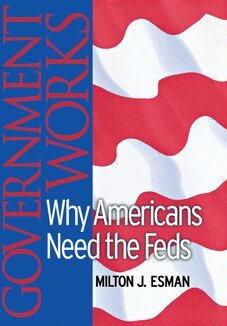
What is the proper role of government in American life? This is the principal controversy in contemporary American politics. Milton J. Esman believes that the United States suffers not from too much government but from too little. Most Americans today proclaim pride in their democracy, but they do not trust Washington. Esman shows how American conservatives have, for the last quarter-century, hammered away at the federal government, attacking its size, its inefficiencies, the limits it places on personal freedom, and its intervention in what conservatives believe should be free and untrammeled market transactions. Such commentators have effectively seized the initiative, and their antigovernment viewpoint now dominates the public discourse on politics. "This bias runs contrary to the main thrust of American political experience," Esman writes, "and is detrimental to the well-being of the nation on the brink of the new millennium." His book includes a historical study of public attitudes toward government and an analysis of the functions that only government can perform to ensure a healthy future for the American people and to check the negative effects of economic globalization. He proposes a set of political tactics to address the unchallenged trashing of a central institution of American democracy and restore public confidence in government.Plainspoken, straight-shooting, wide-ranging, Government Works draws on the progressive tradition in American thought to deal with the central predicament in contemporary public affairs.
340 kr
Skickas inom 10-15 vardagar
In this timely book Milton J. Esman surveys a recurrent and seemingly intractable factor in the politics of nations: ethnicity. As the author notes, virtually no contemporary nation-state is ethnically homogeneous. Most address the political effects of domestic ethnic difference, and many fail in the attempt—with devastatingly violent results.Esman focuses on ethnic mobilization and the management of conflict, on the ways ethnic groups prepare for political combat, and on measures that can moderate or control ethnic disputes, whether peaceful or violent.Opening with a broad synopsis of current understandings of ethnicity and its varying political salience, he illustrates his theories by analyzing experiences in South Africa, Israel-Palestine, Canada-Quebec, and Malaysia. He also outlines the political issues and dilemmas, transnational as well as domestic, caused by the vast labor migrations of Mexicans to the United States, North Africans to France, Turks to Germany, and Koreans to Japan.Can economic growth and prosperity ease ethnic conflicts? Esman addresses this question and draws conclusions based on the empirical chapters. In his view, ethnic pluralism and ethnic politics are not collective psychoses or aberrations, to be deplored and exorcised, but rather pervasive realities that observers can confront and politicians can manage.