• Fri frakt över 249 kr
  • •
  • Snabba leveranser
  • •
  • Billiga böcker
Kundservice

Du är på sajten för privatpersoner.

Företag, bibliotek eller offentlig verksamhet?

Du handlar på classic.bokus.com, där alla dina funktioner finns intakta.
Till classic.bokus.com
Bokus logotyp. Gå till startsidan.
  • Erbjudanden
  • Nyheter
  • Student
  • Topplistor
  • Barn & ungdom
  • Bokus Play
  • E-böcker
  • Pocketböcker
  • Spel & pussel

10% rabatt på allt med kod: NYSTART10 →

Sidfot

Mina sidor

    Hjälp

    • Kundservice
    • Vanliga frågor och svar
    • Frakt och leverans
    • Retur vid ångerrätt
    • Reklamera vara
    • Betalning
    • Köpvillkor
    • Allmänna villkor
    • Information om webbplatsens tillgänglighet

    Om Bokus

    • Om oss
    • Pressrum
    • För studenter
    • För företag
    • För bibliotek och offentlig verksamhet
    • För leverantörer
    • Hållbarhet

    Populärt

    • Aktuella erbjudanden
    • Presentkort
    • Studentlitteratur
    • Nya böcker
    • Topplistor
    • Signerade böcker
    • Engelska böcker

    Inspiration

    • Boktips
    • BookTok
    • Populära bokserier
    • Barnbokskaraktärer
    • Populära författare
    Logotyp för Bokus
    Följ oss på Facebook (extern länk)Följ oss på Instagram (extern länk)Följ oss på YouTube (extern länk)Följ oss på TikTok (extern länk)
    bokus @ CookiesAnpassa cookiesIntegritetspolicyKöpvillkor
    Till Citymail hemsida (extern länk)Till Budbee hemsida (extern länk)Till Postnord hemsida (extern länk)Till Schenker hemsida (extern länk)Till Early Bird hemsida (extern länk)Till Walleys hemsida (extern länk)
    1. Samhälle och politik
    2. Politik och statsskick
    3. Politiskt förtryck

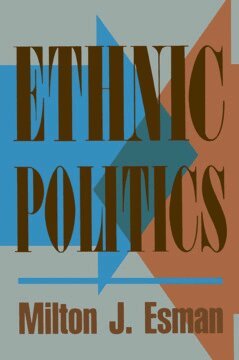
    Ethnic Politics

    AvMilton J. Esman

    Inbunden, Engelska, 1994

    1 617 kr

    Beställningsvara. Skickas inom 10-15 vardagar. Fri frakt över 249 kr.

    Fler format och utgåvor

    Häftad

    493 kr

    Beskrivning

    In this timely book Milton J. Esman surveys a recurrent and seemingly intractable factor in the politics of nations: ethnicity. As the author notes, virtually no contemporary nation-state is ethnically homogeneous. Most address the political effects of domestic ethnic difference, and many fail in the attempt—with devastatingly violent results.Esman focuses on ethnic mobilization and the management of conflict, on the ways ethnic groups prepare for political combat, and on measures that can moderate or control ethnic disputes, whether peaceful or violent.Opening with a broad synopsis of current understandings of ethnicity and its varying political salience, he illustrates his theories by analyzing experiences in South Africa, Israel-Palestine, Canada-Quebec, and Malaysia. He also outlines the political issues and dilemmas, transnational as well as domestic, caused by the vast labor migrations of Mexicans to the United States, North Africans to France, Turks to Germany, and Koreans to Japan.Can economic growth and prosperity ease ethnic conflicts? Esman addresses this question and draws conclusions based on the empirical chapters. In his view, ethnic pluralism and ethnic politics are not collective psychoses or aberrations, to be deplored and exorcised, but rather pervasive realities that observers can confront and politicians can manage.

    Produktinformation

    • Utgivningsdatum:1994-09-22
    • Mått:152 x 229 x 27 mm
    • Vikt:907 g
    • Format:Inbunden
    • Språk:Engelska
    • Antal sidor:304
    • Förlag:Cornell University Press
    • ISBN:9780801430107

    Utforska kategorier

    • Politiskt förtryck inom Samhälle och politik
    • Etnicitet inom Samhälle och politik

    Mer om författaren

    Milton J. Esman is John S. Knight Professor Emeritus of International Studies at Cornell University. His books include Government Works: Why Americans Need the Feds, International Organizations and Ethnic Conflict, and Administration and Development in Malaysia, all from Cornell, and Introduction to Ethnic Conflict.

    Recensioner i media

    "Esman draws on a variety of conceptual perspectives, but employs them with a healthy agnosticism. His own approach is judicious and balanced, persuasive as an explanation of the sources and dynamics of ethnic conflict, while avoiding the pitfalls of ascribing malevolent and pathological qualities to ethnicity, or endowing it with transcendent moral value."