• Fri frakt över 249 kr
  • •
  • Snabba leveranser
  • •
  • Billiga böcker
Kundservice

Du är på sajten för privatpersoner.

Företag, bibliotek eller offentlig verksamhet?

Du handlar på classic.bokus.com, där alla dina funktioner finns intakta.
Till classic.bokus.com
Bokus logotyp. Gå till startsidan.
  • Erbjudanden
  • Nyheter
  • Student
  • Topplistor
  • Barn & ungdom
  • Bokus Play
  • E-böcker
  • Pocketböcker
  • Spel & pussel

10% rabatt på allt med kod: NYSTART10 →

Sidfot

Mina sidor

    Hjälp

    • Kundservice
    • Vanliga frågor och svar
    • Frakt och leverans
    • Retur vid ångerrätt
    • Reklamera vara
    • Betalning
    • Köpvillkor
    • Allmänna villkor
    • Information om webbplatsens tillgänglighet

    Om Bokus

    • Om oss
    • Pressrum
    • För studenter
    • För företag
    • För bibliotek och offentlig verksamhet
    • För leverantörer
    • Hållbarhet

    Populärt

    • Aktuella erbjudanden
    • Presentkort
    • Studentlitteratur
    • Nya böcker
    • Topplistor
    • Signerade böcker
    • Engelska böcker

    Inspiration

    • Boktips
    • BookTok
    • Populära bokserier
    • Barnbokskaraktärer
    • Populära författare
    Logotyp för Bokus
    Följ oss på Facebook (extern länk)Följ oss på Instagram (extern länk)Följ oss på YouTube (extern länk)Följ oss på TikTok (extern länk)
    bokus @ CookiesAnpassa cookiesIntegritetspolicyKöpvillkor
    Till Citymail hemsida (extern länk)Till Budbee hemsida (extern länk)Till Postnord hemsida (extern länk)Till Schenker hemsida (extern länk)Till Early Bird hemsida (extern länk)Till Walleys hemsida (extern länk)
    1. Filosofi och religion
    2. Religion och tro
    3. Religion: allmänt

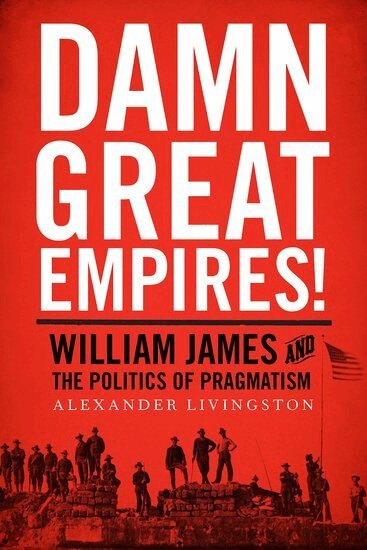
    Damn Great Empires!

    William James and the Politics of Pragmatism

    AvAlexander Livingston

    Häftad, Engelska, 2016

    671 kr

    Beställningsvara. Skickas inom 5-8 vardagar. Fri frakt över 249 kr.

    Fler format och utgåvor

    Inbunden

    2 677 kr

    E-bok

    511 kr

    E-bok

    511 kr

    Beskrivning

    Damn Great Empires! offers a new perspective on the works of William James by placing his encounter with American imperialism at the center of his philosophical vision. This book reconstructs Jamess overlooked political thought by treating his anti-imperialist Nachlass his speeches, essays, notes, and correspondence on the United States annexation of the Philippines as the key to unlocking the political significance of his celebrated writings on psychology, religion, and philosophy. It shows how James located a craving for authority at the heart of empire as a way of life, a craving he diagnosed and unsettled through his insistence on a modern world without ultimate foundations. Livingston explores the persistence of political questions in Jamess major works, from his writings on the self in The Principles of Psychology to the method of Pragmatism, the study of faith and conversion in The Varieties of Religious Experience, and the metaphysical inquiries in A Pluralistic Universe. Against the common view of James as a thinker who remained silent on questions of politics, this book places him in dialogue with champions and critics of American imperialism, such as Theodore Roosevelt and W. E. B. Du Bois, as well as a transatlantic critique of modernity, in order to excavate Jamess anarchistic political vision. Bringing the history of political thought into conversation with contemporary debates in political theory, Damn Great Empires! offers a fresh and original reexamination of the political consequences of pragmatism as a public philosophy.

    Produktinformation

    • Utgivningsdatum:2016-09-22
    • Mått:155 x 231 x 12 mm
    • Vikt:318 g
    • Format:Häftad
    • Språk:Engelska
    • Antal sidor:260
    • Förlag:OUP USA
    • ISBN:9780190237165

    Utforska kategorier

    • Religion: allmänt inom Filosofi och religion
    • Statsvetenskap och politisk teori inom Samhälle och politik
    • Filosofiska discipliner inom Filosofi och religion

    Mer om författaren

    Alexander Livingston is Assistant Professor of Government at Cornell University.

    Recensioner i media

    "Livingston s book is an excellent reminder that William James can provide essential guidance for understanding American political culture and our country s tortuous relationship to authority and democratic responsibility...Damn Great Empires! helps illuminate why William James can provide the psychological key for understanding contemporary political dysfunctions." --Review of Politics"The thematic and literary ground he covers is remarkable. Livingston not only provides a respectable foundation for constructing a Jamesian-based political vision, but he also creates a valuable resource for uncovering links between James s earliest writings, his later writings, and even his personal writings." --Reading Religion"In arguing that James' pragmatist philosophy entailed significant political commitments, and that James' anti-imperial writings are not peripheral but rather essential to his philosophically informed politics, Livingston has challenged several well-worn maxims of James scholarship. ... this [is a] rich and thought-provoking study." --Theory & Event"...a convincing, theoretically rich, and exemplary set of cases showing why and how Jamesian pragmatism leads to political practices." --Contemporary Political Theory"Conceptually innovative and gorgeously written, Damn Great Empires! offers readers an alternative contextualist approach to the political thought of William James that upends mainstream pragmatist and liberal accounts of his life and work. Livingston's book situates James's pragmatism in its American imperial context and demonstrates-with clear, convincing, and uncompromising clarity-the way this approach reveals the habits of imperialism in everyday life. The book is simply a must read for anyone interested in James' work, in new historical approaches to political theory, and in counteracting the politics of empire in our contemporary moment." --Jeanne Morefield, author of Empires without Imperialism"In this exhaustively researched and timely book, Alexander Livingston uncovers the political philosophical insights of William James. If John Dewey was the go-to, even if sophisticated, defender of United States democracy, James is the go-to critic of the United States tendency toward empire! There is still much for us to learn from James today, and Livingston's book must now be the start of our inquiry." --Melvin L. Rogers, author of The Undiscovered Dewey"In this impressive study Alexander Livingston shows both how William James resisted powerful American drives to sovereign agency and imperial expansion and how self-hesitations-stutters-in thinking, judgment and agency make a crucial contribution to that resistance. This is an impressive study of James and America. An indispensable book for today!" --WILLIAM E. CONNOLLY, author of Facing the Planetary"This is as much a work of intellectual history as it is a work of exegesis or of constructive normative theory. Indeed, its thematic unity, broad humane vision, historical sweep, and rigorous but conversational style call to mind the classic works of Richard Hofstadter. [T]his book can be read with profit by students of James, of pragmatism more generally, of imperialism, and of the historical period that it examines." -- Eric MacGilvray, Political Theory"Livingston's readings of James are sophisticated and scholarly. Drawing both on the historical sources and on a wide range of contemporary political theory, this book is an imaginative attempt both to reconstruct James's point of view and remain sensitive to the blindspots and evasions that it entails. Livingston's outstanding study calmly skewers many of the critical and polemical clichés that have gathered around James's pragmatism." --Matthew Festenstein, Perspectives on Politics

    Innehållsförteckning

    • AcknowledgmentsAbbreviationsIntroductionChapter 1: The Political Uses of William JamesChapter 2: Cravings and ConsequencesChapter 3: Taming the Strenuous LifeChapter 4: Stuttering ConvictionChapter 5: Tragedy, History, and Democratic FaithConclusionNotesWorks CitedIndex