• Fri frakt över 249 kr
  • •
  • Snabba leveranser
  • •
  • Billiga böcker
Kundservice

Du är på sajten för privatpersoner.

Företag, bibliotek eller offentlig verksamhet?

Du handlar på classic.bokus.com, där alla dina funktioner finns intakta.
Till classic.bokus.com
Bokus logotyp. Gå till startsidan.
  • Erbjudanden
  • Nyheter
  • Student
  • Topplistor
  • Barn & ungdom
  • Bokus Play
  • E-böcker
  • Pocketböcker
  • Spel & pussel

10% rabatt på allt med kod NYSTART10 →

Sidfot

Mina sidor

    Hjälp

    • Kundservice
    • Vanliga frågor och svar
    • Frakt och leverans
    • Retur vid ångerrätt
    • Reklamera vara
    • Betalning
    • Köpvillkor
    • Allmänna villkor
    • Information om webbplatsens tillgänglighet

    Om Bokus

    • Om oss
    • Pressrum
    • För studenter
    • För företag
    • För bibliotek och offentlig verksamhet
    • För leverantörer
    • Hållbarhet

    Populärt

    • Aktuella erbjudanden
    • Presentkort
    • Studentlitteratur
    • Nya böcker
    • Topplistor
    • Signerade böcker
    • Engelska böcker

    Inspiration

    • Boktips
    • BookTok
    • Populära bokserier
    • Barnbokskaraktärer
    • Populära författare
    Logotyp för Bokus
    Följ oss på Facebook (extern länk)Följ oss på Instagram (extern länk)Följ oss på YouTube (extern länk)Följ oss på TikTok (extern länk)
    bokus @ CookiesAnpassa cookiesIntegritetspolicyKöpvillkor
    Till Citymail hemsida (extern länk)Till Budbee hemsida (extern länk)Till Postnord hemsida (extern länk)Till Schenker hemsida (extern länk)Till Early Bird hemsida (extern länk)Till Walleys hemsida (extern länk)
    1. Naturvetenskap och teknik
    2. Geovetenskap
    3. Miljövetenskap och miljöpolitik

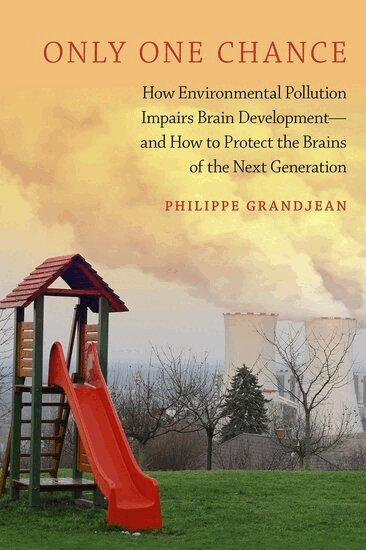
    Only One Chance

    How Environmental Pollution Impairs Brain Development -- and How to Protect the Brains of the Next Generation

    AvPhilippe Grandjean

    Häftad, Engelska, 2015

    Del i serien Environmental Ethics and Science Policy Series

    689 kr

    Beställningsvara. Skickas inom 5-8 vardagar. Fri frakt över 249 kr.

    Fler format och utgåvor

    E-bok

    462 kr

    E-bok

    462 kr

    Beskrivning

    Today, one out of every six children suffers from some form of neurodevelopmental abnormality. The causes are mostly unknown. Some environmental chemicals are known to cause brain damage and many more are suspected of it, but few have been tested for such effects. Philippe Grandjean provides an authoritative and engaging analysis of how environmental hazards can damage brain development and what we can do about it. The brain's development is uniquely sensitive to toxic chemicals, and even small deficits may negatively impact our academic achievements, economic success, risk of delinquency, and quality of life. Chemicals such as mercury, polychlorinated biphenyls (PCBs), arsenic, and certain pesticides pose an insidious threat to the development of the next generation's brains. When chemicals in the environment affect the development of a child's brain, he or she is at risk for mental retardation, cerebral palsy, autism, ADHD, and a range of learning disabilities and other deficits that will remain for a lifetime.We can halt chemical brain drain and protect the next generation, however, and Grandjean tells us how. First, we need to control all of the 200 industrial chemicals that have already been proven to affect brain functions in adults, as their effects on the developing brain are likely even worse. We must also push for routine testing for brain toxicity, stricter regulation of chemical emissions, and more required disclosure on the part of industries who unleash hazardous chemicals into products and the environment. Decisions can still be made to protect the brains of future generations."In his crisply written, deeply documented book, Dr. Philippe Grandjean, renowned physician and public health specialist, describes the exquisite vulnerability of the developing human brain to toxic chemicals in the environment, a vulnerability that he ascribes to the brain's almost unimaginable complexity. Today, nearly one in 6 children is born with a neurodevelopmental disorder - a birth defect of the brain. One in 8 has attention deficit disorder. One in 68 is diagnosed with autism spectrum disorder. These rates are far higher than those of a generation ago, and, although they are less publicized, the problems are more prevalent than those caused by thalidomide in the 1960's. The increases are far too rapid to be genetic. They cannot be explained by better diagnosis. How then could they have come to be? Dr. Grandjean has a diagnosis -- the thousands of toxic chemicals that have been released to the environment in the past 40 years with no testing for toxicity. David P. Rall, former Director of the US National Institute of Environmental Health Sciences, once stated that 'If thalidomide had caused a ten-point loss of IQ rather than obvious birth defects of the limbs, it would probably still be on the market'. This is the core message of Dr. Grandjean's 'must read' book." - Philip J. Landrigan, Dean for Global Health, Ethel H. Wise Professor and Chairman and Director, Children's Environmental Health Center, Mount Sinai School of Medicine

    Produktinformation

    • Utgivningsdatum:2015-07-30
    • Mått:231 x 152 x 17 mm
    • Vikt:340 g
    • Format:Häftad
    • Språk:Engelska
    • Serie:Environmental Ethics and Science Policy Series
    • Antal sidor:232
    • Förlag:OUP USA
    • ISBN:9780190239732

    Utforska kategorier

    • Miljövetenskap och miljöpolitik inom Naturvetenskap och teknik
    • Psykologi inom Psykologi och pedagogik
    • Filosofiska discipliner inom Filosofi och religion

    Mer om författaren

    Philippe Grandjean is Professor and Chair of Environmental Medicine at the University of Southern Denmark and Adjunct Professor of Environmental Health in the Department of Environmental Health at Harvard School of Public Health. He has devoted his career to studying how environmental chemicals affect children and their brain development. His studies on mercury triggered an international response that led to a United Nations agreement to control mercury pollution. He has studied children in the U.S. and Denmark, in the Faroe Islands, and countries in South America and Asia, and he has published more than 500 scientific papers on his findings.

    Recensioner i media

    Only One Chance shaves off layer after layer of ignorance, naivete, and corruption as it exposes the hidden dangers from industrial chemicals. Grandjean's book reads like a thriller and gives us a unique chance to decide that the next generation's brains must be protected against toxic brain drainers.

    Innehållsförteckning

    • Introduction: Brain Matters: Only One Chance to Develop a Brain ; 1. Sensitive Development: Complexity Creates Vulnerability ; 2. Toxic Invasion: The Placenta Is Not a Protective Armor ; 3. Invisible Lead: Health Hazards from Demanding Scientific Proof ; 4. Poisoned Science: Mercury Damaged the Child's Brain but Did Not Harm the Mother ; 5. Substituted Milk: Poisoning During Infancy Causes Permanent Brain Damage ; 6. Persistent Problems: Chemicals Resistant to Break-Down Can Break Brain Cells ; 7. Unusual Suspects: Chemicals That Protect the Lawn May Damage the Brain ; 8. Mindless Costs: Losses Suffered by Victims and Society from Chemical Brain Drain ; 9. Inconvenient Truths: Vested Interests Can Endanger Brain Development ; 10. Brainy Choices: How to Secure Optimal Brain Development for the Next Generation ; Appendix: Chemicals Known to Be Brain Drainers ; Acknowledgments ; Endnotes ; Bibliography