• Fri frakt över 249 kr
  • •
  • Snabba leveranser
  • •
  • Billiga böcker
Kundservice

Du är på sajten för privatpersoner.

Företag, bibliotek eller offentlig verksamhet?

Du handlar på classic.bokus.com, där alla dina funktioner finns intakta.
Till classic.bokus.com
Bokus logotyp. Gå till startsidan.
  • Erbjudanden
  • Student
  • Topplistor
  • Barn & ungdom
  • Bokus Play
  • E-böcker
  • Ljudböcker
  • Pocketböcker
  • Spel och pussel

Pocketfynda! Hundratals böcker för 49 kr/st →

Sidfot

Mina sidor

    Hjälp

    • Kundservice
    • Vanliga frågor och svar
    • Frakt och leverans
    • Retur vid ångerrätt
    • Reklamera vara
    • Betalning
    • Köpvillkor
    • Allmänna villkor
    • Information om webbplatsens tillgänglighet

    Om Bokus

    • Om oss
    • Pressrum
    • För studenter
    • För företag
    • För bibliotek och offentlig verksamhet
    • För leverantörer
    • Hållbarhet

    Populärt

    • Aktuella erbjudanden
    • Presentkort
    • Studentlitteratur
    • Nya böcker
    • Topplistor
    • Signerade böcker
    • Engelska böcker

    Inspiration

    • Boktips
    • BookTok
    • Barnbokskaraktärer
    • Populära författare
    Logotyp för Bokus
    Följ oss på Facebook (extern länk)Följ oss på Instagram (extern länk)Följ oss på YouTube (extern länk)Följ oss på TikTok (extern länk)
    bokus @ CookiesAnpassa cookiesIntegritetspolicyKöpvillkor
    Till Citymail hemsida (extern länk)Till Budbee hemsida (extern länk)Till Postnord hemsida (extern länk)Till Schenker hemsida (extern länk)Till Early Bird hemsida (extern länk)Till Walleys hemsida (extern länk)
    1. Samhälle och politik
    2. Samhälle och kultur
    3. Kultur och medier
    4. Kulturvetenskap

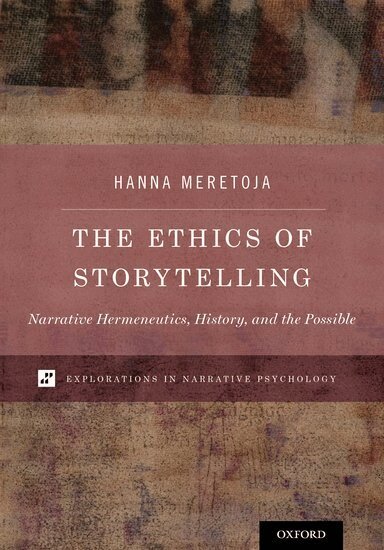
    The Ethics of Storytelling

    Narrative Hermeneutics, History, and the Possible

    AvHanna Meretoja

    Inbunden, Engelska, 2018

    Del i serien Explorations in Narrative Psychology

    2 902 kr

    Beställningsvara. Skickas inom 3-6 vardagar. Fri frakt över 249 kr.

    Beskrivning

    Against the backdrop of the polarized debate on the ethical significance of storytelling, Hanna Meretoja's The Ethics of Storytelling: Narrative Hermeneutics, History, and the Possible develops a nuanced framework for exploring the ethical complexity of the roles narratives play in our lives. Focusing on how narratives enlarge and diminish the spaces of possibilities in which we act, think, and re-imagine the world together with others, this book proposes a theoretical-analytical framework for engaging with both the ethical potential and risks of storytelling. Further, it elaborates a narrative hermeneutics that treats narratives as culturally mediated practices of (re)interpreting experiences and articulates how narratives can be oppressive, empowering, or both. It also argues that the relationship between narrative unconscious and narrative imagination shapes our sense of the possible.In her book, Meretoja develops a hermeneutic narrative ethics that differentiates between six dimensions of the ethical potential of storytelling: the power of narratives to cultivate our sense of the possible; to contribute to individual and cultural self-understanding; to enable understanding other lives non-subsumptively in their singularity; to transform the narrative in-betweens that bind people together; to develop our perspective-awareness and capacity for perspective-taking; and to function as a form of ethical inquiry. This book addresses our implication in violent histories and argues that it is as dialogic storytellers, fundamentally vulnerable and dependent on one another, that we become who we are: both as individuals and communities.The Ethics of Storytelling seamlessly incorporates narrative ethics, literary narrative studies, narrative psychology, narrative philosophy, and cultural memory studies. It contributes to contemporary interdisciplinary narrative studies by developing narrative hermeneutics as a philosophically rigorous, historically sensitive, and analytically subtle approach to the ethical stakes of the debate on the narrative dimension of human existence.

    Produktinformation

    • Utgivningsdatum:2018-02-01
    • Mått:155 x 236 x 28 mm
    • Vikt:613 g
    • Format:Inbunden
    • Språk:Engelska
    • Serie:Explorations in Narrative Psychology
    • Antal sidor:368
    • Förlag:OUP USA
    • ISBN:9780190649364

    Utforska kategorier

    • Kulturvetenskap inom Samhälle och politik
    • Socialpsykologi och gruppsykologi inom Psykologi och pedagogik
    • Biografier inom Biografier

    Mer om författaren

    Hanna Meretoja is Professor of Comparative Literature, Director of SELMA: Centre for the Study of Storytelling, Experientiality and Memory, and Vice Dean of the Faculty of Humanities at the University of Turku in Finland. Her research is mainly in the fields of narrative theory, narrative hermeneutics, and narrative ethics. She is the author of The Narrative Turn in Fiction and Theory (Palgrave Macmillan, 2014) and the co-editor of Values of Literature (Brill, 2015) and Storytelling and Ethics: Literature, Visual Arts, and the Power of Narrative (Routledge, 2018).

    Recensioner i media

    Certainly one of the most interesting new literary publications in 2018. In particular, how Meretoja draws on both older theory and research results from cognitively oriented literary studies and brings them into dialogue with each other proves to be profitable. Last but not least, the book is particularly reader-friendly due to its clear structure and the numbering of its individual thoughts.

    Innehållsförteckning

    • Chapter 1 Introduction: Towards an Ethics of Storytelling Chapter 2 Narrative Hermeneutics Chapter 3 Storytelling and Ethics Chapter 4 The Uses and Abuses of Narrative for Life: Julia Franck's Die Mittagsfrau Chapter 5 Narrative Ethics of Implication: Günte Grass and Historical Imagination Chapter 6 Narrative Dynamics, Perspective-Taking, and Engagement: Jonathan Littell's Les Bienveillantes Chapter 7 Transforming Narrative In-Betweens: Dialogic Storytelling in David Grossman's To the End of the Land and Falling Out of Time Chapter 8 Conclusion: Struggles Over the Possible