• Fri frakt över 249 kr
  • •
  • Snabba leveranser
  • •
  • Billiga böcker
Kundservice

Du är på sajten för privatpersoner.

Företag, bibliotek eller offentlig verksamhet?

Du handlar på classic.bokus.com, där alla dina funktioner finns intakta.
Till classic.bokus.com
Bokus logotyp. Gå till startsidan.
  • Erbjudanden
  • Nyheter
  • Student
  • Topplistor
  • Barn & ungdom
  • Bokus Play
  • E-böcker
  • Pocketböcker
  • Spel & pussel

10% rabatt på allt med kod: NYSTART10 →

Sidfot

Mina sidor

    Hjälp

    • Kundservice
    • Vanliga frågor och svar
    • Frakt och leverans
    • Retur vid ångerrätt
    • Reklamera vara
    • Betalning
    • Köpvillkor
    • Allmänna villkor
    • Information om webbplatsens tillgänglighet

    Om Bokus

    • Om oss
    • Pressrum
    • För studenter
    • För företag
    • För bibliotek och offentlig verksamhet
    • För leverantörer
    • Hållbarhet

    Populärt

    • Aktuella erbjudanden
    • Presentkort
    • Studentlitteratur
    • Nya böcker
    • Topplistor
    • Signerade böcker
    • Engelska böcker

    Inspiration

    • Boktips
    • BookTok
    • Populära bokserier
    • Barnbokskaraktärer
    • Populära författare
    Logotyp för Bokus
    Följ oss på Facebook (extern länk)Följ oss på Instagram (extern länk)Följ oss på YouTube (extern länk)Följ oss på TikTok (extern länk)
    bokus @ CookiesAnpassa cookiesIntegritetspolicyKöpvillkor
    Till Citymail hemsida (extern länk)Till Budbee hemsida (extern länk)Till Postnord hemsida (extern länk)Till Schenker hemsida (extern länk)Till Early Bird hemsida (extern länk)Till Walleys hemsida (extern länk)
    1. Filosofi och religion
    2. Religion och tro
    3. Religion: allmänt

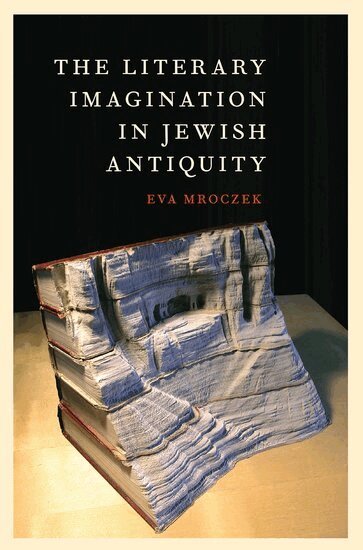
    The Literary Imagination in Jewish Antiquity

    AvEva Mroczek

    Häftad, Engelska, 2018

    833 kr

    Beställningsvara. Skickas inom 5-8 vardagar. Fri frakt över 249 kr.

    Fler format och utgåvor

    Inbunden

    2 729 kr

    Beskrivning

    The discovery of the Dead Sea Scrolls revealed a world of early Jewish writing larger than the Bible, from multiple versions of biblical texts to "revealed" books not found in our canon. Despite this diversity, the way we read Second Temple Jewish literature remains constrained by two anachronistic categories: a theological one, "Bible," and a bibliographic one, "book." The Literary Imagination in Jewish Antiquity suggests ways of thinking about how Jews understood their own literature before these categories had emerged. In many Jewish texts, there is an awareness of a vast tradition of divine writing found in multiple locations that is only partially revealed in available scribal collections. Sacred writing stretches back to the dawn of time, yet new discoveries are always around the corner.Using familiar sources such as the Psalms, Ben Sira, and Jubilees, Eva Mroczek tells an unfamiliar story about sacred writing not bound in a Bible. In listening to the way ancient writers describe their own literature-rife with their own metaphors and narratives about writing--The Literary Imagination in Jewish Antiquity also argues for greater suppleness in our own scholarly imagination, no longer bound by modern canonical and bibliographic assumptions.

    Produktinformation

    • Utgivningsdatum:2018-04-26
    • Mått:155 x 231 x 20 mm
    • Vikt:408 g
    • Format:Häftad
    • Språk:Engelska
    • Antal sidor:284
    • Förlag:OUP USA
    • ISBN:9780190886080
    • Utmärkelser:Winner of the 2017 Manfred Lautenschlaeger Award for Theological PromiseWinner of the George A. and Jean S. DeLong Book History Book Prize 2017 by The Society for the History of Authorship, Reading and PublishingFinalist for the Jordan Schnitzer Book Award from the Association of Jewish Studies

    Utforska kategorier

    • Religion: allmänt inom Filosofi och religion
    • Judiska heliga texter inom Filosofi och religion
    • Litteraturvetenskap inom Skönlitteratur

    Mer om författaren

    Eva Mroczek is Assistant Professor of Religious Studies at the University of California, Davis. She holds a PhD in the Study of Religion from the University of Toronto.

    Recensioner i media

    "Mroczek's argument is innovative, cogent, and commendable as a corrective to situate scholars' historical perspective."-- H. H. Hardy II, Southeastern Theological Review"Mroczek is a sage guide, and I am open to following her into a brave new world with neither Bibles nor books, but I want to hear more from her about these peculiarly Jewish textual practices. Luckily for us all, this is only Mroczek's first book."-Matthew V. Novenson, Review of Biblical Literature"The book is breathtaking and beautifully-written...Despite its impressive and wide-ranging scholarship, the book is deft of touch, enjoyable and accessible, and should be read by any scholar interested in the history of the Bible, early Jewish literature, and the idea of the book."--Claire Squires, Director of Publications and Awards for the Society for the History of Authorship, Reading and Publishing"[A] well-conceived, elegant monograph [M]akes a convincing case for abandoning terms and concepts like 'Bible,' 'canon,' and 'books' when investigating Second Temple Jewish literature...Highly recommended."--CHOICE"[A]n accessible and interesting read. Her book is a much-needed contribution to biblical literature...The book is a meticulous, creative, and refreshing contribution to the conversation in biblical studies about the literary world of Jewish antiquity."--Studies in the Bible and Antiquity"[V]ery few have made these arguments with the detail, conviction, and dedication revealed in this particular book...Mroczek breaks new ground in her expositions of key texts, carving out space for genuinely new and better understandings of Second Temple literary culture and thus early Judaism. This is an important monograph, one that all scholars of antiquity should read. Moreover, because of its successful balancing of theoretical critiques and practicaladvances, the work will prove insightful for scholars of religious studies generally."--Critical Research on Religion"Mroczek's work here is valuable on multiple fronts. In the narrower conversation about Second Temple Jewish literature, she argues convincingly against several regnant narratives, such as the conception of Ben Sira as a historical named author and the correlation between 'David's writings' and the Psalms. She presents a convincing native theory of text production. In a wider discourse on antiquity, she offers an important theoretical intervention by pointingto the problematic use of 'books' and 'authors' even as metaphors, and the limitations this usage can engender Mroczek has created a work that is useful for scholars of antiquity in general as well asstudents of Second Temple Judaism in particular. "--Ancient Jew Review"Mroczek's study presents an important corrective to modern assumptions that inform our reading of early Jewish texts. The Literary Imagination in Jewish Antiquity is a profitable read for anyone who thinks deeply about Scripture, canon, and the way we encounter the Bible."--Reading Religion"'Biblical' primacy is a mirage that continues to mislead scholars in their quest to recover the scriptural roots of both Judaism and Christianity. The Literary Imagination in Jewish Antiquity promises to remake the ways in which scholars think about and talk about the role of Bible in early Jewish and Christian communities. The book is perhaps the most important publication on 'how the Bible came to be' to date."-John C. Reeves, Blumenthal Professor of JudaicStudies, University of North Carolina at Charlotte"The discovery of the Dead Sea Scrolls overturned longstanding assumptions about the formation of biblical books and canons. Moving beyond this much-repeated insight, Eva Mroczek invites the reader to rethink what 'books' and 'literature' did and meant for ancient Jews-in and beyond the Bible. The result is a brilliant study bristling with astonishingly fresh insights, challenging questions, and creative new approaches, opening up exciting conversations at thecrossroads of Biblical Studies, Jewish Studies, and Book History."-Annette Yoshiko Reed, Graduate Chair, Religious Studies, University of Pennsylvania"Religious communities today often take for granted that in ancient times the 'Bible' consisted of an exclusive pool of textually inflexible-and therefore divinely inspired-writings. Mroczek's study beautifully demonstrates how anachronistic this assumption is. At the same time this book recovers for us a religious world that did not require a fixed objectifiable text or collection of texts in order for discourse about the sacred in writing and memory to bemeaningful and, indeed, transformative. This constructive approach to Second Temple Judaism is a must-read!"-Loren T. Stuckenbruck, Chair, Institute of New Testament Studies,Ludwig-Maximilians-Universität München"Beyond the constructive correction of anachronistic assumptions of scholars dealing with concepts of 'biblical' and 'canon' formation in ancient Judaism and early Christianity, Eva Mroczek s study offers challenging insights into rethinking the significance of the literary imagination in the world of sacred writing and memory not only in Jewish Antiquity but also in our reading of religious texts and biblical interpretation."--Journal for the Study ofJudaism"Mroczek has a razor-sharp critical mind and a graceful prose style, and The Literary Imagination in Jewish Antiquity is an excellent book, as readable as it is smart." --Review of Biblical Literature

    Innehållsförteckning

    • Acknowledgements Introduction: Beyond Bible and Book 1. The Mirage of the Bible: The Case of the Book of PsalmsIntroduction: Milton's Vial and the Uncontained TextI. Biblical SpectaclesII. Why there was no "Book of Psalms" in the Second Temple Period: Manuscripts and the ImaginationIII. Psalms without Psalters: Rethinking Psalms Traditions Beyond "Bible" and "Book"Conclusion: Bibliographic Surprises in Early Judaism 2. The Sweetest Voice: the Poetics of AttributionIntroduction: What Did Ancient Attribution Claim? Aesthetics and AuthorshipI. Characters in Search of Stories: Authority, Pseudonymity, and PoeticsII. The Psalm Superscriptions and Davidic VoiceIII. Sinful King to Angelic Bard: The Making of the Sweet Singer of IsraelConclusion: The Life of the Writer 3. Like A Canal from a River: Scribal Products and ProjectsIntroduction: The Poetic "I": Historical or Legendary?I. The First Jewish Author? Ben Sira and the Authorial NameII. What is "The Book of Ben Sira"? Open Books and Authentic TextIII. The Afterlives of Ben Sira as Text and CharacterConclusion: Metaphors and Manuscripts 4. Shapes of Scriptures: The Non-Biblical Library of Early JudaismIntroduction: "Collecting, if possible, all the books in the world"I. Mental Architecture and the Shape of the Sacred Library in Early JudaismII. From Forgery to Exegesis: The Non-Biblical Libraries of Modern PublishingIII. Jubilees as Bibliography: A Native History of Written RevelationConclusion: Bibliography and Totality 5. Outside the Number: Counting, Canons, and the Boundaries of RevelationIntroduction: When Haile Selassie Finished the BibleI. Qualitative Numbers: Twenty-Two and Twenty-Four Books in Josephus and 4EzraII. Beyond Psalm 150: When King David Finished the PsalterIII. Canons, Closure, and the Insufficiency of ScriptureConclusion: Revelation Out of Reach ConclusionBibliographyIndex