• Fri frakt över 249 kr
  • •
  • Snabba leveranser
  • •
  • Billiga böcker
Kundservice

Du är på sajten för privatpersoner.

Företag, bibliotek eller offentlig verksamhet?

Du handlar på classic.bokus.com, där alla dina funktioner finns intakta.
Till classic.bokus.com
Bokus logotyp. Gå till startsidan.
  • Erbjudanden
  • Nyheter
  • Student
  • Topplistor
  • Barn & ungdom
  • Bokus Play
  • E-böcker
  • Pocketböcker
  • Spel & pussel

10% rabatt på allt med kod NYSTART10 →

Sidfot

Mina sidor

    Hjälp

    • Kundservice
    • Vanliga frågor och svar
    • Frakt och leverans
    • Retur vid ångerrätt
    • Reklamera vara
    • Betalning
    • Köpvillkor
    • Allmänna villkor
    • Information om webbplatsens tillgänglighet

    Om Bokus

    • Om oss
    • Pressrum
    • För studenter
    • För företag
    • För bibliotek och offentlig verksamhet
    • För leverantörer
    • Hållbarhet

    Populärt

    • Aktuella erbjudanden
    • Presentkort
    • Studentlitteratur
    • Nya böcker
    • Topplistor
    • Signerade böcker
    • Engelska böcker

    Inspiration

    • Boktips
    • BookTok
    • Populära bokserier
    • Barnbokskaraktärer
    • Populära författare
    Logotyp för Bokus
    Följ oss på Facebook (extern länk)Följ oss på Instagram (extern länk)Följ oss på YouTube (extern länk)Följ oss på TikTok (extern länk)
    bokus @ CookiesAnpassa cookiesIntegritetspolicyKöpvillkor
    Till Citymail hemsida (extern länk)Till Budbee hemsida (extern länk)Till Postnord hemsida (extern länk)Till Schenker hemsida (extern länk)Till Early Bird hemsida (extern länk)Till Walleys hemsida (extern länk)
    1. Ekonomi och Ledarskap
    2. Nationalekonomi
    3. Internationell ekonomi

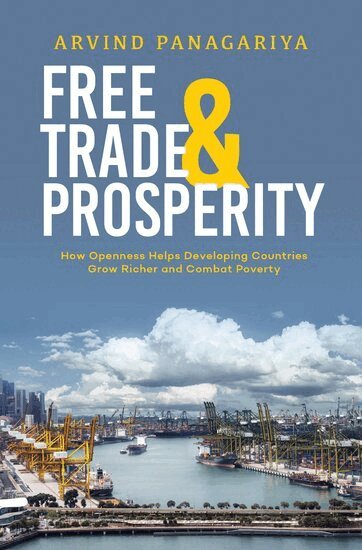
    Free Trade and Prosperity

    How Openness Helps the Developing Countries Grow Richer and Combat Poverty

    AvArvind Panagariya

    Inbunden, Engelska, 2019

    606 kr

    Beställningsvara. Skickas inom 5-8 vardagar. Fri frakt över 249 kr.

    Fler format och utgåvor

    E-bok

    442 kr

    E-bok

    442 kr

    Beskrivning

    Arguments for protection and against free trade have seen a revival in developed countries such as the United States and Great Britain as well as developing countries such as India. Given the clear benefits trade openness has brought everywhere, this is a surprising development. The benefits of free trade are especially great for emerging market economies. FreeTrade and Prosperityoffers the first full-scale defense of pro-free-trade policies with developing countries at its center. Arvind Panagariya, a professor at Columbia University and former top economic advisor to the government of India, supplies a historically informed analysis of many longstanding but flawed arguments for protection. He starts with an insightful overview of the positive case for free trade, and then closely examines the various contentions of protectionists. One protectionist argument is that "infant" industries need time to grow and become competitive, and thus should be sheltered. Other arguments are that emerging markets are especially prone to coordination failures, they are in need of diversification of their production structures, and they suffer from market imperfections. The panoply of protectionist arguments, including those for import substitution industrialization, fails when subject to close logical and empirical scrutiny. Free trade and outward-oriented policies are preconditions to both sustained rapid growth and poverty alleviation in developing countries. Panagariya provides compelling evidence demonstrating the failures of protectionism and the promise of free trade using detailed case studies of successful countries such as Singapore, Taiwan, South Korea, China and India. Low or declining barriers to free trade and high or rising shares of trade in total income have been key elements in the sustained rapid growth and poverty alleviation in these countries and many others. Free trade is like oxygen: the benefits are ubiquitous and not noticed until they are no longer there. This important book is an essential reminder of the costs of protectionism.

    Produktinformation

    • Utgivningsdatum:2019-06-06
    • Mått:236 x 163 x 35 mm
    • Vikt:635 g
    • Format:Inbunden
    • Språk:Engelska
    • Antal sidor:384
    • Förlag:OUP USA
    • ISBN:9780190914493

    Utforska kategorier

    • Internationell ekonomi inom Ekonomi och Ledarskap
    • Makroekonomi inom Ekonomi och Ledarskap
    • Statsvetenskap och politisk teori inom Samhälle och politik

    Mer om författaren

    Arvind Panagariya is Professor of Economics and the Jagdish Bhagwati Professor of Indian Political Economy at Columbia University. From January 2015 to August 2017, he served as the first Vice Chairman of the NITI Aayog, Government of India in the rank of a Cabinet Minister. Previously he was Chief Economist of the Asian Development Bank. He is the author of India: The Emerging Giant (2008, OUP) and his columns have appeared in the Financial Times, Wall Street Journal and India Today.

    Recensioner i media

    Throughout, Panagariya manages to provide compelling evidence showing the failures of trade protection and the success stories of free trade... This book serves as a reminder of how free trade can lift hundreds of millions of people out of poverty.

    Innehållsförteckning

    • Chapter 1 - Setting the StagePart I - Questioning the Protectionists' ArgumentsChapter 2 - The Mirage of Infant Industry ProtectionChapter 3 - Other Common Arguments for ProtectionChapter 4 - The Positive Case for Trade Openness Part II - Trade, Growth, Poverty and InequalityChapter 5 - Trade Openness and Growth: Exposing the Critics' Specious ArgumentsChapter 6 - Trade Openness and Sustained Rapid Growth: Miracles and DebaclesChapter 7 - Trade Openness and Poverty: Exposing the Critics' Specious ArgumentsChapter 8 - Trade Openness and Poverty: The Empirical EvidenceChapter 9 - Trade Openness and Inequality Part III - Miracles of YesteryearChapter 10 - The Uncontroversial Cases of Hong Kong and SingaporeChapter 11 - Taiwan: An Early Triumph of Outward OrientationChapter 12 - South Korea: From Basket Case to Middle Income Part IV - Miracles of TodayChapter 13 - India: From Near Autarky to Near Free Trade