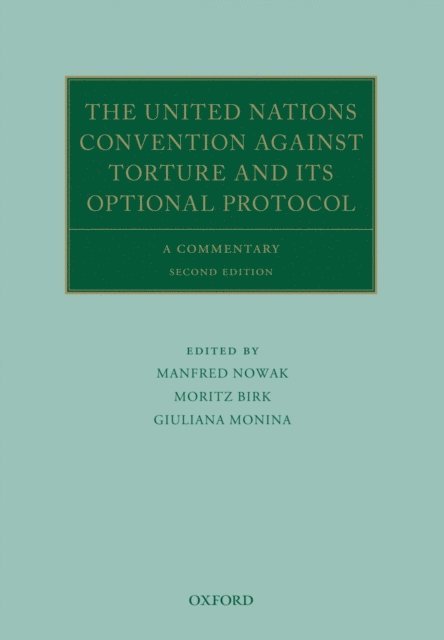
E-bok, Engelska, 2019
United Nations Convention Against Torture and its Optional Protocol
Av Giuliana Monina, Moritz Birk, Manfred Nowak
50 kr
Läs direkt i Bokus Reader – eller ladda ned till din enhet
Beskrivning
The prohibition of torture - the right to physical and mental integrity - is guaranteed in the strongest terms under international law. It is protected as an absolute right, non-derogable even in times of war or public emergency under many human rights treaties and is also generally accepted as a part of customary international law and even ius cogens. The main instrument to combat torture within the framework of the United Nations is the Convention Against Torture and other Cruel, Inhuman, or Degrading Treatment or Punishment (CAT). This Commentary explores the problematic definition of torture in the Convention, the substantive obligations of States parties, the principle of ''non-refoulement'', provisions for international monitoring, and also the concept of preventative visits to all places of detention as contained in the Optional Protocol to the CAT. It also covers issues including the distinction between torture and cruel inhuman or degrading treatment and the principle of non-admissibility of evidence extracted under torture. Full article by article commentary on the Convention also provides historical context and thorough analysis of case-law and practice from international and regional courts and monitoring bodies. Relevant case-law from domestic courts are also discussed. Despite the broad ratification and the universal recognition of the prohibition of torture and other forms of ill-treatment we witness a ''global crisis'' affecting the majority of countries worldwide. In recent years the protection of human rights is experiencing a particularly serious crisis - also affecting the phenomenon of torture - in which official narratives and public belief often trivialise and even endorse such practices in the name of security and the fight against terrorism, ignoring the suffering and damages it causes. On the other hand, the positive experiences in some States illustrate that torture can be eradicated if the provisions of CAT and OPCAT are taken seriously and are being fully implemented. This is an open access title available under the terms of a CC BY-NC 4.0 International licence. It is offered as a free PDF download from OUP and selected open access locations.
Produktinformation
- Utgivningsdatum: 2019-12-19
- Språk: Engelska
- Filformat: EPUB
- Kopieringsskydd: LCP
- ISBN: 9780192585080
- Förlag: OUP Oxford
Utforska kategorier
Betyg & recensioner
0 recensioner
Inga recensioner tillgängliga.