• Fri frakt över 249 kr
  • •
  • Snabba leveranser
  • •
  • Billiga böcker
Kundservice

Du är på sajten för privatpersoner.

Företag, bibliotek eller offentlig verksamhet?

Du handlar på classic.bokus.com, där alla dina funktioner finns intakta.
Till classic.bokus.com
Bokus logotyp. Gå till startsidan.
  • Erbjudanden
  • Nyheter
  • Student
  • Topplistor
  • Barn & ungdom
  • Bokus Play
  • E-böcker
  • Pocketböcker
  • Spel & pussel

Må bättre, för mindre! Upp till 50% rabatt på hälsoböcker

Sidfot

Mina sidor

    Hjälp

    • Kundservice
    • Vanliga frågor och svar
    • Frakt och leverans
    • Retur vid ångerrätt
    • Reklamera vara
    • Betalning
    • Köpvillkor
    • Allmänna villkor
    • Information om webbplatsens tillgänglighet

    Om Bokus

    • Om oss
    • Pressrum
    • För studenter
    • För företag
    • För bibliotek och offentlig verksamhet
    • För leverantörer
    • Hållbarhet

    Populärt

    • Aktuella erbjudanden
    • Presentkort
    • Studentlitteratur
    • Nya böcker
    • Topplistor
    • Signerade böcker
    • Engelska böcker

    Inspiration

    • Boktips
    • BookTok
    • Populära bokserier
    • Barnbokskaraktärer
    • Populära författare
    Logotyp för Bokus
    Följ oss på Facebook (extern länk)Följ oss på Instagram (extern länk)Följ oss på YouTube (extern länk)Följ oss på TikTok (extern länk)
    bokus @ CookiesAnpassa cookiesIntegritetspolicyKöpvillkor
    Till Citymail hemsida (extern länk)Till Budbee hemsida (extern länk)Till Postnord hemsida (extern länk)Till Schenker hemsida (extern länk)Till Early Bird hemsida (extern länk)Till Walleys hemsida (extern länk)
    1. Samhälle och politik
    2. Samhälle och kultur
    3. Kultur och medier
    4. Referensverk och tvärvetenskap

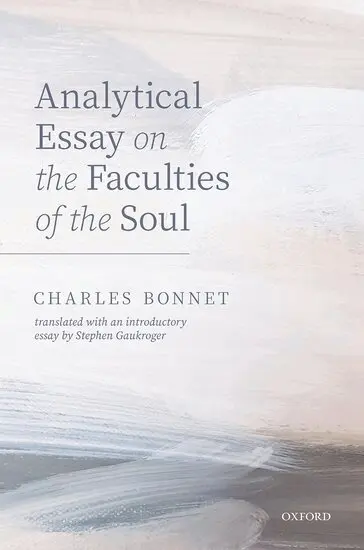
    Charles Bonnet, Analytical Essay on the Faculties of the Soul

    AvStephen Gaukroger

    Inbunden, Engelska, 2022

    1 333 kr

    Beställningsvara. Skickas inom 5-8 vardagar. Fri frakt över 249 kr.

    Beskrivning

    In the course of the eighteenth century, understanding human cognitive life came to be construed as something to be explored in terms of the physiology of the sensory organs, the nerves, and the brain: a form of naturalization that effectively moved cognition out of the realm of philosophy as it had traditionally been understood. Bonnet's Analytical Essay on the Faculties of the Soul was at the forefront of these developments, and this is its first English translation. Drawing on his earlier work in natural history--he was the leading entomologist of his era--he approaches problems of the nature of the mind via the physiology and anatomy of the brain and sensory systems. His approach is one of 'reverse engineering', starting from an organic statue without faculties, and investigating how it would need to be modified to produce a human being.Bonnet takes up a position that cuts across the standard understanding of the period as a clash between materialism and dualism. While his approach was rigorously naturalistic and physiological, this did not lead him to reject the notion of a soul. Instead, he argues that, in order to make sense of their sensory abilities, we need to attribute a soul to animals as well as human beings. At the same time, he argues that if personal immortality is to be possible, it can be conceived along the lines of insect metamorphosis, which shows how different biological forms can harbour a single identity.

    Produktinformation

    • Utgivningsdatum:2022-01-06
    • Mått:161 x 240 x 20 mm
    • Vikt:558 g
    • Format:Inbunden
    • Språk:Engelska
    • Antal sidor:270
    • Förlag:OUP OXFORD
    • ISBN:9780192846778

    Utforska kategorier

    • Referensverk och tvärvetenskap inom Samhälle och politik
    • Filosofiska discipliner inom Filosofi och religion
    • Naturvetenskapens historia inom Naturvetenskap och teknik

    Mer om författaren

    Stephen Gaukroger, who was educated at the Univerity of London and the University of Cambridge, is Emeritus Professor of History of Philosophy and History of Science at the University of Sydney. Among his sixteen books, he is author of a four-volume Science and the Shaping of Modernity (2006-2020), and The Failures of Philosophy (2020). He has translated works by Arnauld and Descartes, and has edited nine collections of essays.

    Recensioner i media

    Bonnet's is an important and courageous text, well deserving of translation and commentary.

    Innehållsförteckning

    • Stephen Gaukroger: Introduction: The Physiology of Understanding Preface Introduction 1: General and preliminary reflections on the nature of man. 2: Plan of this work. Man considered under the idea of a statue whose senses act separately or successively. 3: Continuation of the same subject. Thoughts on Condillac's Treatise on Sensations. 4: On the idea one can form of the statue before it begins to sense. General conceptions of the origin of ideas. 5: Reflections on the physics of our being. Thoughts on the nerves, on the mind, and on the seat of the soul. 6: The statue begins to sense by means of smell. Physical relations in general, and the laws of nature that are arise from them. The idea of the mechanics of smell, and what results from it in relation to the soul. 7: On the state of the statue immediately after the first sensation. The birth of pleasure, of desire, and of attention. On the connection and the relation between ideas in general. Thoughts on memory. 8: The statue is stimulated by a new smell. Principles and conjectures on the connection and the relation of ideas. An examination of the question whether the diversity of sensations depends on the diversity of the fibres, or on the diversity of the movements impressed on identical fibres. 9: Continuation of the same subject. Essay on the theory of remembering. The birth of habit. On the pleasure associated with novelty. Thoughts on personal identity 10: On the natural philosophy of pleasure and sadness. On the question whether the laws of Union are arbitrary. On the disposition of the fibres and their effects. Thoughts on activity, and that of our being in general. 11: On the faculty of sensing, considered as a branch of the activity of the soul. On the question whether the soul is passive when it perceives or senses. On the determinants of the activity of the soul, and their causes. On the nature and effects of attention. 12: On the will and on freedom. Some errors about the faculties. Examination of the opinion of Condillac on freedom. Reflections on the analysis of the soul. 13: On the deterioration of the movements of the sensible fibres, and on the sensations that correspond to them. On desire, its mechanism and its effects. The generation of dreams. The general idea of the mechanism that produces them. An examination of the question whether the soul has many ideas at the same time. 14: A general theory of ideas. On sensible ideas. On sensible abstractions. On the imagination. 15: Continuation of the general theory of ideas. On the general effects of language. On intellectual abstractions. On concepts. On substance, attributes, and modes. On essence. Reflections on essences. On the different kinds of concepts. 16: Continuation of the general theory of ideas. Continuation of the effects of language. On reflection in general. On the relation between abstract ideas and sensible ideas. On the language of animals. On the effect of reflection on our freedom. On clear, obscure, distinct, and confused ideas. On the truth and falsity of concepts. On judgment. On evidence. On reasoning. On method. 17: On the idea that the statue has of succession. On surprise and its causes, nature, and effects in general. On the pleasure associated with variety, harmony, and beauty. On the birth of consonance in the soul of the statue. 18: On the passions in general. The idea of their mechanism. On self love. An examination of the question whether the soul remembers ideas. A critique of some passages in the Essay on Psychology 19: New thoughts on the faculties of the soul, and especially on its activity. In what respects the soul is active. On the freedom of indifference. On the question whether the soul executes its volitions itself. On the determinations of sensibility and the will; on their causes and their effects. 20: The present limits on the activity of the soul of the statue. On the question whether, when the statue has a memory of one of two sensations, it recognizes at the same time that this sensation has affected it more strongly. What constitutes the physics of the memory of sadness and displeasure. On the idea that the statue has of number, duration, existence, etc. 21: Reflections on the analysis of the two first sensations of the statue. The statue experiences a third sensation. A new sensation recalls those that have preceded it. Why cannot the fibres that are excited by a new object excite those that have already been excited by other objects? Why, when each sensation has its own fibres, does it happen that the fibres of different kinds are reciprocally excited? 22: The statue experiences three new smells. Inquiry into the mechanics of memory. The practical consequences that result from this mechanics. Questions which arise from the current state of the statue. 23: On the state of the statue when all the fibres of smell are put in play. On the pleasure that it takes in harmonious sequences, and the effects of this. Thoughts on dreams in general, and on those of the statue in particular. On visions. On the question whether the statue can change or modify the order of its sensations. On the sensible abstractions that the statue can form, and what the natural philosophy of these abstractions consists in. 24: On happiness and unhappiness in the statue. New thoughts on the self, or personal identity. Reflections on the soul of beasts, and on materialism. On the personal identity of animals that undergo metamorphosis, and, on the future state of man. On the personal identity of animals that can reproduce from cut sections. 25: On what happens when a soul transmigrates into the statue. On the activity and extent of desire. On the state of the statue supposing it can obtain the objects of its sensations. The general principle of operations in beasts. Thoughts on these operations. Thoughts on the scale of sensibility, and on the reality of our sensations. On the mechanics that links our ideas to one another and to their signs, and the effects of this linking. On the physics of the material composition of the worksof the mind. 26: The statue becomes a thinking being. On the effect of signs on its brain. Practical upshot. Conclusion. 27: Observations on some passages in The Spirit of the Laws relevant to this analysis.