• Fri frakt över 249 kr
  • •
  • Snabba leveranser
  • •
  • Billiga böcker
Kundservice

Du är på sajten för privatpersoner.

Företag, bibliotek eller offentlig verksamhet?

Du handlar på classic.bokus.com, där alla dina funktioner finns intakta.
Till classic.bokus.com
Bokus logotyp. Gå till startsidan.
  • Erbjudanden
  • Student
  • Topplistor
  • Barn & ungdom
  • Bokus Play
  • E-böcker
  • Ljudböcker
  • Pocketböcker
  • Spel och pussel

Pocketfynda! Hundratals böcker för 49 kr/st →

Sidfot

Mina sidor

    Hjälp

    • Kundservice
    • Vanliga frågor och svar
    • Frakt och leverans
    • Retur vid ångerrätt
    • Reklamera vara
    • Betalning
    • Köpvillkor
    • Allmänna villkor
    • Information om webbplatsens tillgänglighet

    Om Bokus

    • Om oss
    • Pressrum
    • För studenter
    • För företag
    • För bibliotek och offentlig verksamhet
    • För leverantörer
    • Hållbarhet

    Populärt

    • Aktuella erbjudanden
    • Presentkort
    • Studentlitteratur
    • Nya böcker
    • Topplistor
    • Signerade böcker
    • Engelska böcker

    Inspiration

    • Boktips
    • BookTok
    • Barnbokskaraktärer
    • Populära författare
    Logotyp för Bokus
    Följ oss på Facebook (extern länk)Följ oss på Instagram (extern länk)Följ oss på YouTube (extern länk)Följ oss på TikTok (extern länk)
    bokus @ CookiesAnpassa cookiesIntegritetspolicyKöpvillkor
    Till Citymail hemsida (extern länk)Till Budbee hemsida (extern länk)Till Postnord hemsida (extern länk)Till Schenker hemsida (extern länk)Till Early Bird hemsida (extern länk)Till Walleys hemsida (extern länk)
    1. Historia och arkeologi
    2. Arkeologi
    3. Arkeologiska perioder och områden

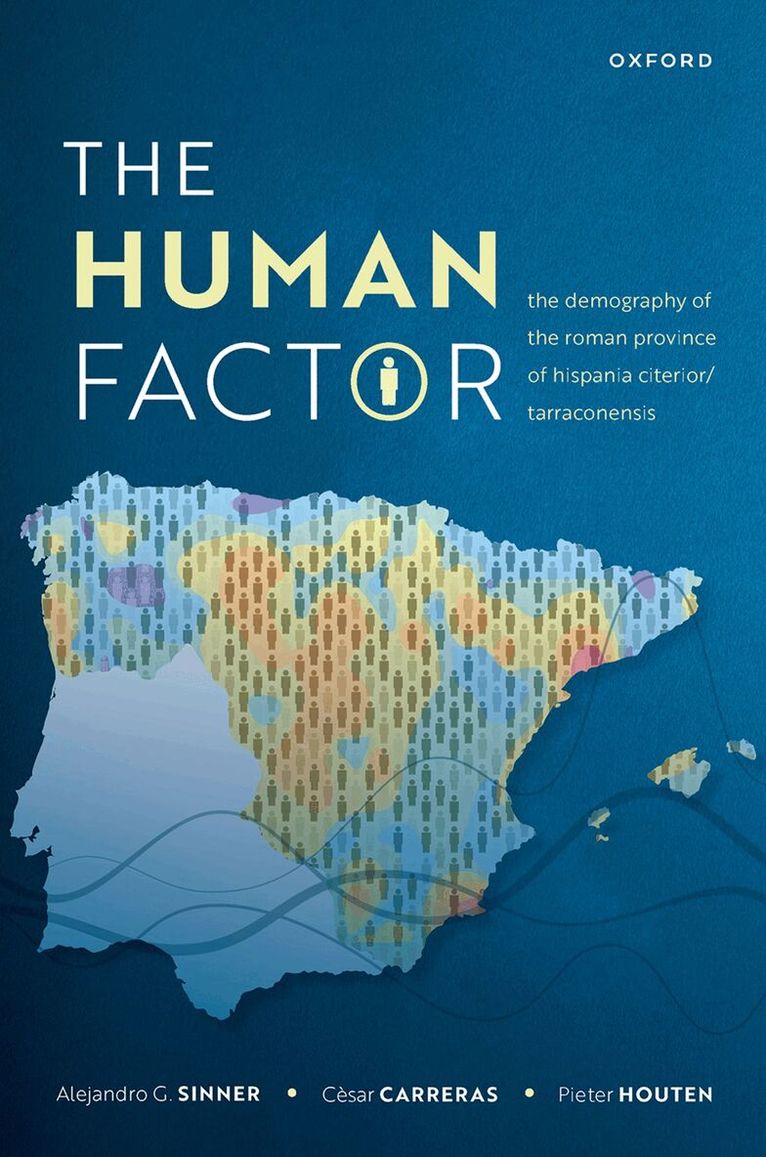
    The Human Factor

    The Demography of the Roman Province of Hispania Citerior/Tarraconensis

    AvAlejandro Sinner,Cèsar Carreras

    Inbunden, Engelska, 2024

    1 962 kr

    Beställningsvara. Skickas inom 5-8 vardagar. Fri frakt över 249 kr.

    Beskrivning

    The Human Factor establishes a foundation for the study of ancient demography in the Iberian Peninsula, focusing on its largest province, Hispania Citerior/Tarraconensis. The authors take a multidisciplinary approach, compiling archaeological, epigraphic, architectonic, osteological, and genetic datasets. This comprehensive and detailed study of a single province is necessary to generate accurate demographic estimates and to compare it with datasets from other regions and historical periods. By examining the province of Hispania Citerior/Tarraconensis in depth, the authors provide a detailed understanding of demographic patterns, urbanism, and urbanization rates over time, and link them with the social, cultural, and economic factors that affected the Iberian Peninsula and the Western Mediterranean from the fourth century BC until the end of the Roman period. For instance, population size was a significant indicator of economic growth and performance, and the distribution of people between urban and rural areas played a vital role in the negotiation of collective identities. Additionally, human mobility promoted cultural change and mediated information and technological flows.This is the first comprehensive , state-of-the-art demographic analysis of the Iberian Peninsula from the Iron Age down to the end of the Roman period, and the authors' integration and interpretation of data provide cutting-edge research and methodology, and fill a gap in the scholarly literature, allowing for a more nuanced understanding of the ancient Mediterranean.

    Produktinformation

    • Utgivningsdatum:2024-05-20
    • Mått:164 x 240 x 32 mm
    • Vikt:976 g
    • Format:Inbunden
    • Språk:Engelska
    • Antal sidor:510
    • Förlag:OUP OXFORD
    • ISBN:9780192848598

    Utforska kategorier

    • Arkeologiska perioder och områden inom Historia och arkeologi
    • Forntidens historia inom Historia och arkeologi
    • Geografi inom Naturvetenskap och teknik

    Mer om författaren

    Alejandro G. Sinner holds a BA in History, an MA in Archaeology, and a PhD in Classical Archaeology (Society and Culture) from the University of Barcelona. His research focuses on the social, economic, and cultural history of the Late Iron Age Iberia, Roman Hispania, and the western provinces. Most notably, he has conducted research and published on Ibero-Roman material culture (especially ceramics and coinage), demography, Palaeohispanic languages, pre-Roman and Roman domestic and religious spaces, and the construction and negotiation of identities and the processes of cultural change and exchange in ancient colonial contexts.Cèsar Carreras holds a BA in History from the University of Barcelona, an MA in Archaeological Computing from Southampton University, a PhD in Archaeology from Southampton University, and a PhD in Classical History from the University of Barcelona. He is a Senior lecturer in Classical Archaeology at the Autonomous University of Barcelona. Dr Carreras's research focuses on the Roman economy from amphora studies in different European countries (UK, the Netherlands, Germany, Spain), transport costs with the use of network analysis in GIS, and ancient demography. He has published widely on these and other topics, and has been involved in many geophysics fieldwork projects in the Iberian peninsula. He is currently involved in excavations at the Roman castellum of Puig Castellar (Biosca), and the Roman cities of Iesso (Guissona), and Iulia Libica (Llívia).Pieter Houten holds a BA in History and an MA in Ancient History, both from Utrecht University, and a PhD in Ancient History from Leiden University. His work focusses on social processes such as urbanisation and Latinization in the Roman west, combining archaeological, epigraphic, and historical sources to obtain a clearer picture of these and other social processes using Geographic Information Systems. Within the ATLAS-project (www.atlas-cities.com) at Universität Hamburg he researches the Late Antique cities of Southern Spain and Tunisia. For the LatinNow project (www.latinnow.eu) at the University of Nottingham he studies the spread of Latin during the Imperial period, especially those who learned to speak and write Latin as a second language next to the palaeohispanic languages. His PhD-research on urban settlement on the Iberian Peninsula during the Early Empire has been published as Urbanisation in Roman Spain and Portugal (2021).

    Innehållsförteckning

    • 1: Introduction 2: Population Characteristics: Fertility, Mortality, and Life Expectancy 3: Population Estimates: Formulae, Methods, Variables, and Limitations 4: Population, Urbanization, and Settlement Patterns in the Late Iron Age 5: Population, Urbanization, and Settlement Patterns in the Early Empire 6: Population and Urbanization in the Late Roman Period 7: Connectivity, Migrations, Mobility, and Networks 8: Future Directions and New Approaches to Study Ancient Populations Conclusions Appendices