• Fri frakt över 249 kr
  • •
  • Snabba leveranser
  • •
  • Billiga böcker
Kundservice

Du är på sajten för privatpersoner.

Företag, bibliotek eller offentlig verksamhet?

Du handlar på classic.bokus.com, där alla dina funktioner finns intakta.
Till classic.bokus.com
Bokus logotyp. Gå till startsidan.
  • Erbjudanden
  • Nyheter
  • Student
  • Topplistor
  • Barn & ungdom
  • Bokus Play
  • E-böcker
  • Pocketböcker
  • Spel & pussel

10% rabatt på allt med kod NYSTART10 →

Sidfot

Mina sidor

    Hjälp

    • Kundservice
    • Vanliga frågor och svar
    • Frakt och leverans
    • Retur vid ångerrätt
    • Reklamera vara
    • Betalning
    • Köpvillkor
    • Allmänna villkor
    • Information om webbplatsens tillgänglighet

    Om Bokus

    • Om oss
    • Pressrum
    • För studenter
    • För företag
    • För bibliotek och offentlig verksamhet
    • För leverantörer
    • Hållbarhet

    Populärt

    • Aktuella erbjudanden
    • Presentkort
    • Studentlitteratur
    • Nya böcker
    • Topplistor
    • Signerade böcker
    • Engelska böcker

    Inspiration

    • Boktips
    • BookTok
    • Populära bokserier
    • Barnbokskaraktärer
    • Populära författare
    Logotyp för Bokus
    Följ oss på Facebook (extern länk)Följ oss på Instagram (extern länk)Följ oss på YouTube (extern länk)Följ oss på TikTok (extern länk)
    bokus @ CookiesAnpassa cookiesIntegritetspolicyKöpvillkor
    Till Citymail hemsida (extern länk)Till Budbee hemsida (extern länk)Till Postnord hemsida (extern länk)Till Schenker hemsida (extern länk)Till Early Bird hemsida (extern länk)Till Walleys hemsida (extern länk)
    1. Psykologi och pedagogik
    2. Pedagogik
    3. Pedagogik: historia

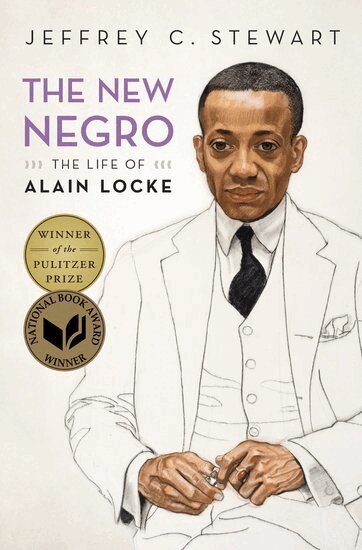
    The New Negro

    The Life of Alain Locke

    AvJeffrey C. Stewart

    Inbunden, Engelska, 2018

    460 kr

    Beställningsvara. Skickas inom 5-8 vardagar. Fri frakt över 249 kr.

    Fler format och utgåvor

    Häftad

    398 kr

    Beskrivning

    A tiny, fastidiously dressed man emerged from Black Philadelphia around the turn of the twentieth century to mentor a generation of young artists like Langston Hughes, Zora Neale Hurston, and Jacob Lawrence and call them the New Negro--the gender ambiguous, transformative, artistic African Americans whose art would subjectivize Black people and embolden greatness. Alain Locke (1885-1954) believed Black Americans were sleeping giant that could transform America into a truly humanistic and pluralistic society. In the 1920s, these views were radical, but by announcing a New Negro in art, literature, music, dance, theatre, Locke shifted the discussion of race from the problem-centered discourses of politics and economics to the new creative industries of American modernism. Although this Europhile detested jazz, he used the Jazz Age interest in Black aesthetics to plant the notion in American minds that Black people were America's quintessential artists and Black urban communities were crucibles of creativity where a different life was possible in America. By promoting art, a Black dandy subjectivized Black people and became in the process a New Negro himself.

    Produktinformation

    • Utgivningsdatum:2018-04-12
    • Mått:163 x 239 x 58 mm
    • Vikt:1 406 g
    • Format:Inbunden
    • Språk:Engelska
    • Antal sidor:944
    • Förlag:OUP USA
    • ISBN:9780195089578
    • Utmärkelser:^BWinner of the Pulitzer Prize for Biography^R ^BWinner of the National Book Award for Nonfiction^R ^BFinalist, NAACP Image Award for Outstanding Literary Work - Biography/ Autobiography^R ^BWinner of the PROSE Award for Best Biography/ Autobiography from the Association of American Publishers^R ^BWinner of The Mark Lynton History Prize^R ^BPublishers Weekly Best Books of 2018 for Nonfiction^R ^BBooklist 2018 Editors' Choice^R ^BBooklist 2018 Editors' Choice^R ^BWinner of the Black Caucus of the American Library Association Award for Nonfiction^R ^BFinalist, The Museum of African American History Stone Book Award^R ^BFinalist, Plutarch Award of the Biographers International Organization^R

    Utforska kategorier

    • Pedagogik: historia inom Psykologi och pedagogik
    • Amerikas historia inom Historia och arkeologi
    • Filosofiska discipliner inom Filosofi och religion

    Mer om författaren

    Jeffrey C. Stewart is Professor and Chair of the Department of Black Studies at the University of California, Santa Barbara. He is the author of 1001 Things Everyone Should Know About African American History and editor of Paul Robeson: Artist and Citizen.

    Recensioner i media

    Stewart creates a compelling portrait of Locke ... as well providing rich contextual background and insights into the cultural and political debates out which his subject emerged.

    Innehållsförteckning

    • Acknowledgments Section I. The Education of Alain Locke1. A Death and a Birth 2. A Black Victorian Childhood 3. Child God and Black Aesthete 4. An Errand of Culture at Howard College, 1904-1905 5. A Reluctant Prometheus: Locke's Intellectual Awakening at Harvard, 1905-1907 6. Going for the Rhodes 7. Oxford Contrasts 8. Black Cosmopolitan 9. Paying Second Year Dues at Oxford, 1908-1909 10. Italy and America, 1909-1910 11. Berlin Stories 12. Exile's Return 13. Back in the U.S.S.R., 1911-1912 14. Search for a Voice at Howard University, 1912-1916 15. Rapprochement and Silence: Harvard, 1916-1917 16. Fitting in Washington, DC, 1917-1922 Section II: Enter the New Negro17. Rebirth 18. Queen Mother of the Movement, 1922-1923 19. Opportunity Knocks 20. Egypt Bound 21. Renaissance and Self-Fashioning in 1924 22. The Dinner and the Dean 23. Battling the Barnes 24. Looking for Love 25. Survey Says 26. Renaissance and Rejection 27. The New Negro and The Blacks 28. Beauty or Propaganda? 29. The Curator and the Patron 30. Langston's Indian Summer 31. The American Scholar 32. Loves' Labour Lost Section III: Metamorphosis33. The Naked and the Nude 34. The Saving Grace of Realism 35. Bronze Booklets, Gold Art 36. Warn A Brother 37. The Riot and the Ride 38. Conversion 39. Two Trains Running 40. Queer Toussaint 41. The Invisible Locke 42. FBI, Haiti, and Diasporic Democracy 43. Inclusion and Death: Wisdom de Profundis 44: Buried but not Dead EpilogueNotesSelected Bibliography Index